


You're Decorating Your Cat's World With Smells It Can't Stand
A cat's nose runs the show, and most of what we do to make a home smell 'nice' works against it. Here's what actually smells good to a cat, what quietly stresses them, and the laundry habit to break.

Affiliate disclosure. This article contains affiliate links. We may earn a small commission if you buy through a link, at no extra cost to you. How we handle recommendations.
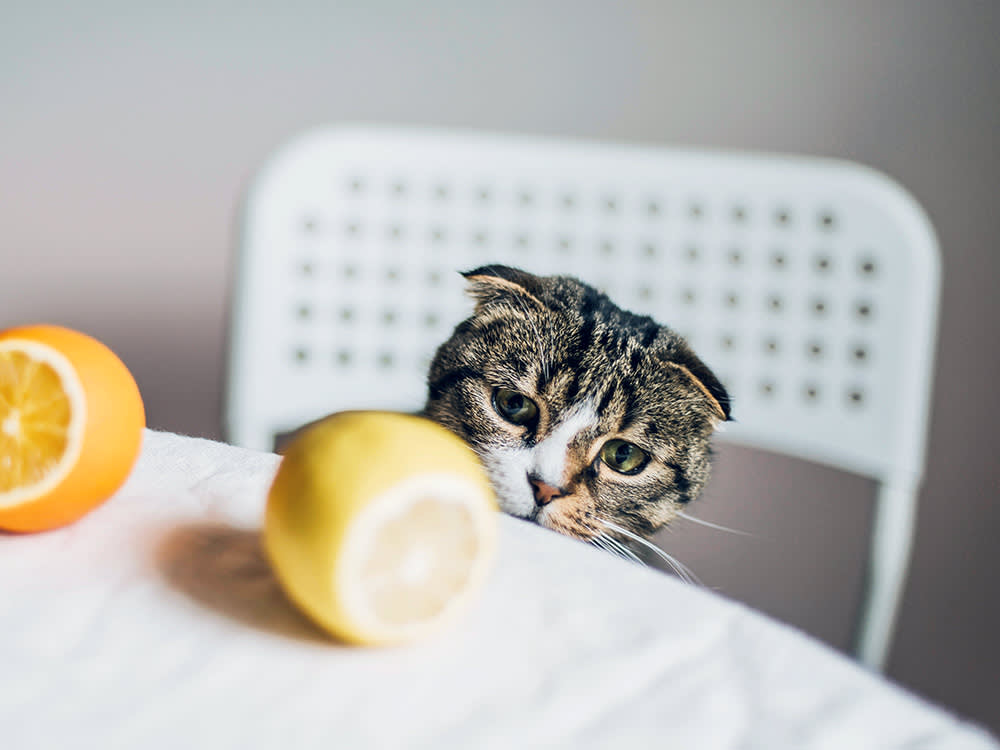
We tend to think of cats as visual hunters, all those wide eyes tracking a laser dot. It is almost backwards. A cat’s eyes are the weak link; they are somewhat near- and farsighted, and a lot of the world reads as fuzzy to them. The sense that actually runs a cat’s life is smell. And once you understand how much a cat lives through its nose, you start to notice how much of ordinary home life quietly works against it.
A nose built on a different scale
The raw numbers are startling. Cats have up to 200 million odor receptors, and a sense of smell estimated at around 14 times more powerful than a human’s. Dogs may carry more receptors overall, but cats appear to be better at discriminating between similar scents, telling near-identical smells apart. For a cat, smell is not decoration on top of experience. It is the primary channel.
People assume a cat takes in a room the way we do, mostly by looking. It’s closer to the opposite. A cat reads a room by smell first, and the scent layer holds information we’re completely blind to: who was here, when, whether they belong. When we scrub that layer or bury it under air freshener, we’re erasing the cat’s main source of information about its own home.
That reframing is the whole point. Much of what we do to make a space pleasant for us is, from a cat’s perspective, sensory vandalism.
Why cats lean on smell in the first place
The reliance on scent traces back to where cats came from. Their closest wild ancestors were solitary animals with little face-to-face social life. For a solitary hunter, smell is an elegant way to communicate without ever meeting: a scent mark works like a signpost claiming ownership of a patch of territory, telling other cats who passed through and whose space this is, no risky confrontation required. Cats still run on this system. Scent lets them manage territory and social boundaries indirectly, which is exactly what a solitary species evolved to want.
That is why a cat’s own smell, and the smell of the cats and people it lives with, is so load-bearing to its sense of safety. It is not sentiment. It is infrastructure.
The everyday habits that stress a scent-driven animal
Several common household moves land much harder on a cat than we realize.
Artificial scents, dialed up. Perfumes, heavily scented hair and skin products, plug-in fresheners, burning incense, and strong candles can all read as unpleasant to a cat, precisely because they are intense and artificial. Remember the multiplier: a scent that reads as “a little strong” to you can be overwhelming to a nose 14 times more sensitive. A little goes a very long way.
Aromatherapy and essential oils. This one crosses from unpleasant into unsafe. Many essential oils are outright toxic to cats, and the trend of diffusing them for a cat’s “benefit” has almost no evidence behind it. The sensible move is to avoid essential oils around cats, keep any you use for yourself well out of reach, and never apply them to your cat. If you want the safety detail, it is worth a specific conversation with your vet.
Masking the litter box instead of cleaning it. A lot of scented products get deployed to cover litter odor. That is backwards. If a litter box smells bad, the fix is scooping twice a day, using a good clumping litter, changing it before it ages, and wiping down the box’s inner walls. A properly maintained box should not fill your home with odor in the first place, and drowning it in fragrance just stacks a second unpleasant smell on top of the first. Persistent odor despite good hygiene, or a cat avoiding the box, is a behavior and health flag worth addressing directly rather than perfuming over.
Washing every cat bed at once. This is the habit almost nobody thinks about. A cat’s bedding is saturated with its own scent and the scent of its household, and that smell is a big part of why the spot feels safe. Laundering all of it in one go wipes that comfort out at a stroke. If your cat has several beds, wash them one at a time so there is always a familiar-smelling refuge in rotation.
What cats actually like to smell
It is not all restriction. Cats have genuine scent pleasures, and leaning into them is real enrichment.
Food smells are the reliable winners, given their obvious appeal. Beyond that, the plant world is where it gets interesting. Catnip is the famous one, and it is safe, though only about 60 percent of cats respond to it; the response is tied to activation of the cat’s dopamine system, which is why it looks so blissful. Other plants in the mint family can trigger a reaction in some cats too.
The underrated option is silver vine, also called Japanese catnip or matatabi, a plant in the kiwi family. Research suggests more cats respond to silver vine than to catnip, which makes it well worth trying if your cat is one of the catnip-indifferent. Valerian and tatarian honeysuckle round out the list of cat-safe scent enrichers. The smart way to offer any of them is contained, in a tea ball or a sock, so your cat can choose to investigate rather than being enveloped.
For plants a cat might nibble rather than just sniff, always check a reliable safe-plant list first, since “smells nice” and “safe to chew” are different questions.
When you do need to clean
Cleaning a scent-driven animal’s home does not mean masking smells, it means removing them at the source. Enzyme cleaners are the tool for this: rather than covering an odor, they break down the compounds causing it. For accidents, a good unscented enzyme option is Anti-Icky-Poo, which removes the smell instead of layering fragrance over it. Air purifiers and generally low-scent, natural cleaning products round out an approach that keeps a home clean without carpet-bombing your cat’s primary sense.
What newer research adds
The picture of just how sophisticated feline olfaction is keeps getting sharper. In recent years, researchers mapping the structure of the cat’s nose have described an unusually efficient, coiled airflow design that helps explain their fine scent discrimination, and other work has demonstrated that cats can distinguish the scent of a stressed human from a calm one. The direction of the science is consistent: cats are doing far more sophisticated chemical sensing than the old “dogs are the smell animals” framing allowed.
One steady caveat: much of the practical advice here, the plant preferences, the citrus-as-deterrent idea, rests partly on individual variation, and cats differ enormously. Citrus in particular is often repeated as a guaranteed cat repellent, but it is not reliable, so do not count on a bowl of lemon peels to keep a determined cat off the counter. Treat scent as something to offer and observe, not a set of universal rules. Your cat will tell you, clearly, which smells belong in its world and which ones you have been imposing on it.
References
- Delgado, M. Feline olfaction and behavior, expert commentary.
- VCA Animal Hospitals. “Why Do Cats Sniff Rear Ends?” (on feline olfactory anatomy). vcahospitals.com
- Pet Poison Helpline / ASPCA guidance on essential oil toxicity in cats. aspca.org
Common questions
Is aromatherapy or essential oil diffusing safe around cats?
It is best avoided. Many essential oils are toxic to cats, and their sense of smell is so much sharper than ours that even a diffuse amount can be overwhelming. There is also little evidence of any health benefit. If you use oils, keep them well away from your cat and never apply them to your cat.
What scents do cats actually enjoy?
Food smells and certain plants. Catnip works on roughly 60 percent of cats, and silver vine (also called matatabi) reaches even more. Some cats also like other plants in the mint family or valerian. Individual preference varies a lot, so it is worth offering a few and seeing what your cat responds to.
Not a substitute for your vet. Our guidance is educational. For urgent symptoms, contact a vet or emergency clinic right away. Editorial standards
Dr. Park is a board-certified emergency and critical care specialist. She reviews our health and safety content for clinical accuracy and contributes guides on recognising urgent conditions. Her focus is helping owners act quickly and correctly when it matters most.
Meet our experts ↗Keep reading
 LivingThe Litter Scoop in the Dishwasher: It Was Never About the IckNina Vasquez · 5 min
 Health & WellnessYour Cat vs. the Christmas Tree: The Climbing Isn't the Real DangerDr. Ravi Mehta · 6 min
 Health & WellnessYour Cat Begs to Go Outside. The Honest Case for Keeping Them In.Dr. Priya Nair · 8 min
 LivingShe Keeps 200 Houseplants and One Curious Cat. The Plants Are Winning.Leila Torres · 5 min
 LivingThe Best Thing in Your Cat's Life Is Also the Most DangerousDr. Priya Nair · 8 min
 Health & WellnessFoxtails Aren't Just a Dog Problem. For Cats They Can Be Deadly.Dr. Amara Solis · 5 min