


Foxtails Aren't Just a Dog Problem. For Cats They Can Be Deadly.
The barbed summer grass seed everyone warns dog owners about is just as dangerous for outdoor and adventure cats. Here's how foxtails hurt cats and how to keep yours safe.

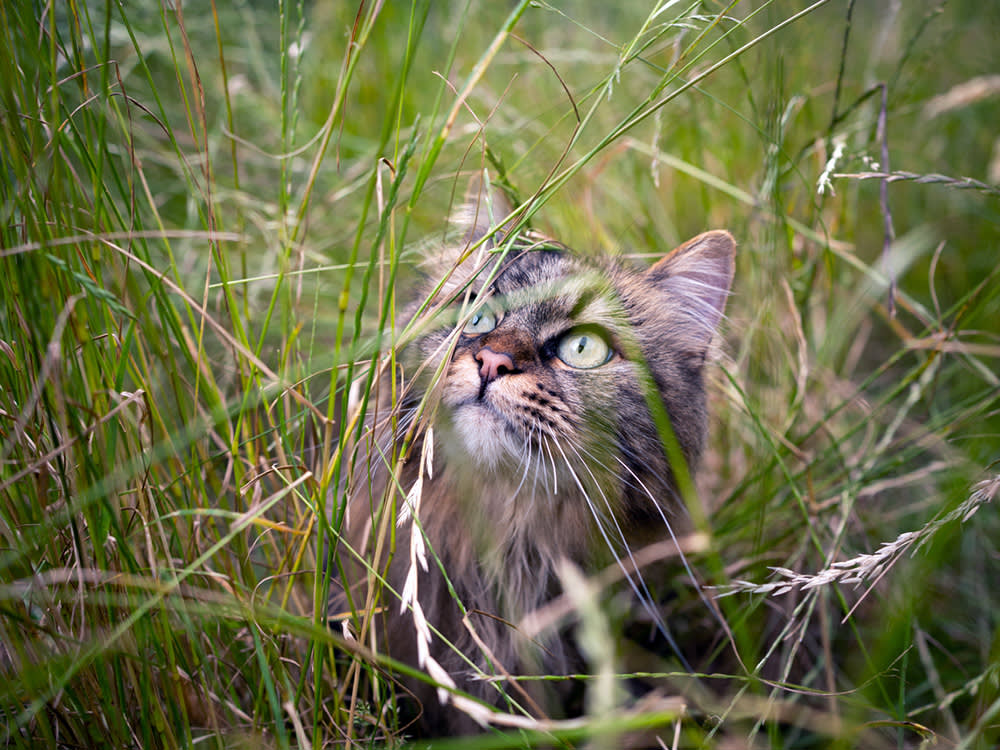
Ask most pet owners about foxtails and they will tell you it is a dog thing. The warnings, the vet photos, the paw-checking rituals all seem aimed at dogs. But if you have a cat who spends time outside, even a leash-trained adventure cat or one who patrols a catio, that assumption can cost you. Foxtails are just as dangerous for cats, and the single most important thing you can do about them is almost boringly simple: check your cat after every time they come in.
What a foxtail actually is, and why it’s built to hurt
A foxtail is the dried seed head of certain grasses, named for the bushy, fox-tail shape of the cluster. It grows across the United States but is most at home in the West. Here is the part that matters: the seed is engineered by nature to travel. Each little cluster is light, sharp, and covered in one-way barbs so that it burrows into soil, or fur, and only moves forward. It cannot back itself out.
That design is exactly the problem for a cat. The seeds latch onto passing fur and work their way toward skin, and from there into the very places you least want them.
A foxtail behaves like a splinter that only knows one direction, in. On a cat it slips into an ear canal, up a nostril, under an eyelid, or between the toes, and because of those barbs it keeps migrating instead of falling out. The body treats it as a foreign invader, so you get swelling, discharge, and a cat who is suddenly very uncomfortable.
Caught early, a foxtail in the coat is a nuisance you can comb out. Left to burrow, it can drive an infection that antibiotics alone will not clear, and in rare cases it migrates into an airway or body cavity with life-threatening results. Deaths are uncommon, but they happen, which is why this is worth taking seriously.
How to keep your cat out of harm’s way
Prevention is far easier than treatment. A few habits cover most of the risk:
- Keep cats away from foxtail patches. The surest protection is keeping your cat indoors during peak summer, when the grasses dry out and harden. If your cat does go out, steer them clear of overgrown, weedy areas where foxtails thrive.
- Trim long or fluffy coats. Less fur to catch a seed means fewer seeds reaching skin. A shorter summer trim on a long-haired cat genuinely helps here.
- Do the after-outing check, every time. Run your hands and a comb through the coat when your cat comes in, paying special attention to the ears, the face, the armpits, and between the toes. This same check catches ticks and other summer hitchhikers, so it pays off twice.
- Consider protective gear. Head-covering mesh devices designed to block seed clusters (the OutFox Field Guard is the best-known) are used by some owners of very outdoorsy pets. They are more common with dogs, but the concept applies.
Know the symptoms, sorted by where the seed lands
Because a foxtail can end up almost anywhere, the signs depend on the location. Learn to read them:
- Paws: obsessive licking of one foot, or a swollen, oozing bump or blister between the toes.
- Ears: sudden head-shaking, tilting, or frantic scratching at one ear.
- Eyes: squinting, swelling, tearing, or pawing around one eye.
- Nose and throat: violent, repeated sneezing, gagging, coughing, trouble swallowing, or labored breathing.
- Skin anywhere: a swollen, weepy lump or a sore that will not heal.
If any of these show up during foxtail season, do not wait to see if it settles. See your vet.
What treatment looks like
If you spot a seed still sitting in the fur, a comb will lift it out before it does any damage. Once it has burrowed, though, it is a veterinary job. A vet may start with anti-inflammatories and antibiotics, but finding a migrating foxtail often takes imaging, such as an otoscope or endoscope exam, ultrasound, or a CT scan, to trace where it has traveled. Seeds lodged deep under the skin or inside a body cavity usually have to be surgically removed, after which pain medication and antibiotics treat the discomfort and any infection the foxtail left behind.
What’s new for outdoor cats
The advice here has only gotten more relevant as more cats live at least part-time outdoors. The rise of leash-trained “adventure cats” and backyard catios has put a lot of house cats into exactly the tall-grass environments where foxtails wait, so the old “cats stay inside, this is a dog issue” logic no longer holds for a big slice of the cat population. The good news is that none of the modern enrichment options require accepting the risk. A catio can be sited on a paved or gravel surface away from weedy edges, and a supervised leash walk lets you steer around the danger and run the after-walk coat check the moment you are back inside. The tools have changed; the seed has not.
The bottom line
Foxtails do not care whether your pet barks or meows. If your cat goes outside in summer, treat those barbed little seeds as a real hazard: keep your cat away from the patches, keep long coats trimmed, and make the after-outing check a non-negotiable habit. It takes a minute and it is the difference between combing out a seed and sitting in a vet’s exam room.
References
- University of California, Davis, Veterinary Medicine. “Foxtails: A Summer Hazard for Pets.” https://healthtopics.vetmed.ucdavis.edu
- Purdue University College of Veterinary Medicine. “Foxtails and Grass Awns.” https://vet.purdue.edu
- American Veterinary Medical Association. “Foxtail Grasses and Your Pet.” https://www.avma.org
Not a substitute for your vet. Our guidance is educational. For urgent symptoms, contact a vet or emergency clinic right away. Editorial standards
Dr. Solis is a board-certified veterinary dermatologist with over twelve years of clinical experience. She advises on skin conditions, allergies, and grooming practices that affect coat and skin health. All dermatology and allergy content at The Pet Times is reviewed by her team before publication.
Meet our experts ↗Keep reading
 Health & WellnessYour Cat Begs to Go Outside. The Honest Case for Keeping Them In.Dr. Priya Nair · 8 min
 LivingA Five-Month-Old Kitten Turned On a Faucet, Blocked a Drain, and Closed a Cat CafeSara Lim · 6 min
 LivingShe Keeps 200 Houseplants and One Curious Cat. The Plants Are Winning.Leila Torres · 5 min
 Health & WellnessBringing an Outdoor Cat Inside Isn't Cruel. Doing It All at Once Is.Dr. Nina Kohl · 8 min
 TrainingThat 'Come Here' Cat Video Works. Your Own Voice Works Better.Dr. Lena Park · 7 min
 Health & WellnessHalloween Is Your Cat's Least Favorite Night. Six Ways to Fix That.Dr. Lena Park · 5 min