


Your Cat vs. the Christmas Tree: The Climbing Isn't the Real Danger
The broken ornaments are annoying. What can actually hurt your cat is what they swallow: needles, tinsel, tree-water additives, and the essential-oil sprays people use to keep them away. Here's how to cat-proof the tree without trading one hazard for another.

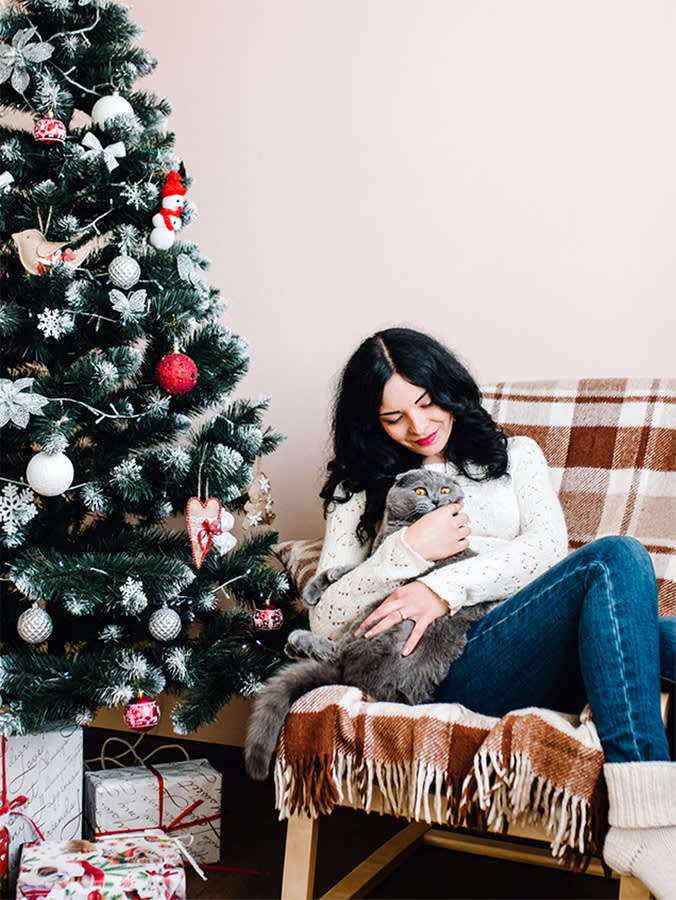
Every December, the same scene plays out in cat households: a tree goes up, a cat goes up after it, and an ornament comes down in pieces. The natural worry is the mess and the mayhem, the toppled tree and the shattered baubles.
But if you sort the holiday tree hazards by what can actually land your cat at the emergency vet, the climbing barely makes the list. The real danger is not what your cat does to the tree. It is what your cat puts in their mouth around it. Once you see it that way, cat-proofing gets both simpler and more effective, and you avoid the very common mistake of swapping one hazard for a worse one.
Why the tree is irresistible in the first place
You are not going to out-argue instinct here. Cats are built to climb and drawn to height, and a fragrant, glittering, seven-foot structure that just appeared in the living room is, from a cat’s point of view, the best new perch of the year. Add ornaments that dangle, sparkle, and swing, and you have essentially installed a giant interactive toy.
A dangling, shiny ornament hits every button a cat has, movement, sparkle, and something to bat at up high. You are not going to lecture that instinct away. The winning approach is to make the tree boring and stable, and to make sure nothing on or under it can hurt them when curiosity wins anyway.
So assume your cat will investigate. Plan for contact, not for a cat who politely ignores a tree. That mindset shift is the whole game.
The hazards, ranked by how much they matter
What your cat swallows is the top tier. A real fir or pine’s oils, sap, and resin can irritate a cat’s mouth and stomach if they gnaw the branches, and swallowed needles are stiff enough to scratch the throat or gut and, in a bad case, cause a blockage. An artificial tree takes poisoning off the table but adds its own swallow risks, because some ornaments are made of materials that are not cat-safe and the little wire hooks that hang them can jab a cat’s gums or, if eaten, cause internal injury.
Two things people forget are near the top too. Tinsel and garland are, to a cat, irresistible string, and string is one of the classic feline emergencies. A swallowed strand can catch at one end and saw through the intestine as the gut tries to move it along, a linear foreign body that often means surgery. And the water sitting in the tree stand is easy to overlook. If it holds preservatives, fertilizers, aspirin, or the additives sold to keep a cut tree fresh, a cat who drinks from it can get sick, so keep that reservoir covered.
The toppling and the broken ornaments are real but lower stakes. A pulled-down tree can injure the cat and wreck your decorations, and a smashed glass bulb leaves sharp pieces, so they earn attention. They are just not where the worst outcomes hide.
Cat-proofing that works, top hazard first
Because ingestion is the real threat, start there.
Keep tinsel and garland off the tree entirely if your cat is a chewer. Choose ornaments that are not going to shatter into swallowable shards, and hang the fragile, sentimental, or hook-heavy ones high and toward the interior where paws struggle to reach. Cover or conceal the tree’s water reservoir, and if you can, use plain water only. Tape down or hide electrical cords so a curious mouth does not find them.
Then make the tree less fun to climb. A carpet runner laid spike-side up under the tree, or a ring of aluminum foil around the base, uses textures many cats hate underfoot. Some people build a low barrier of pinecones, a folded exercise pen, or simply the pile of wrapped gifts. None of it is elegant, but it buys you a calmer tree.
Then make the tree impossible to bring down. Use a heavy, wide-based stand or weight a lighter one, and run a length of clear fishing line from the upper trunk to a wall anchor or ceiling hook. If your space is tight, a smaller tabletop tree simply cannot do as much damage when, not if, it gets bumped.
The natural-deterrent trap
Here is where well-meaning advice can backfire, and it is worth slowing down for.
A lot of “natural” tips suggest spraying the tree with a homemade citrus or citronella oil mixture, on the logic that cats dislike the smell. The dislike part is true. The safety part is not. Many essential oils, including citrus oils and pine oil, are toxic to cats, who lack a liver enzyme needed to process the compounds in them, and cats can absorb these oils through their skin or by grooming residue off their fur. Dousing a tree your cat is guaranteed to rub against with a concentrated oil spray trades a small hazard for a real one.
If you want to use scent as a deterrent, use the whole fruit, not the oil. Tuck fresh lemon or orange peels into the lower branches or around the base. A bowl of diluted apple cider vinegar nearby can also give off a smell cats tend to avoid. Both give you the aversion without the toxic exposure.
Redirect the energy, and know when to fold
The most durable fix is not a deterrent at all, it is a better offer. A cat with plenty of scratching posts, climbing perches, and daily interactive play has less reason to treat your tree as the only entertainment in the house. Yes, you can train a cat with patience and consistency, rewarding them with a treat and praise when they choose their post over the pine.
And if you have tried the anchoring, the barriers, and the enrichment and your cat still treats the tree as a personal jungle gym, it is fair to close the loop the easy way: put the tree in a room you can shut, like a bedroom or office, or lean into a cat-safe festive plant and a few sturdier decorations elsewhere. A holiday you can actually enjoy beats a nightly standoff.
What newer research adds
The one piece of old holiday-safety advice worth updating is the essential-oil spray. As veterinary toxicology has gotten clearer about feline sensitivity to essential oils, poison-control centers now specifically warn cat owners away from citrus, pine, tea tree, eucalyptus, and similar oils, whether diffused, applied, or sprayed onto surfaces a cat contacts. If a “natural cat repellent” recipe calls for an essential oil, treat that as a reason to skip it, not a reason to reach for it. Whole citrus peels and physical deterrents do the same job without asking your cat’s liver to process something it cannot.
References
- Holiday Safety Tips. American Veterinary Medical Association. Accessed July 2026.
- Essential Oils and Cats. ASPCA Animal Poison Control Center. Accessed July 2026.
- Holiday Hazards. ASPCA. Accessed July 2026.
Common questions
What smells keep cats away from the Christmas tree?
Cats tend to dislike citrus, so orange or lemon peels tucked near the base can help. Be careful with essential oils and concentrated sprays, though. Many essential oils, including citrus and pine oils, are toxic to cats, so skip DIY oil sprays on or near the tree and reach for whole peels or a physical deterrent instead.
How do I stop my cat from knocking over the Christmas tree?
Anchor it. Use a heavy, wide stand or weight a lighter one, and secure the top of the tree to the wall or ceiling with clear fishing line. A smaller tree does less damage if it does go over. Then make the base unappealing with a textured mat and keep your cat busy with play and enrichment elsewhere.
Not a substitute for your vet. Our guidance is educational. For urgent symptoms, contact a vet or emergency clinic right away. Editorial standards
Dr. Mehta is a board-certified veterinary nutritionist who evaluates pet food formulations, ingredient quality, and the science behind dietary trends. He writes and reviews all nutrition content at The Pet Times, including our food rankings and feeding guides.
Meet our experts ↗Keep reading
 TrainingThat 'Come Here' Cat Video Works. Your Own Voice Works Better.Dr. Lena Park · 7 min
 TrainingPaper Is the Best Cat Toy in Your House. It's Also a Trap.Dr. Ravi Mehta · 7 min
 TrainingYour Cats Don't Hate Each Other. They Just Don't Smell Like a Family Yet.Dr. Amara Solis · 9 min
 TrainingYour Cat Isn't Attacking the Wall. Read the Spot.Dr. Amara Solis · 7 min
 TrainingYour Couch Isn't Losing to Your Cat. It's Losing to Bad Real Estate.Dr. Nina Kohl · 9 min
 TrainingThe Paw on Your Mouth at 4 A.M.? You Trained That.Dr. Amara Solis · 6 min