


45 Degrees Is the Number That Should Bring Your Cat Inside
You judge the cold by your own comfort, but your cat runs on different math: a hotter body, a coat that varies, and a real threshold. Here's how cold is too cold, and why you should read the cat, not the thermometer.

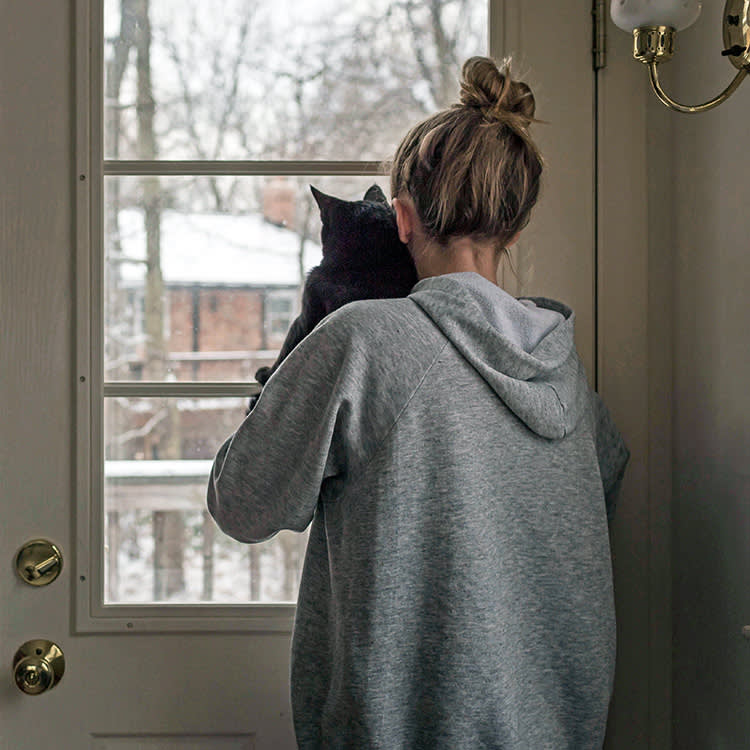
Here is the trap almost every cat owner falls into: you decide whether it is cold out by how cold you feel, then apply that verdict to your cat. The problem is that your cat is not running your body’s math. A cat sits at a higher baseline temperature than you do, wears a coat that varies wildly from one animal to the next, and copes with cold through variables you cannot feel on your own skin. So the honest answer to “how cold can my cat handle” starts by throwing out your own thermostat and learning theirs.
Your cat’s thermostat runs hotter than yours
Cats are warm-blooded, which means they have to hold a steady internal temperature no matter what the weather does, the way you do and a lizard does not. That baseline sits around 100 to 102 degrees Fahrenheit, roughly two degrees above a human’s 98. It is a small-sounding gap with a big consequence: a room that feels perfectly comfortable to you can already read as slightly chilly to your cat, which is exactly why your cat burrows under the blanket before you reach for it.
The number that actually matters: 45 degrees
Plenty of factors move the line, but if you need a single figure to hang a decision on, make it 45 degrees Fahrenheit. Once the outdoor temperature drops to that point, a mostly indoor cat should stay inside, and a cat that lives outdoors needs a genuinely insulated shelter to get through it. For indoor-only cats, keep the house above 50 degrees at a minimum, though most cats will be visibly happier somewhere between 70 and 80.
The catch is that a thermometer lies to you in wind and rain. Both drag the felt temperature well below the number on the display, so 45 on a still, dry day is a very different thing from 45 in a cold drizzle with a stiff breeze. Which is why the number is a starting point, not the whole answer.
Read the cat, not the thermometer
The most reliable gauge of whether your cat is too cold is the cat itself, and the signs are quieter than cartoons led you to believe. No chattering teeth and blue nose. Instead, watch for:
- Shivering
- Curling into a tight, compact ball
- Reluctance to move around
- Actively seeking out warm spots
- Ears or paws that feel cold to the touch
Spot any of these and it is time to warm your cat up, regardless of what the forecast claims the temperature is.
Who feels the cold first
The 45-degree line bends depending on the individual cat, and a few variables do most of the bending:
- Coat. The thicker and longer the fur, the better the insulation. A dense double coat buys real cold tolerance; a thin or hairless one buys almost none.
- Health. Conditions like heart disease, diabetes, and kidney disease make it harder for a cat to regulate temperature, so those cats will want things warmer than a healthy cat would.
- Body condition and activity. More active cats generate more of their own heat, and a bit of body fat provides insulation, so both raise cold tolerance.
- Acclimation. A cat that spends real time outdoors adjusts to lower temperatures far better than a cat that has only ever known a heated living room.
These same variables apply to dogs, so in a multi-species household the reasoning carries across the board.
People fixate on the outdoor number, but the cat that worries me most is the thin, older, or sick one that gets chilly inside a house someone keeps a little cool to save on heat. Watch the individual animal. A senior cat with kidney disease has a completely different cold tolerance than a young, chunky, double-coated one.
How a cat heats itself
You probably know your cat’s cooling tricks, the panting, the shade-seeking, the stretching out on cool tile. The heating system is the mirror image. To warm up, a cat shivers, generating heat through rapid muscle movement. It curls into a tight ball to shield its legs and tail and shrink the surface area losing heat. It fluffs its fur into a puffball to trap a layer of warm air against the skin. The blood vessels near its skin narrow to keep heat from escaping. And, sensibly, it goes looking for the warmest spot it can find. All of that works, but it has limits, which is where you come in.
How to help your cat stay warm
You have more influence over your cat’s comfort than its own biology does. Three things matter most:
- Shelter. Indoors, that means a cozy bed in a warm part of the house, ideally near a safe heat source. Outdoors, it means an enclosed structure that blocks wind and precipitation, insulated or fitted with a safe heat source when it is truly cold, and lined with warm bedding.
- Unfrozen water. Indoor and outdoor cats alike need steady access to fresh water, because hydration is part of how they hold their body temperature. In freezing weather an outdoor cat needs a heated bowl or frequent refills so the water does not turn to ice.
- Extra calories. Staying warm burns energy, so a cat spending time in the cold may need more food to keep both weight and body heat up. A calorie-dense option like kitten food can help an outdoor cat meet that demand.
The cats built for winter
Some cats simply handle the cold better, usually because they carry a thick coat or descend from breeds developed in cold places. The usual standouts are the Maine Coon, the Norwegian Forest Cat, the Russian Blue, the Turkish Angora, and the Scottish Fold. Just do not let a thick coat lull you into complacency. A cold-hardy breed is not a cold-proof one, and none of these cats should be assumed fine and left outside without shelter.
How strays make it through
Community and stray cats are survivors who piece together food, water, and shelter on their own, but winter is hard on them without a human keeping watch. They tuck into vacant buildings and under porches to escape wind and weather, huddle together to pool body heat, and move less to conserve energy. Most try to build up a fat layer for insulation and fuel. One of those survival instincts can turn deadly in a driveway: cats seek out the lingering warmth of a recently parked car and climb into the engine bay, so knock on the hood and check underneath before you start the car on a cold morning.
When cold becomes an emergency
Below 45 degrees, factor in wind chill and stop trusting the thermometer alone. Judge by your cat’s reaction: shivering or tight curling means cold, and cold means it is time to bring your cat in or into a proper shelter. As temperatures approach freezing, water becomes a second problem alongside warmth, so a heated dish or regular refills and a snug, out-of-the-wind shelter both matter more.
The real danger is prolonged exposure without help, which can lead to hypothermia or frostbite. Hypothermia sets in as the body’s core temperature falls below its normal range, bringing lethargy, weakness, and shivering that may eventually stop as things worsen, a bad sign, not a good one. Frostbite tends to strike the extremities first, the ear tips, tail, and paws, where tissue can be damaged by the cold. Both are genuine emergencies that warrant a vet visit rather than a wait-and-see at home.
The bottom line
Cats are comfort-seekers who do not enjoy the cold and will tell you so by burrowing and seeking heat. Give an outdoor cat a wind- and rain-proof shelter and water that will not freeze, and when the temperature dips below 45 degrees, keep your cat in or cut its outdoor time short. Above all, stop outsourcing the decision to your own sense of cold and start reading the animal in front of you.
What’s new since this was written
The framing of cold-weather cat care has shifted a little in recent guidance from veterinary groups: the emphasis now is less on a single magic number and more on the combination of temperature, wind, moisture, and the individual cat, which is exactly why “read the cat” beats “read the thermometer.” Cold-weather advisories from veterinary organizations also increasingly group the engine-bay warning in with the core safety tips, a reminder that the most common winter injuries to outdoor and community cats are often preventable with a knock on the hood and a dry, insulated shelter.
References
- American Veterinary Medical Association. “Cold Weather Animal Safety.” AVMA, avma.org/resources-tools/pet-owners/petcare/cold-weather-animal-safety.
- Cornell Feline Health Center. “Keeping Cats Safe in Cold Weather.” Cornell University College of Veterinary Medicine, vet.cornell.edu/departments-centers-and-institutes/cornell-feline-health-center.
Common questions
How can I tell if my cat is cold?
Look for shivering, curling into a tight ball, reluctance to move, seeking out warm spots, and ears or paws that feel cold to the touch. Cats do not always show it obviously, so these subtle signs matter.
Which cat breeds handle cold best?
Thick-coated breeds developed in cold climates tend to cope better, including the Maine Coon, Norwegian Forest Cat, Russian Blue, Turkish Angora, and Scottish Fold. Even so, no cat should be assumed cold-proof and left outside.
Not a substitute for your vet. Our guidance is educational. For urgent symptoms, contact a vet or emergency clinic right away. Editorial standards
Dr. Kohl is a board-certified veterinary dentist with a particular interest in preventive oral care. She reviews all dental health content at The Pet Times and contributes practical guides on home dental routines, professional cleaning, and oral disease prevention.
Meet our experts ↗Keep reading
 Health & WellnessCats Don't Always Land on Their Feet. Scientists Just Found the Part That Does the WorkDr. Priya Nair · 6 min
 Health & WellnessBringing an Outdoor Cat Inside Isn't Cruel. Doing It All at Once Is.Dr. Nina Kohl · 8 min
 Health & WellnessHalloween Is Your Cat's Least Favorite Night. Six Ways to Fix That.Dr. Lena Park · 5 min
 LivingThe Best Thing in Your Cat's Life Is Also the Most DangerousDr. Priya Nair · 8 min
 TrainingThat 'Come Here' Cat Video Works. Your Own Voice Works Better.Dr. Lena Park · 7 min
 LivingYour Party's Biggest Risk Isn't the Cat Getting Scared. It's the Front Door.Dr. Amara Solis · 7 min