


Dogs Detect Cancer With 90% Accuracy. So Why Isn't One in Your Vet's Office?
The question isn't whether dogs can smell cancer. They can, with startling accuracy. The real story is why a nose that good still isn't in your clinic, and what the newest research is doing to close that gap.

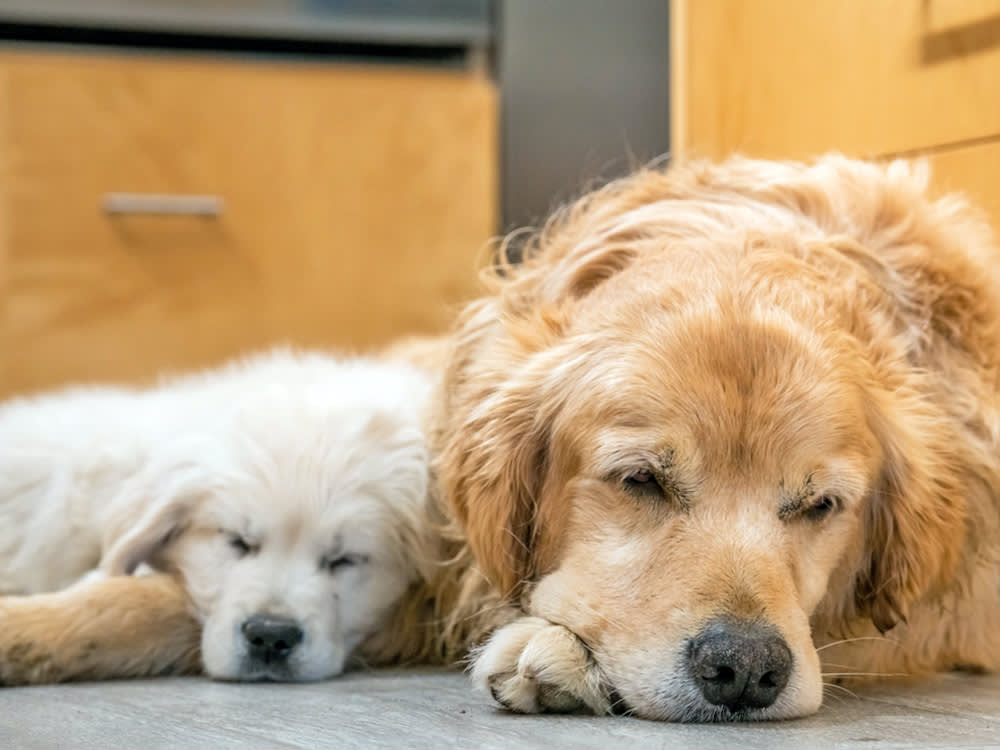
The stories are everywhere, and they are hard to shake. A family dog grows distant from someone who, weeks later, gets a diagnosis. A puppy won’t stop licking one spot on an older dog’s shoulder until the family feels around and finds a hard little lump that turns out to be a tumor. The online version always ends the same way: if your dog won’t leave one part of you alone, don’t ignore it.
It would be easy to write a whole article debunking or celebrating those anecdotes. But that misses the genuinely interesting question. Because the science is not actually in doubt: trained dogs can detect cancer by smell, and they can do it with an accuracy that would make many lab tests jealous. The real puzzle, the one worth 2,000 words, is this: if a dog’s nose is that good, why isn’t there a detection dog working in your vet’s office or your doctor’s clinic? The answer to that tells you far more about how medicine actually works than any tearjerker story.
The accuracy is real, and it is remarkable
Start with what is settled. Trained sniffer dogs have detected lung, ovarian, prostate, and other cancers in study after study. The mechanism is understood in broad strokes: tumors, or the body reacting to them, release volatile organic compounds, essentially altered chemical signatures, and a dog’s nose locks onto the difference between that scent and healthy tissue. Human breath alone contains more than 1,400 distinct volatile compounds; a dog is reading that chemical library in a way our instruments still struggle to match.
The single most striking demonstration in dogs-detecting-dogs came from the University of Wisconsin. Researchers trained pet dogs over six months, then tested them on saliva swabbed from the cheeks of dogs with cancers in various parts of the body, against samples from healthy controls. The trained dogs sorted sick from healthy with an average sensitivity of 90 percent (they caught the cancer nine times out of ten) and a specificity of 98 percent (they almost never flagged a healthy dog by mistake). Those are numbers a diagnostic company would be thrilled with.
So capability is not the bottleneck. Something else is.
Why your untrained dog is a different story
Before we get to the bottleneck, one honest caveat that the accuracy numbers hide. A dog trained in a lab, rewarded thousands of times for marking one specific scent, is a completely different instrument from your pet sniffing your arm on the couch.
To see why, appreciate how much a dog reads from the world. Walk one into a bedroom and let it concentrate and it is taking in the drawers, the clothes inside, who last touched the handle, the lamp and what its shade is made of, the footprints on the floor. Your dog smells your perfume and your blemishes with equal ease. Cancer, to that nose, is one scent in an ocean of scents. So when your dog fixates on a spot, there is no way to know whether it found a tumor or a tick, a scratch, an old wound, or something it rolled in. The lab dog has been trained to ignore all of that and mark only the target. Your pet has not.
When a pet dog seems to find a cancer once, it isn’t magic and it isn’t nothing. The dog genuinely noticed a change in body chemistry, the same way it would notice a cut and want to lick it. But noticing something once is not the same as reliably finding it on command. Both of those things are true, and confusing them is where people go wrong.
There is a real cost to that confusion. Over the years, people have walked pet dogs into public places claiming to have a “cancer-sniffing dog” after a single lucky detection, and that overreach made the legitimate science harder to take seriously. The irony is that the whole field began with exactly these anecdotes. Ordinary dogs noticing their owners’ illness were the spark. The work since has been about turning that spark into something measurable and repeatable, which is precisely the thing your pet on the couch is not.
The real bottleneck: dogs aren’t standardized, and medicine demands it
Here is the crux. The obstacle to putting cancer-detection dogs into clinics is not that dogs aren’t accurate enough. It is that dogs are not machines, and medicine runs on standardization.
Consider what deployment would actually require:
- False positives carry enormous weight. A wrong cancer flag is devastating financially, legally, and emotionally, which means a screening tool has to be not just accurate but consistently accurate, sample after sample, dog after dog.
- Dogs vary. Different breeds work differently, with different accuracy and different stamina. One dog’s great day is another dog’s off day.
- Dogs are living beings. They need rest, breaks, motivation, and a life outside the work. You cannot run one twenty-four hours a day or ship it overnight.
- Training is expensive and slow. Producing one reliable detection dog takes months of skilled, reward-based work.
Regulators and clinicians need a test that behaves the same way every time, everywhere. A dog, magnificent as its nose is, does not offer that guarantee. And crucially, nobody serious is trying to replace scans, blood panels, and biopsies with a Labrador. The goal was always narrower and smarter: add the dog’s nose as one more sensory channel. Doctors already detect tumors by sight on imaging, by sound in the chest, and by feel with their hands. Scent would be another lane, not a replacement highway.
What the newest research is doing about it
This is where the story gets genuinely current, because the field’s whole recent thrust is aimed straight at that standardization problem, in two directions.
Direction one: figure out the best raw material. A 2025 study in the European Respiratory Journal pitted breath against saliva for lung-cancer detection and found dogs were far more accurate from breath (about 78 percent) than from saliva (about 42 percent). That matters because it tells researchers which sample type to build a reliable protocol around, breath being especially rich, with those 1,400-plus volatile compounds to work with, though better handling could still make more convenient samples viable.
Direction two: pair the dog with a machine. Rather than choosing between a dog’s nose and lab instruments, newer platforms fuse them. A large 2025 multicenter study across six hospitals in India enrolled more than 3,000 participants and combined canine olfaction with Bayesian statistical modeling to screen for several cancer types at once, reporting roughly 91 percent sensitivity and specificity. Commercial bio-AI hybrid systems have posted similar figures across breast, lung, prostate, and colorectal cancers. The insight is elegant: the dog supplies a detection sensitivity that instruments can’t yet match, and the software supplies the consistency and auditability that a living animal can’t. Together they start to look like something a regulator could actually approve.
Where could this land? Two applications look most promising. One is monitoring remission, catching cancer’s return after treatment, potentially earlier than current tools. The other is early screening, a mail-in sample sent to a lab where trained dogs (backed by that software) return a positive or negative, in the spirit of existing at-home screening tests. We are not there yet. Researchers still need to pin down detection thresholds and understand how medications alter the scents dogs perceive. But the direction is clear, and it is the standardization problem, not the sensitivity problem, that is finally getting solved.
The reality check for worried owners
None of this means you should panic every time your dog sniffs your leg. Dogs can probably smell all kinds of conditions, including something like low blood sugar, but a curious sniff is not a diagnosis. The best detection dogs need extensive training precisely to focus their extraordinary noses on the one thing we want, and left to their own devices most of them would abandon the assignment for a dropped fry. Your pet’s curiosity is worth a glance, not a spiral.
The bottom line
Dogs can smell cancer, accurately and reliably, once trained. The reason that skill isn’t in your clinic has nothing to do with their noses and everything to do with the fact that medicine needs a standardized, repeatable test and a dog is a magnificent, variable, living animal. The most exciting research right now isn’t proving dogs can do it (that’s done) but pairing them with breath sampling and AI to make their accuracy dependable enough to sit beside the tools your doctor already trusts.
References
- Junqueira, H., et al. / University of Wisconsin. “Trained Dogs Can Accurately Discriminate Between Scents of Saliva Samples From Dogs With Cancer Versus Healthy Controls.” JAVMA, 2023. https://avmajournals.avma.org/view/journals/javma/261/11/javma.23.06.0357.xml.
- “The use of sniffer dogs for early detection of cancer: a One Health approach.” American Journal of Veterinary Research, 2024. https://avmajournals.avma.org/view/journals/ajvr/85/1/ajvr.23.10.0222.xml.
- “Breath versus saliva for lung cancer detection with dogs.” ERJ Open Research, 2025. https://publications.ersnet.org/content/erjor/11/5/00914-2024.
- “Canine Olfaction Combined With Bayesian Modeling for Multicancer Detection From Breath Samples: A Phase II Study in India.” Journal of Clinical Oncology, 2025. https://ascopubs.org/doi/10.1200/JCO-25-02310.
- Johns Hopkins Medicine. “Why Can Dogs Detect Prostate Cancer?” https://www.hopkinsmedicine.org/news/articles/2021/11/why-can-dogs-detect-prostate-cancer.
Not a substitute for your vet. Our guidance is educational. For urgent symptoms, contact a vet or emergency clinic right away. Editorial standards
Dr. Park is a board-certified emergency and critical care specialist. She reviews our health and safety content for clinical accuracy and contributes guides on recognising urgent conditions. Her focus is helping owners act quickly and correctly when it matters most.
Meet our experts ↗Keep reading
 Health & WellnessYes, Dogs Get Headaches. The Real Question Is Which Ones Are EmergenciesDr. Amara Solis · 7 min
 Training8 Disgusting Things Your Dog Does. Only 3 Are Worth Worrying About.Dr. Ravi Mehta · 9 min
 Health & WellnessYour Dog Is Limping. Here's the 48-Hour Rule.Dr. Priya Nair · 8 min
 Health & WellnessYour Dog's Scooting Isn't Funny. It's a Message From the Other End.Dr. Mara Chen · 7 min
 Health & WellnessReaching for Dramamine for Your Carsick Dog? Read This FirstDr. Amara Solis · 6 min
 Health & WellnessOne Flea Bite Can Wreck an Allergic Dog. The Count Never Mattered.Dr. Priya Nair · 9 min