


Your Dog's Scooting Isn't Funny. It's a Message From the Other End.
Anal glands are the unglamorous body part every dog owner eventually has to think about. Here's what they do, why some dogs have constant trouble with them, the breeds most at risk, and the warning signs that mean a vet visit, not a groomer.

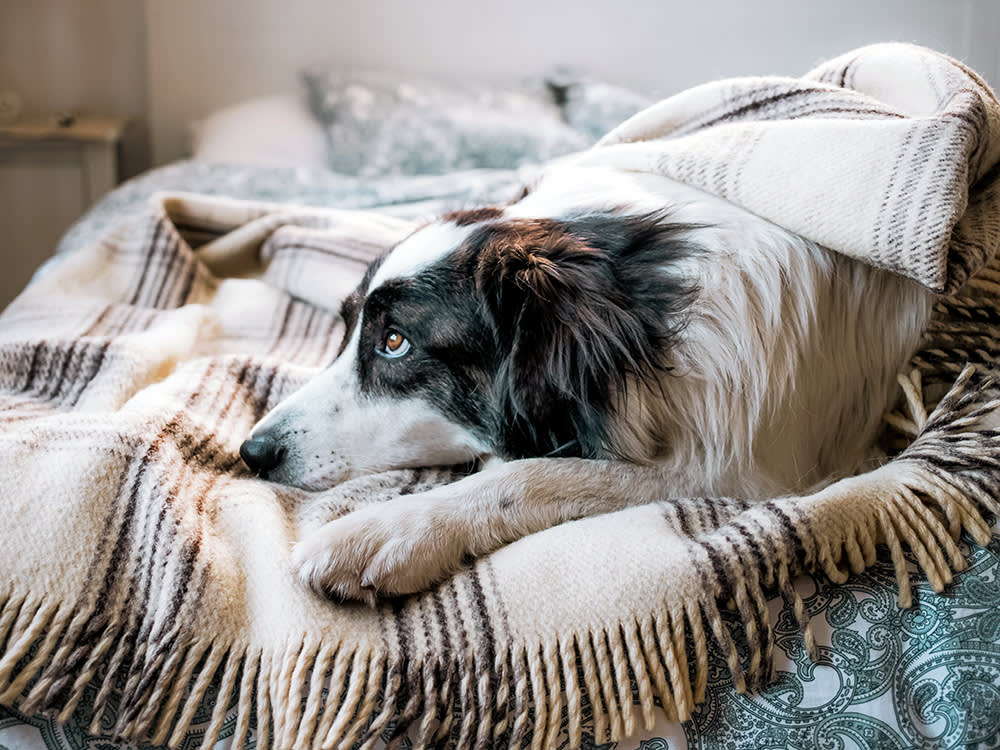
Nobody adopts a dog imagining the day they will be Googling “anal glands.” And yet here we are, because sooner or later most dog owners meet these little pouches, usually when their dog starts dragging their rear across the living room rug at an inopportune moment.
It is easy to treat scooting as a punchline. It is better to treat it as information. Those glands exist for a reason, they cause trouble in fairly predictable ways, and the difference between a minor annoyance and a painful, infected mess often comes down to whether an owner recognized the early signs. So let’s give the least glamorous part of your dog the attention it actually deserves.
What anal glands are and what they’re for
Anal glands, also called anal sacs, are two small pouches just inside your dog’s anus, one on each side. They hold a secretion loaded with pheromones, a personal scent signature that carries information other dogs can read: identity, social standing, and more. That is the real reason dogs are so interested in each other’s rear ends. Every sniff is a scent ID check.
Normally, the sacs empty on their own. When your dog has a bowel movement, the pressure and muscular contractions squeeze a little of that fluid out along with the stool. In a healthy dog, this happens automatically and you never think about it.
When the system backs up
The trouble starts when the glands stop emptying properly. If a sac gets clogged, or “impacted,” the fluid builds up with nowhere to go. Left alone, an impacted gland can distend, get infected, form an abscess, become painful, and in the worst case rupture. This is the cascade that turns a minor plumbing issue into a genuine medical problem, and it is why catching it early matters so much.
The signs your dog is trying to show you
Any change in your dog’s normal behavior can be a sign of discomfort, and inflamed or impacted anal glands are usually painful. The signals tend to cluster.
The most recognizable is scooting, dragging the rear end along the ground, which is your dog trying to relieve pressure or itch. Alongside it you may see excessive licking of the anus or the base of the tail, and a foul, metallic odor coming from the back end when the glands are overfull. During a bowel movement, a dog with sore glands may whine or vocalize, or become reluctant to poop at all.
Pain also shows up as broader behavior change. A dog with an infected or inflamed gland may not want to go on walks, may eat less or seem low-energy, and may react, flinch, snap, or pull away, if you touch near the tail or rear. Bloody or pus-like discharge from around the anus is a clear red flag. Any of these, especially scooting plus licking plus odor together, is worth a vet visit, because these problems are painful and much easier to treat when caught early.
Why some dogs have chronic trouble and others never do
Vets do not have a single tidy explanation for why certain dogs struggle with their anal glands, but a few contributing factors come up repeatedly.
Diet is one. A diet low in fiber can produce soft, loose stools, and soft stool does not create the firm pressure needed to empty the sacs during a bowel movement. For dogs with recurring issues, a fiber supplement is a common recommendation, precisely because bulkier stool helps the glands express naturally.
Genetics and breed play a role too, some dogs are simply predisposed. And body condition matters: obesity and lack of exercise are linked to anal gland problems, because regular movement supports gut motility and normal, well-formed bowel movements. Vets who see a dog needing frequent manual expression will often ask, first, whether that dog is getting enough exercise.
When a dog keeps having anal gland flare-ups, I try to look upstream instead of just emptying the sacs on repeat. Firming up the stool with fiber and getting more consistent exercise fixes the underlying mechanics for a lot of these dogs. Regular expression treats the symptom, but the goal is a dog whose glands empty on their own the way they’re supposed to.
The treatment options, from routine to surgical
When glands do need help, there is a ladder of options.
Manual expression is the first line, ideally done at the first signs of scooting. A dog who cannot empty their glands well may need this every three to four weeks, though it varies by dog. It is best done by a veterinary professional, particularly if your dog is in pain, so that injury is avoided and safe pain relief can be given if needed. Some groomers are trained to express glands as a preventive routine, but only for dogs who tolerate handling well.
Diet and lifestyle changes come alongside expression for any dog needing frequent help: a fiber supplement plus regular exercise to regulate the gut and encourage normal, gland-emptying bowel movements.
Surgery is the last resort. For dogs with recurrent infections or abscesses, a vet may eventually discuss removing the anal glands. This is a specialized procedure, usually performed by a board-certified veterinary surgeon because of the risk of serious, sometimes irreversible complications, including loss of bowel control. It is not done routinely and only after careful discussion.
Prevention beats treatment
Once a dog has had anal gland problems, prevention becomes the priority, most often through regular expressions at the vet’s office every three to six weeks, with the exact cadence set by how full the sacs are at each visit and whether symptoms are appearing at home.
For a dog who has never had trouble, the best prevention is boring in the best way: a balanced, veterinary-formulated diet with adequate fiber, and regular exercise, including one to two good walks a day. Firm stool and a moving gut do most of the work on their own.
What newer research adds
A large UK study using the VetCompass database put real numbers to what vets long suspected, that some breeds are far more prone to anal gland disorders than others. Looking at more than 100,000 dogs, researchers found anal sac disorders affected about 4.4 percent of dogs overall, but the risk was heavily skewed by breed.
Several breeds carried a much higher risk than crossbred dogs, led by Cavalier King Charles Spaniels and King Charles Spaniels (both around three times the risk), followed by Cockapoos, Shih Tzus, Bichon Frises, and Cocker Spaniels. On the other end, several breeds had notably lower risk, including Boxers, German Shepherds, Staffordshire Bull Terriers, Border Collies, and Labrador Retrievers. The study also linked flatter-faced (brachycephalic) conformation to higher risk, with a breed like the Shih Tzu carrying well over twice the risk of a long-skulled breed like the Border Collie.
The practical message: if you own one of the higher-risk breeds, do not be surprised by recurring anal gland issues, and lean early into the fiber-and-exercise prevention plus a regular check schedule with your vet, rather than waiting for the next painful flare.
References
- Collins, B. “Anal Sac Diseases.” Cornell University College of Veterinary Medicine.
- O’Neill, D.G., et al. “Non-neoplastic anal sac disorders in UK dogs: Epidemiology and management aspects of a research-neglected syndrome.” Veterinary Record, 2021.
- RVC VetCompass: Ground-breaking research explores prevalence of anal sac disorders in dogs.
Common questions
Can I express my dog's anal glands myself?
In some cases your vet can teach you, but it is best done by a veterinary professional, especially if your dog is in pain. Done wrong it can cause injury, and a dog who is already sore may need safe pain relief first. Never force it.
What causes recurring anal gland problems in dogs?
The exact cause is not always clear, but low-fiber diets and loose stools, breed and genetic predisposition, and obesity or lack of exercise are all thought to contribute. Some breeds are simply at much higher risk than others.
Not a substitute for your vet. Our guidance is educational. For urgent symptoms, contact a vet or emergency clinic right away. Editorial standards
Dr. Chen is a small-animal veterinarian who leads health and safety coverage at The Pet Times. She writes and reviews the bulk of our illness, condition, and safety content, translating clinical guidance into clear, practical advice owners can act on at home.
Meet our experts ↗Keep reading
 Health & WellnessA Warm, Dry Nose Tells You Nothing. Here's How to Actually Know Your Dog Has a Fever.Dr. Priya Nair · 6 min
 Health & WellnessBone Cancer in Big Dogs: Don't Wait Out the LimpDr. Mara Chen · 7 min
 Health & WellnessThe 'Mystery Dog Illness' Wasn't a Mystery. Here Are 8 Ways to Keep Your Dog Out of It.Dr. Mara Chen · 7 min
 Health & WellnessThe Distemper Shot Has Side Effects. Reading the List Shouldn't Talk You Out of It.Dr. Ravi Mehta · 7 min
 Health & WellnessYour Monthly Chew Doesn't Kill Every Worm. Here's the Gap.Dr. Ravi Mehta · 9 min
 Health & WellnessMost Post-Water Coughs Are Nothing. Here's the Short List That Isn't.Dr. Priya Nair · 7 min