


Most Post-Water Coughs Are Nothing. Here's the Short List That Isn't.
Nearly every dog coughs after a big drink, and it's usually just plumbing. But a handful of causes are serious. Here's how to sort the harmless gulp-cough from the one that needs a vet.

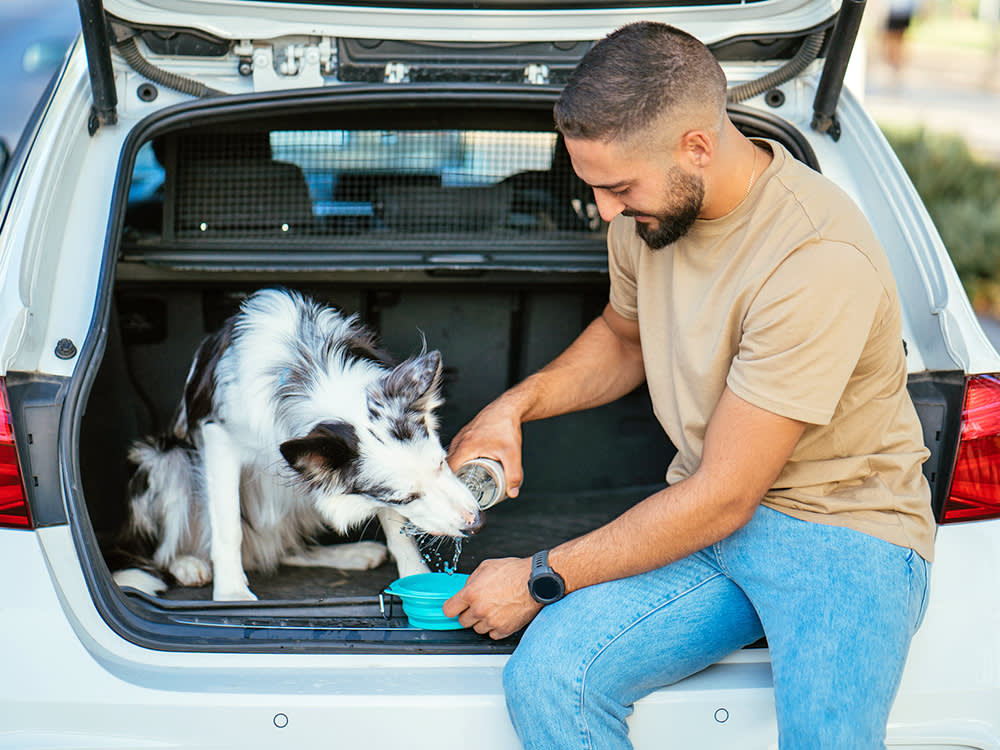
If you have lived with a dog for any length of time, you have heard it: a big, sloppy drink of water followed by a cough or two. It is so common that most owners stop noticing. And most of the time, they are right not to worry. The cough is usually just plumbing, the canine version of you coughing when a sip goes down the wrong pipe. The reason to understand it anyway is that a small number of causes behind a post-water cough are serious, and the whole skill is telling those apart from the everyday gulp-cough.
So let’s split this cleanly: the harmless version, then the short list that actually earns a vet visit.
The harmless version (which is most of them)
Your dog has two tubes running down the throat. The trachea, or windpipe, carries air to the lungs. The esophagus, right alongside it, carries food and water to the stomach. When a dog drinks too fast or at an awkward angle, a little water can slip toward the trachea instead of the esophagus, and the cough is simply the airway clearing and protecting itself. That is a reflex, not a disease. A quick cough after a gulp, from a dog who is otherwise bright, breathing normally, eating well, and acting like themselves, needs no treatment at all.
A close cousin is the reverse sneeze — a startling snorting, honking inhale that people often mistake for coughing or choking. It usually comes from irritation in the soft palate or throat, drinking water can set it off, and it is almost always harmless. Alarming to hear, benign in fact. Only worth a vet’s attention if it becomes frequent.
If your dog’s post-water cough looks like either of these and nothing else is off, you can relax.
The short list that isn’t harmless
The cough becomes a real signal when it is frequent, worsening, or traveling with other symptoms. Here are the causes worth knowing, roughly grouped by system.
Airway structure problems. A collapsing trachea — where the cartilage rings supporting the windpipe weaken and the tube flattens — is a common cause of coughing, especially in small breeds, and drinking can aggravate it. Contributing factors include genetics, age, obesity, and chronic respiratory issues. It often produces a distinctive “goose honk” cough. Management ranges from weight control and anti-inflammatory medication to surgery in severe cases.
Infections and inflammation. Respiratory infections like kennel cough and pneumonia can cause coughing after drinking, usually alongside lethargy, fever, or nasal discharge. Bronchitis — inflammation of the airways — can come from infections, allergens, irritants like smoke, lungworm parasites, or chronic underlying disease. Any cough that comes with those extra symptoms is a vet visit.
Aspiration pneumonia. If a dog has trouble swallowing for any reason, water can go down into the lungs and cause aspiration pneumonia, which is serious and can worsen fast. Signs include persistent coughing, labored breathing, and lethargy. This one is an emergency.
A foreign body. Dogs eat things they shouldn’t, and an object stuck in the throat or esophagus can turn a drink of water into a coughing fit, often with difficulty swallowing, pawing at the mouth, and gagging. Also an emergency.
Allergies. Food or environmental allergies can irritate the throat, and an already-irritated throat coughs more when water hits it. Usually manageable, often with your vet’s help identifying the trigger.
Heart and vessel disease. This is the category people least expect and most need to know. Congestive heart failure can cause fluid to back up into the lungs, producing a cough that drinking can worsen, often with labored breathing, fatigue, and sometimes a swollen abdomen; a heart murmur is frequently the first clue a vet catches. Heartworm disease, which damages the heart and lungs, can also cause coughing, particularly after drinking or exercise — and it is largely preventable with year-round medication.
Cancer. Less common, but tumors in the respiratory or digestive tract can cause irritation or obstruction that triggers coughing after drinking. Red flags include coughing up blood, weight loss, and difficulty breathing. This needs immediate attention.
The one question that sorts it
Before you panic or dismiss, ask: is anything else wrong? A single cough after a fast drink, from a dog who is otherwise completely normal, is almost always fine.
The gulp-and-cough on its own almost never worries me. What I want owners watching for is company. A cough that shows up alongside tiredness, faster breathing, a poor appetite, or a drop in stamina is a different animal, and that’s the one I want to see, not wait on. A cough that persists or worsens, or that shows up with lethargy, poor appetite, labored or fast breathing, blood, weight loss, or exercise intolerance, is your cue to see a vet. A genuinely useful trick: film an episode on your phone and note when and how often it happens. A ten-second video tells your vet more than a paragraph of description, and it means they see the cough even if your dog stubbornly refuses to perform in the exam room.
What a vet does, and what helps at home
If a cough warrants a workup, the vet reaches for imaging first, then bloodwork, and occasionally a camera down the throat. Treatment follows the cause: antibiotics for infection, anti-inflammatories for bronchitis, surgery for something like a tumor or severe tracheal collapse.
For a mild, infrequent cough in an otherwise healthy dog, a few gentle home measures can soothe things while you keep an eye out. Keep fresh water available at all times, since good hydration actually reduces throat irritation. A humidifier in the room your dog spends time in helps, as does plenty of rest and avoiding irritants like smoke and strong fragrances. With your vet’s okay, a small amount of honey can be genuinely soothing for an irritated throat. And if your dog is a gulper, a slow-drinker water bowl can cut down on the whole problem by keeping them from inhaling half the bowl at once.
Preventing the coughs you can
Some of the serious causes are preventable, which is where routine care pays off. Regular check-ups let your vet catch things like a heart murmur early, when it matters most, and keep your dog current on vaccines that prevent some respiratory infections and on parasite prevention that keeps heartworm and lungworm away. Keeping your dog at a healthy weight reduces strain on the airway and heart, lowering the risk of tracheal collapse and heart-related coughing. And minimizing exposure to dust, pollen, smoke, and household chemicals helps allergy-prone dogs breathe easier.
The bottom line
A cough after a drink of water is usually your dog’s plumbing working exactly as designed. Treat the isolated, otherwise-healthy gulp-cough as the non-event it almost always is. Save your worry for the cough that lingers, worsens, or brings friends along — and when it does, get it looked at rather than guessing, because the serious causes on this list reward early attention.
References
- Hsieh, Brisa M., and Alicia K. Beets. “Coughing in Small Animal Patients.” Frontiers in Veterinary Science, vol. 6, 21 Jan. 2020. https://www.ncbi.nlm.nih.gov/pmc/articles/PMC6985277/
- Johnson, Lynelle R. “Laryngeal Structure and Function in Dogs with Cough.” Journal of the American Veterinary Medical Association, vol. 249, no. 2, 15 July 2016, pp. 195–201. https://doi.org/10.2460/javma.249.2.195
- “Tracheal Collapse in Dogs.” American College of Veterinary Surgeons, Animal Health Topics. https://www.acvs.org/small-animal/tracheal-collapse/
Not a substitute for your vet. Our guidance is educational. For urgent symptoms, contact a vet or emergency clinic right away. Editorial standards
Dr. Nair is a veterinarian focused on diet and feeding. She covers everyday nutrition, treats, and the many "can they eat this?" questions owners ask, grounding each answer in what is actually safe and sensible for dogs and cats.
Meet our experts ↗Keep reading
 Health & WellnessYes, Dogs Get STDs. No, They Don't Have to Mate to Catch Them.Dr. Mara Chen · 8 min
 Health & WellnessThe Color of Your Dog's Eye Goop Is a Triage MapDr. Amara Solis · 6 min
 Health & WellnessThere's a Number for 'Drinking Too Much.' Most Dog Owners Don't Know It.Dr. Lena Park · 8 min
 Health & WellnessThe 'Miracle' Antibiotic for the Mystery Dog Illness Isn't a Cure. It's a Last Resort.Dr. Lena Park · 6 min
 Health & WellnessYour Straining Dog Might Not Be Constipated at AllDr. Lena Park · 6 min
 Health & WellnessYour Dog Can't Have Down Syndrome. What You're Seeing Is Still Real.Dr. Amara Solis · 8 min