


Yes, Dogs Get Headaches. The Real Question Is Which Ones Are Emergencies
Dogs probably do get headaches, even migraines. But 'headache' in a dog can also be the only outward sign of glaucoma, a condition that can destroy sight in a day. Here's how to tell ordinary from urgent.

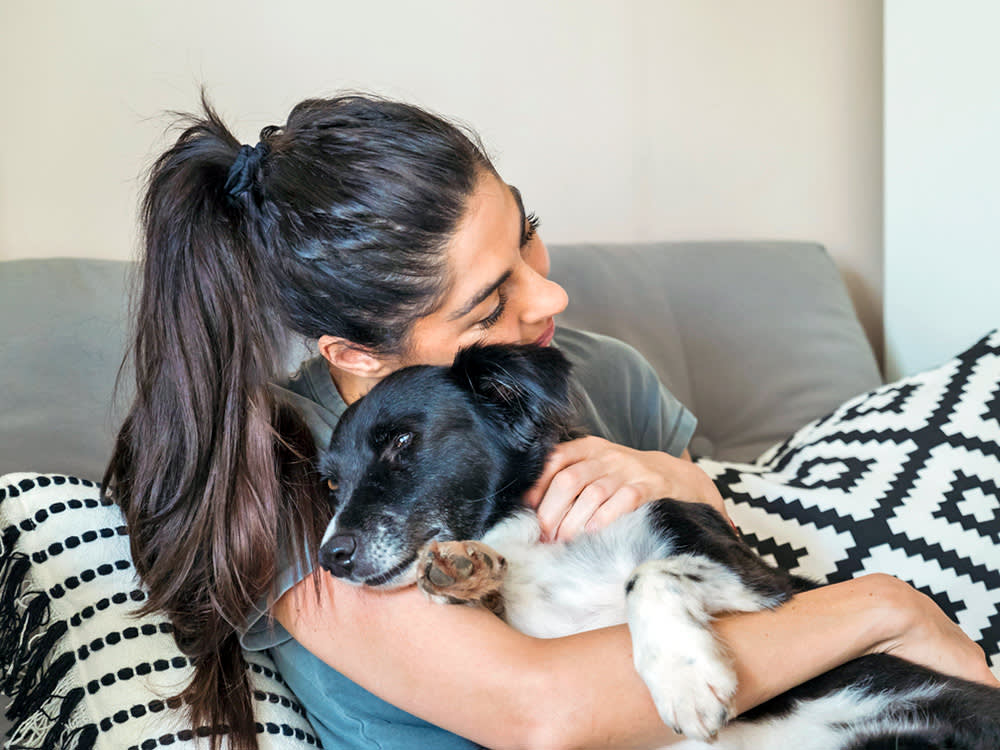
Yes, dogs almost certainly get headaches. The research is thin, but the evidence points that way, and most of the time a dog’s headache is exactly what it sounds like: uncomfortable, temporary, and not dangerous. If the article stopped there, it would be true and nearly useless, because the question that actually protects your dog isn’t “can dogs get headaches.” It’s “is this headache the kind that resolves on its own, or the kind that’s a symptom of something that can blind or seriously hurt my dog by tomorrow?”
That’s the frame worth carrying. A dog can’t tell you “throbbing, left side, worse in light,” so you’re left reading behavior, and the same vague signs can mean a passing ache or a genuine emergency. So we’ll cover what a canine headache looks like, but the heart of this is the sorting: ordinary versus urgent.
What we actually know about dog headaches
The honest starting point is that this is understudied. The most-cited evidence is a 2013 case report of a five-year-old Cocker Spaniel with what researchers concluded were recurring migraines. Her episodes began as hiding under furniture and withdrawing, then progressed to vocalizing, nausea, refusing food and water, and holding her head low, and they escalated from once or twice a year to once or twice a month. A single case isn’t proof that headaches are common, but it’s solid evidence they’re real.
It also fits what we’d expect biologically. Dogs have the same pain-sensing apparatus around the head, eyes, and sinuses that we do, so the machinery for a headache is all there. People get tension, cluster, and migraine headaches from a range of triggers, stress, dehydration, sinus pressure, and dogs can plausibly experience pain from a similar list: stress, dehydration, sinus infections, certain medications, and more serious causes too.
Reading the signs, since your dog can’t narrate them
Headache signs in a dog are frustratingly nonspecific, which is exactly why they need careful watching rather than guessing. Look for clusters of these:
- Withdrawal and lethargy. Reluctance to play, more napping than usual, and gravitating to a dark, quiet corner or under furniture, the canine version of “lie down in a dark room.”
- Head-focused behavior. A low-hanging head, pressing the head against walls or furniture, or pawing and rubbing at the head or face.
- Light and noise sensitivity. Flinching from bright light or loud sound that didn’t used to bother them.
- Appetite and nausea. Loss of interest in food and water, sometimes with signs of queasiness.
- Pain responses. Whimpering, shaking, or pulling away from a pat to the head or neck.
A single off afternoon with a couple of these usually isn’t alarming, and a one-off headache should pass on its own much like ours does. The reason to pay attention is that “head pressing” in particular, deliberately pushing the head into a wall and holding it there, is never normal and can signal a serious neurological problem. That moves us straight into the part that matters most.
The sorting that actually matters: ordinary vs. urgent
Most of the things that give a dog a headache are mild. A few are emergencies wearing a headache’s clothing. Here’s how to tell them apart.
The probably-ordinary causes
These tend to be self-limiting and respond to comfort and time:
- Environmental triggers like loud noise, harsh light, or overwhelming smells, the same things that give people a tension headache.
- Mild sinus or allergy pressure, which often comes and goes with the season or exposure.
- Stress, which is a bit chicken-and-egg, dogs show stress signs when their head hurts, and stress can also drive the ache.
For these, the response is supportive: move your dog to a calm, dim, quiet space away from the trigger and let them settle. If they’re comfortable within a couple of hours, you’re likely in ordinary territory, though a recurring pattern still earns a vet conversation to rule out an underlying cause.
The urgent causes, and the one to memorize
Some conditions produce headache-like pain and demand fast action. The standout, the one every dog owner should know by name, is glaucoma.
Glaucoma is a buildup of pressure inside the eye, and the pain it causes is frequently compared to a severe migraine, dogs have similar pain receptors in the eye. Here’s why it belongs at the top of the list: untreated, glaucoma can permanently destroy vision in less than 24 hours. This is not a “watch it for a few days” condition. It’s a same-day emergency.
The tell is that the headache comes with eye signs. Watch for squinting or holding one eye shut, pawing or rubbing at one eye specifically, rubbing the head along the floor or furniture, and an eye that looks red, cloudy, bulging, or simply “off.” A dog who is withdrawn and head-shy and fussing with one eye is showing you a possible glaucoma emergency. Get to a vet or emergency clinic immediately.
Other serious causes that can present as headache-like pain include brain tumors, head trauma and concussion, severe sinus or ear infections, and reactions to certain medications. The thread connecting all of them: sudden, severe, or recurring head pain, especially paired with neurological signs (head pressing, circling, disorientation, seizures, collapse, or vision trouble) is a reason to be seen quickly, not to wait it out.
What you can and absolutely cannot do at home
For a mild, apparent headache with no red flags, comfort is the whole job: a dim, quiet, calm space, away from known triggers, and a little time.
The hard line is medication. Never reach for the human medicine cabinet. Ibuprofen, aspirin, acetaminophen, and other common over-the-counter pain relievers are toxic to dogs at doses people consider trivial, and they can cause stomach ulcers, kidney failure, or worse. If your dog seems to be in real pain, the move is to call your vet, who has access to genuinely safe, effective options, not to estimate a dose of yours.
When to see a vet, and how fast
Use this as your trigger list:
- Same day / emergency: any eye involvement (squinting, redness, cloudiness, bulging, pawing at one eye), head pressing, circling, disorientation, seizures, collapse, or signs after a blow to the head.
- Soon, schedule a visit: a recurring pattern of headache-like episodes, escalating frequency, or signs that keep returning over days.
- Monitor at home first: a single, mild, self-resolving episode with no eye or neurological signs and a comfortable dog within a couple of hours.
Because a plain headache is so hard to diagnose directly, your vet works by ruling things out, a physical and neurological exam first, then potentially blood work or imaging like an MRI to exclude the serious causes. That process is the point: the goal isn’t to confirm “just a headache,” it’s to make sure it isn’t one of the conditions that can’t wait.
What newer research adds
Veterinary ophthalmologists have grown increasingly vocal that glaucoma is both underrecognized by owners and brutally time-sensitive, with the window to save vision sometimes measured in hours, not days. Newer emergency-care guidance emphasizes treating acute glaucoma as a true ophthalmic emergency on par with any other, precisely because the pain is migraine-grade and the damage is fast and irreversible.
The practical takeaway sharpens the whole article: if your dog seems to have a “headache” and is also messing with one eye, don’t file it under headache at all. Treat the eye as the emergency it may be, and let a vet sort out the rest.
References
- Plummer, Caroline E., et al. “Clinical Signs and Diagnosis of the Canine Primary Glaucomas.” Veterinary Ophthalmology, review of canine glaucoma presentation and urgency.
- Niessen, Stijn, et al. “Recurrent Migraine-Like Episodes in a Dog.” PubMed, 2013, pubmed.ncbi.nlm.nih.gov/24033420/.
- American College of Veterinary Ophthalmologists. “Glaucoma in Dogs.”
- ASPCA Animal Poison Control Center. “Over-the-Counter Medications and Pets.”
Common questions
What's the most urgent cause of headache-like signs in a dog?
Glaucoma. A sudden rise in eye pressure causes migraine-level pain and can permanently destroy vision in under 24 hours if untreated. A dog squinting, pawing at one eye, or with a red, cloudy, or bulging eye plus headache-like withdrawal is an emergency, see a vet immediately, not in a few days.
Can I give my dog a pain reliever for a headache?
No. Never give human over-the-counter pain medications like ibuprofen, aspirin, or acetaminophen, which are toxic to dogs at common doses. If your dog seems to be in pain, call your vet, who has far safer options.
Not a substitute for your vet. Our guidance is educational. For urgent symptoms, contact a vet or emergency clinic right away. Editorial standards
Dr. Solis is a board-certified veterinary dermatologist with over twelve years of clinical experience. She advises on skin conditions, allergies, and grooming practices that affect coat and skin health. All dermatology and allergy content at The Pet Times is reviewed by her team before publication.
Meet our experts ↗Keep reading
 Health & WellnessYour Dog Is Panting at 3 a.m. Here's How to Know If It's Nothing.Dr. Mara Chen · 7 min
 Health & WellnessVets Call It the '$1,000 Sock.' The Size of What Your Dog Swallowed Isn't the Real Danger.Dr. Priya Nair · 8 min
 Health & WellnessYour Dog Keeps Gagging but Nothing Comes Up. Don't Wait It Out.Dr. Lena Park · 8 min
 Health & Wellness"The Great Pretender": How Addison's Disease Hides in DogsDr. Ravi Mehta · 8 min
 Health & WellnessOne Raw Fish Can Kill a Dog in Two Weeks. Most Owners Have Never Heard of It.Dr. Ravi Mehta · 6 min
 Health & WellnessThe CBD-for-Seizures Pitch Is Way Ahead of the ScienceDr. Ravi Mehta · 7 min