


Reaching for Dramamine for Your Carsick Dog? Read This First
The human motion-sickness pill can settle a queasy dog, but people keep using it to fix the wrong problem. A vet-backed breakdown of when Dramamine actually helps, the exact dose, the side effects, and the medication that usually works better.

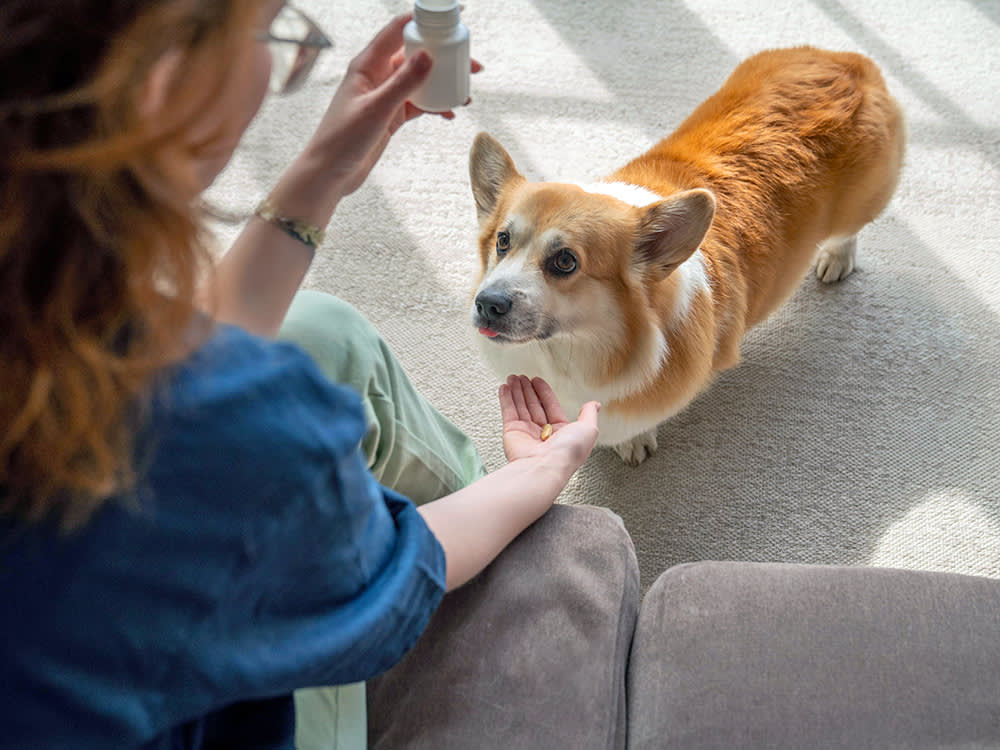
Some dogs are miserable travelers. They drool, they pant, they throw up before you have left the driveway, and it is genuinely hard to watch. So it makes sense that a lot of owners eye the Dramamine in their own medicine cabinet and wonder if it would help. The short answer is: sometimes. The longer, more useful answer is that Dramamine is often the second-best fix for two problems people constantly mix up, and getting the diagnosis right matters more than the pill.
First, figure out which problem you’re solving
Carsick dogs usually have one of two things going on, and they need different solutions.
The first is true motion sickness, a physical response driven by the inner ear, the same system that makes some people green on a boat. The tells are drooling, vomiting, lethargy, and heavy panting that show up specifically with movement.
The second is travel anxiety. Plenty of dogs learn that the car leads somewhere stressful, like the vet or the boarding kennel, and the dread itself produces whining, restlessness, and even nausea. It looks similar from the driver’s seat, but it is a fear problem, not a balance problem.
Why does this matter? Because if you medicate for the wrong one, you will be disappointed. A motion-sickness drug will not fix a dog who is panicking, and a calming approach will not settle a genuinely queasy inner ear. Match the tool to the actual problem.
What Dramamine is and what it does
Dramamine, generically dimenhydrinate, is an over-the-counter antihistamine people use for motion sickness. It works by helping the body maintain its sense of balance, calming the brain’s response to movement and quieting inner-ear disturbances that trigger nausea, vomiting, and dizziness.
It is not FDA-approved for animals, but that does not make it off-limits. Vets routinely prescribe human drugs “off-label” when it is medically appropriate, which is completely legitimate. Once the FDA approves a drug, a veterinarian can legally use it for an unapproved purpose based on their judgment, often because there is no approved product for the exact situation, or because approved options have not worked.
For dogs, Dramamine gets used two ways. Mainly it is for motion sickness: it acts on the vestibular system in the inner ear, which governs balance and motion detection, and it relieves symptoms for most dogs. Secondarily, its mild sedative effect can help a lightly anxious dog tolerate a trip with less stress, though it is not an anti-anxiety medication, and for moderate to severe anxiety a vet should reach for something more targeted.
The dose (and why you still call your vet first)
Dosing is where people get into trouble, because too much can be dangerous and too little does nothing. Typical guidelines for dogs:
- 2 to 4 mg per pound of body weight.
- No more often than every 8 hours, as needed.
- Given 30 to 60 minutes before travel so it has time to take effect.
Confirm all of this with your veterinarian before the first dose, and confirm the form, too. Not every version of Dramamine is dog-safe. Some formulas, including certain “non-drowsy” and combination products, contain ingredients that are not appropriate for dogs, so use only what your vet signs off on.
The side effects to watch for
Many dogs tolerate Dramamine fine, but some do not, and side effects are more likely at the wrong dose:
- Vomiting or diarrhea
- Drowsiness or sedation
- Lack of coordination
- Dry mouth
- Urinary retention
An allergic reaction is also possible. If your dog develops facial swelling, hives, or difficulty breathing, that is an emergency, get to a vet. And some dogs simply are not good candidates: puppies, pregnant dogs, seniors, and dogs with existing medical conditions should only take it under direct veterinary guidance.
The alternatives (one of which is usually better)
If Dramamine is not a fit, or your dog reacts poorly to it, there are options, and you should match them to the problem you actually have:
- Cerenia (maropitant): an FDA-approved prescription anti-nausea drug that is highly effective against motion sickness. More on why this one stands out below.
- Ginger: available in dog formulations, it can provide a mild anti-nausea effect.
- Gradual desensitization: short car rides that slowly get longer can, over time, retrain a dog out of both mild motion sickness and travel dread.
- Anti-anxiety medication: for fear-driven cases, vets may use drugs like trazodone or gabapentin, or dog-safe calming supplements.
- Pressure wraps: thunder shirts and calming wraps apply gentle pressure some anxious dogs find reassuring.
The rule of thumb: treat motion sickness with a motion-sickness remedy and anxiety with a calming one. They are different problems with different answers.
What newer guidance adds: Cerenia usually wins
Here is the update worth knowing before your next road trip. When veterinarians compare the options today, the prescription drug Cerenia (maropitant) is widely considered the gold standard for canine motion sickness, and it beats antihistamines like Dramamine in two ways that matter. It is more effective at actually preventing motion-sickness vomiting, because it targets the NK-1 receptors in the brain’s vomiting center rather than working as a general antihistamine. And it does this without the drowsiness Dramamine can cause, so your dog arrives alert instead of groggy.
The practical dosing difference is also useful to understand: preventing motion sickness with maropitant takes a higher dose than treating ordinary vomiting, and it is typically given about an hour before travel. For a roughly 30-pound dog that often works out to a single daily tablet before the trip.
That does not make Dramamine useless. It remains a legitimate over-the-counter fallback when you are heading out and cannot get to the clinic for a prescription in time. But if your dog is a chronically carsick traveler, it is worth asking your vet about Cerenia rather than defaulting to the human pill.
When to loop in your vet
Before giving Dramamine, or any human medication, talk to your veterinarian, especially if your dog has heart disease, kidney or urinary problems, or diabetes. Also check in if she’s pregnant or nursing, if you’re not sure which Dramamine version is dog-safe, if symptoms persist despite treatment, or if your dog reacts badly. Depending on the situation, your vet may point you to something safer or simply more effective, so your travel buddy can actually look forward to the trip instead of dreading it.
References
- Conder, G. A., et al. “Efficacy and safety of maropitant, a selective neurokinin-1 receptor antagonist, in two randomized clinical trials for prevention of vomiting due to motion sickness in dogs.” Journal of Veterinary Pharmacology and Therapeutics, vol. 31, no. 6, 2008, pp. 528–532.
- Noble, R. L. “Adaptation to experimental motion sickness in dogs.” American Journal of Physiology, vol. 154, no. 3, 1948, pp. 443–450.
- Wang, S. C., and Herman I. Chinn. “Experimental motion sickness in dogs: functional importance of chemoceptive emetic trigger zone.” American Journal of Physiology, vol. 178, no. 1, 1954, pp. 111–116.
Common questions
Is Dramamine or Cerenia better for motion sickness?
For preventing motion-sickness vomiting, Cerenia (maropitant) is generally more effective and doesn't cause the drowsiness Dramamine can. Dramamine is a reasonable over-the-counter option when you can't get to the vet, but a prescription for Cerenia is usually the stronger tool.
Does Dramamine calm an anxious dog?
Only mildly, and indirectly. Its sedative effect can take a little edge off a lightly anxious dog, but it's not an anti-anxiety medication. For moderate to severe travel anxiety, your vet has better-targeted options.
Not a substitute for your vet. Our guidance is educational. For urgent symptoms, contact a vet or emergency clinic right away. Editorial standards
Dr. Solis is a board-certified veterinary dermatologist with over twelve years of clinical experience. She advises on skin conditions, allergies, and grooming practices that affect coat and skin health. All dermatology and allergy content at The Pet Times is reviewed by her team before publication.
Meet our experts ↗Keep reading
 Health & WellnessA Pool, a Lake, and the Ocean Will Kill Your Dog in Three Different WaysDr. Lena Park · 8 min
 LivingYou Buckle Up. In a Crash, an Unrestrained Dog Is a Projectile.Dr. Priya Nair · 7 min
 LivingThe Trail Doesn't Care How Good Your Dog Is Off-LeashDr. Ravi Mehta · 7 min
 Health & WellnessThe Waves Aren't the Biggest Beach Danger to Your Dog. The Sand Is.Dr. Priya Nair · 7 min
 LivingThe Kayak Isn't What Hurts Dogs. The Water Is.Dr. Ravi Mehta · 8 min
 LivingA Woman Left Her Dog at the Airport. The Breed Ban That Set It Up Is the Real Story.Jordan Ellis · 4 min