


The Cat-Anxiety Mistake That Actually Gets Cats Killed
Yes, cats feel real fear and even panic. But the confusion that matters isn't panic versus heart attack, it's panic versus respiratory distress. Here's how to tell a scared cat from an emergency, plus how to calm true anxiety.

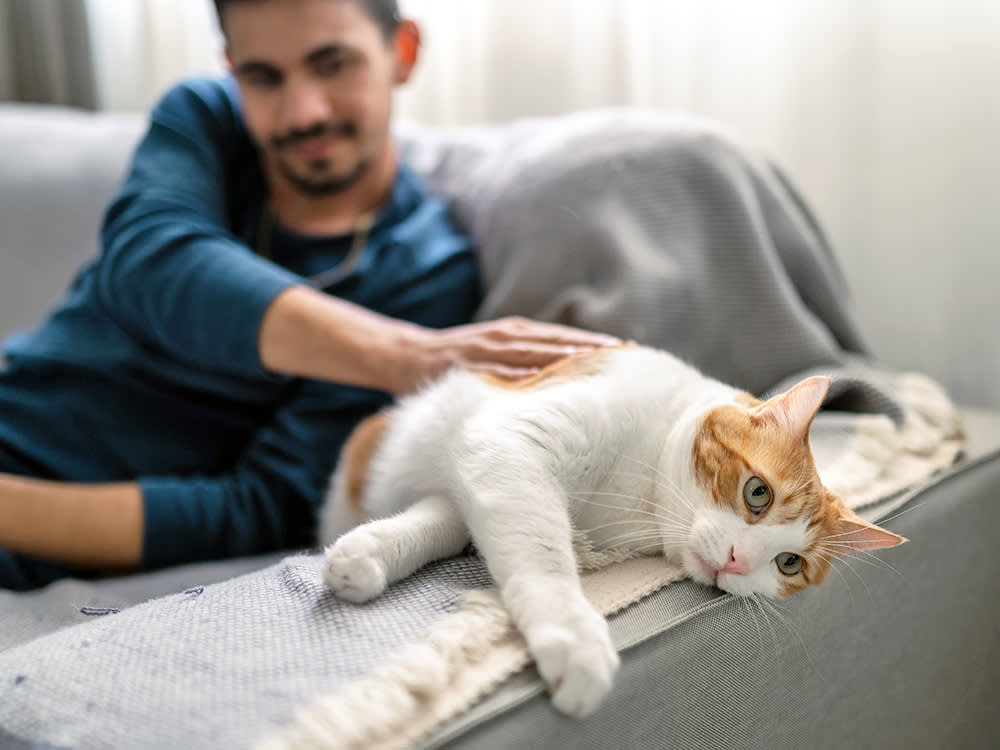
Cat people love the line “he’s having a heart attack” to describe a startled cat, the same way we say it about ourselves when something makes us jump. It’s harmless as a figure of speech. The trouble starts when the joke shapes how an owner reads a genuinely sick cat, because the question everyone asks, “can cats have panic attacks or heart attacks like we do,” points attention at the wrong comparison.
True heart attacks are vanishingly rare in cats, so that’s not the call you’ll ever really have to make. The call that actually saves cats is a different one: telling apart a cat that’s frightened from a cat that’s in respiratory distress. Those two look more alike than people expect, and getting them confused is the mistake that turns a treatable emergency into a tragedy. So let’s lead with the part that matters, then cover the everyday anxiety that’s far more common.
First, the distinction that can’t wait: fear vs. an airway emergency
Here is the single most important paragraph in this article. A scared cat and a cat who can’t breathe can both look agitated, both can breathe fast, both can have wide eyes. But they call for completely different responses, and only one of them is a clock-is-ticking emergency.
A frightened cat hides, flattens, hisses, bolts, or swats. It’s looking for escape or a fight. A cat in respiratory distress does something a scared-but-healthy cat almost never does: it breathes with its mouth open, or pants like a dog, often while becoming quiet and still rather than reactive.
The mistake I most want to head off is an owner watching an open-mouthed, panting cat and deciding it’s ‘just anxiety.’ In cats, open-mouth breathing is almost never normal. A scared cat hides or hisses. A cat breathing through its mouth may be drowning in its own chest. When in doubt, that’s an emergency room, not a wait-and-see.
The other red flags of a true cardiac or respiratory crisis: collapse or inability to walk, gums that look pale, dark red, or blue-tinged, cold paws and ears, or crying out in distress. These often follow a gradual lead-up, weight loss, reduced appetite, lethargy, or abnormal breathing over days. Any of them, alone or together, means immediate veterinary care.
If you’ve ruled that out, and your cat is hiding, hissing, or skittish but breathing normally with its mouth closed, you’re almost certainly dealing with fear and anxiety, not a medical emergency. That’s the rest of this article.
So, do cats actually panic?
Yes, in a meaningful sense. Cats experience the full range from a brief startle to severe, chronic fear. What they don’t have is the human clinical definition of a panic attack, an intense episode that fires in the absence of any real threat. In a cat, that absence is hard to confirm, because a cat may genuinely perceive a true threat where you see none: the vacuum, the new puppy, a sound below your hearing. The fear is real to them even when the danger isn’t real to you.
A panic episode is essentially fight-or-flight cranked to maximum and usually burns out within minutes. The signs mirror acute stress: dilated pupils, rapid breathing and heart rate, raised body temperature, fur puffed along the back and tail, and ears flat back or out to the sides. A cornered, panicking cat may flee, hide, or turn aggressive, and some vomit, urinate, or defecate in the moment.
Reading everyday stress, short-term and chronic
Most feline anxiety isn’t a dramatic panic episode, it’s quieter, and it shows up differently depending on whether the stress is a passing scare or a long-running situation.
In an acute scare, you’ll see the body-language tells: dilated pupils, puffed fur, a crouched posture, ears pinned back. The cat may meow a lot, growl, hiss, bolt, or swat and bite if it feels trapped.
Under chronic stress, the picture shifts and gets easier to miss. A chronically stressed cat may hide for long stretches, sleep more, stop eating or overeat, have litter-box accidents, overgroom, develop recurring health issues, lose interest in play and people, or grow irritable and aggressive. Physically, long-term stress can bring vomiting, diarrhea, or urinary problems like sterile cystitis (bladder inflammation), and repeated respiratory infections.
The subtle clues are the ones that slip past: a small appetite change, avoiding a certain room, becoming less playful, sleeping more. When these creep in gradually, and especially when they coincide with other changes at home, they’re easy to write off.
What sets it off
The most common triggers are things a cat reads as dangerous, plus the quieter stressors of a disrupted routine or too little enrichment. And sometimes what looks like anxiety is actually a medical problem wearing an anxiety costume.
Environmental triggers. Cats are predators that are also potential prey, so they stay primed to defend themselves. Unfamiliar animals (a dog, a stray), loud noises, feeling cornered, and new people or places top the list.
Past experience. Cats remember trauma. A bad vet visit can make the carrier, the car, or the clinic a trigger on sight. A cat may avoid people who once frightened it, or spots tied to a bad memory. Cats poorly socialized as kittens tend to be more fearful in general.
Medical mimics. Hyperthyroidism, cognitive dysfunction, heart and respiratory conditions, urinary problems, and digestive issues can all produce anxiety-like signs, or genuinely make a cat feel bad enough to be more anxious. It’s often a tangle of the physical and the emotional.
Behavioral and neurological conditions. A few cats have something more specific, feline hyperesthesia syndrome, focal seizures, certain toxin exposures, or redirected aggression, where there’s no obvious trigger and the signs are more extreme or longer-lasting than ordinary fear. Record a video of these episodes; it’s enormously useful to your vet.
How to calm an anxious cat
The most durable fix is to learn your cat’s triggers and either minimize them or gradually desensitize your cat to them. In the meantime, plenty helps. (During an active panic, mind your own safety too, a frightened cat can injure you while trying to flee.)
- Build a safe retreat. Every cat needs a quiet, private spot people and other animals can’t reach, a high perch, a cat tree, a room behind a cat door. The key is that the cat can come and go freely and still reach food, water, and a litter box; a hideout that feels like a trap doesn’t help.
- Try calming products. Pheromone sprays and diffusers mimic the facial pheromones content cats leave when they rub on things, and the signals mother cats use to soothe kittens. They settle some cats noticeably.
- Make the routine predictable. Cats run on knowing when meals, play, and cleaning happen. Hold a consistent schedule, and make daily play and enrichment non-negotiable, they’re real medicine against boredom, anxiety, obesity, and destructive habits.
- Engineer around triggers. Minimize the things you know scare your cat; when a trigger is unavoidable, give the cat distance and a safe space, and desensitize slowly over time.
- Ask about medication. For severe or chronic anxiety, or for predictably stressful events like travel and vet trips, your vet can recommend appropriate medication, daily for ongoing anxiety or situational for a specific event. The goal is to relieve the anxiety enough to prevent the downstream health costs of chronic stress, or to allow safe handling in a hard moment.
When to bring in the vet
Veterinary support is invaluable for both the behavioral side and any overlapping medical issue. Make the call especially when:
- Symptoms persist. Ongoing anxiety or frequent panic-like episodes need relief, and the longer stress runs, the higher the risk of secondary illness. It’s worth finding effective treatment and screening for related medical conditions.
- Changes turn severe. If your cat injures itself or others during episodes, becomes destructive, or pairs stress with physical signs (not eating, diarrhea, eliminating outside the box), get professional help before it worsens, and especially if you suspect a heart or other medical problem.
- Home approaches aren’t enough. Your vet may have additional options, prescription medications, and referrals to specialists like veterinary neurologists, trainers, and behaviorists.
What’s changed in how vets treat feline stress
The field increasingly treats cat stress as a genuine medical concern rather than a personality quirk. Research has strengthened the link between chronic stress and physical disease in cats, especially feline idiopathic cystitis, the bladder inflammation that so reliably flares during stressful stretches. That’s pushed vets to fold environmental enrichment and stress reduction into the medical plan, not the “optional extras” pile.
Treatment has advanced too. The FDA has approved a feline-specific pregabalin oral solution (marketed as Bonqat) to relieve the acute anxiety and fear that so many cats feel around transport and veterinary visits, a dose given at home before the trip, giving owners a targeted tool for the single most dreaded appointment on the calendar. It sits alongside the older situational options many vets already reach for, like gabapentin before a visit, and the low-stress handling techniques now widely taught in clinics. Together they reflect a real shift: feline anxiety is something to treat, not tolerate.
This article covers a sensitive subject. If your cat’s distress is severe, sudden, or paired with any breathing or circulation red flag, skip the troubleshooting and call your veterinarian or an emergency clinic right away.
References
- Buffington, C.A.T., & Bain, M. “Stress and Feline Health.” Veterinary Clinics of North America: Small Animal Practice
- Guillaumin, J. “Feline Aortic Thromboembolism: Recent Advances and Future Prospects.” Journal of Feline Medicine and Surgery
- Rodan, I., et al. “AAFP and ISFM Feline-Friendly Handling Guidelines.” Journal of Feline Medicine and Surgery
Common questions
Can cats have panic attacks?
Cats experience intense, short-lived fear that can look like a panic attack, but not the human clinical version, an episode triggered without any real threat. A cat is usually reacting to something it genuinely perceives as dangerous, even if you don't.
Is open-mouth breathing in a cat just anxiety?
Almost never. A frightened cat hides, hisses, or bolts. A cat breathing with its mouth open or panting is far more likely in respiratory distress, which is an emergency. When in doubt, treat it as one and go to the vet.
How do I calm an anxious cat?
Find and reduce the triggers, give your cat a safe retreat it can enter and leave freely, keep a predictable routine with daily play, try calming pheromone products, and ask your vet about medication for severe or chronic anxiety.
Dr. Solis is a board-certified veterinary dermatologist with over twelve years of clinical experience. She advises on skin conditions, allergies, and grooming practices that affect coat and skin health. All dermatology and allergy content at The Pet Times is reviewed by her team before publication.
Meet our experts ↗Keep reading
 TrainingWhether You Call It PTSD Doesn't Matter. How Fast You Act on It DoesDr. Nina Kohl · 7 min
 TrainingYour Cat Isn't Plotting Revenge. They Already Forgot.Dr. Nina Kohl · 5 min
 LivingYour Cat's Stress Isn't Emotional. It's Sensory.Dr. Mara Chen · 8 min
 TrainingYour Cat Isn't Attacking You. It's Sending One of 5 Messages.Dr. Amara Solis · 5 min
 First DaysYour Older Cat Doesn't Hate the Kitten. It Hates the Energy.Dr. Priya Nair · 7 min
 TrainingYour Cat Isn't Being Dramatic. 8 Things That Genuinely Wound ThemDr. Nina Kohl · 6 min