


Whether You Call It PTSD Doesn't Matter. How Fast You Act on It Does
Owners get stuck debating whether a pet can 'really' have PTSD. Meanwhile the thing that actually shapes recovery, acting quickly on a behavior change, is slipping away. Here's what to watch for and why the clock matters.

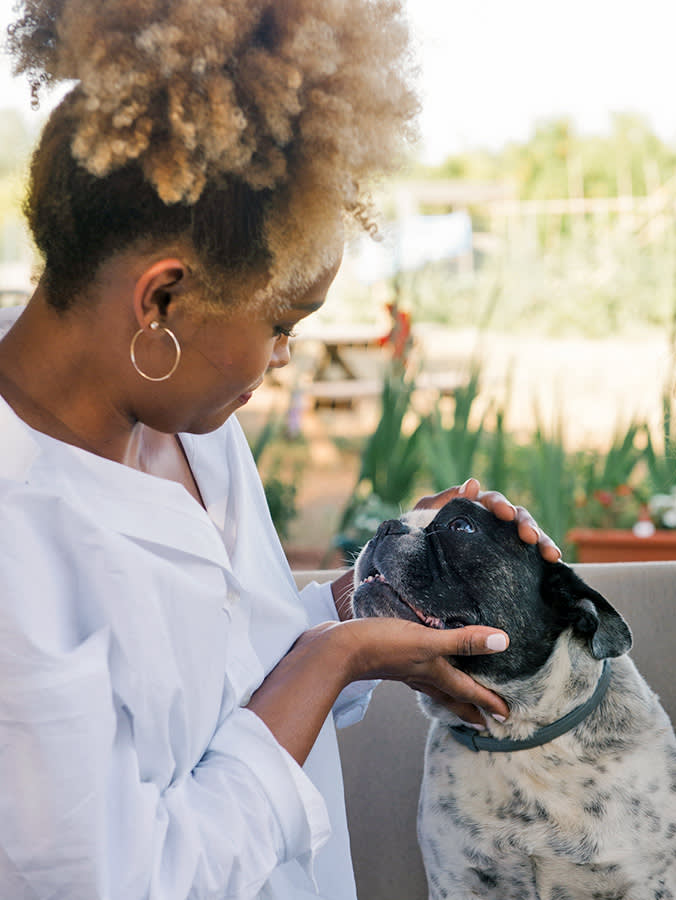
After a disaster tears through a community, a wildfire, a flood, a house fire, the response from animal lovers is immediate and huge. People foster displaced pets, shelters absorb hundreds of frightened animals overnight, vets clear space for the injured. Then the news trucks leave, and a quieter question settles in. The people who lived through it will be processing it for a long time. What about the animals who were right there beside them?
Most owners, trying to answer that, get pulled into a debate that does not actually help their pet: can a dog or cat really get PTSD, or is that just a human word we’re borrowing? It is an interesting question. It is also, for a frightened animal in your living room, close to irrelevant. Because whatever you call it, the thing that most shapes how a traumatized pet recovers is not the diagnosis. It is how quickly you notice the change and act on it. This piece is about that clock.
Why the label debate is a trap
First, let’s dispatch the debate so we can move past it. Most mammals share the same basic brain architecture we do, so a genuinely terrifying experience, extreme pain, illness, loud noise, a natural disaster, can leave a lasting mark on a pet much as it does on a person. A dog who survived a house fire may panic at the smell of smoke; a cat who endured a long hospitalization may bolt at the sight of a carrier. Several studies have documented behavior changes in animals that closely mirror human PTSD: anxiety, hypervigilance, increased aggression.
The reason vets hesitate to stamp “PTSD” on a pet is procedural, not dismissive. “PTSD” is defined in the DSM-5, the manual human psychiatrists use, and veterinary medicine has no equivalent rulebook. So a careful vet avoids formally applying a human psychiatric diagnosis to an animal. That caution says nothing about whether the suffering is real. It plainly is.
Not every fearful pet has something we’d call PTSD, and honestly, the name isn’t what changes the outcome. What changes the outcome is whether the owner catches the shift early and does something about it. A pet that gets help in the first weeks after a scare tends to do far better than one whose fear has had months to harden into a habit.
That is the whole argument for treating this as a clock, not a classification.
Why the clock matters
Fear behaviors are not static; they rehearse and entrench. Each time a dog panics at a trigger and the panic “works”, the scary thing eventually goes away, the response gets a little more automatic and a little harder to unwind. Left alone, a manageable startle can deepen into an ingrained phobia, and in the worst cases fear tips into aggression that puts the pet or people at risk. That is why “wait and see” is a gamble that gets more expensive the longer you play it. The window when a traumatized pet is most reachable is early, before the pattern sets.
Which means the practical skill is simply noticing, fast.
What to watch for: the loud signs and the quiet ones
You can’t hand a dog a questionnaire or ask a cat to list its triggers, so reading a struggling animal is detective work. The signs split into two groups, and the quiet ones are the ones people miss.
The loud signs are hard to ignore. A normally gentle dog or cat turns aggressive toward people or other animals. A social pet withdraws, starts avoiding specific people, places, or situations, or becomes jumpy and reactive to ordinary surroundings.
The quiet signs are where trauma hides, especially in cats. A traumatized pet may change how it eats, eating less, or noticeably faster or slower than before. A grazer who nibbled all day may start bolting meals; an eager eater may pick. Sleep patterns shift. A cat may simply hide more, and this is the dangerous one, because owners write it off as “just cat stuff.” A cat’s signals are also subtler than a dog’s, and unless the shift tips into outright aggression it tends to get missed, so with a cat especially, any sudden behavior change deserves attention.
“My rule of thumb is blunt,” Dr. Kohl says. “New behavior, especially right after something frightening? Book the vet that week and let them clear the medical side. If the body checks out, your next call is a trainer who uses rewards, or a veterinary behaviorist. Don’t sit on it.”
That medical-first step matters: pain and illness masquerade as behavior change constantly, and you don’t want to treat a “trauma response” that is actually a sore tooth.
What to do, in order
Once you’ve noticed, the response is not complicated, but sequence and speed matter.
- Rule out a medical cause. Vet first. Always.
- Identify and avoid the triggers you can. If your dog can’t tolerate loud noises, skip the crowded festival. If your cat associates a food’s smell with a miserable illness, steer clear of anything similar. There is no one-size-fits-all fix, so knowing the specific triggers and reducing exposure is the highest-value first move.
- Rebuild associations slowly, with help. In many cases you can go further than avoidance and gently build new, positive associations around an old trigger through counterconditioning and desensitization. This work must move at the pet’s pace, pushing too fast deepens the fear, so it is often best done with a qualified reward-based trainer guiding you.
- Don’t wait to escalate. If the fearful behavior sticks, or if it’s already tipping toward aggression, bring in a professional sooner rather than later. Anti-anxiety medication, under veterinary guidance, can give a frightened pet the breathing room to actually engage with the retraining. Sometimes a pet bounces back on its own with time and patience; but if it doesn’t, every week of delay makes the job harder.
What the newest research reveals about how deeply pets feel this
The science here has taken a fascinating turn, and it flows in a direction that reframes how seriously we should take animal stress: much of the newest work studies how dogs help humans recover from trauma. In 2024, the first National Institutes of Health-funded clinical trial on service dogs and veterans found that pairing a trained service dog with standard care was linked to meaningfully lower PTSD severity, anxiety, and depression at three months. Strikingly, it also measured a physiological shift: veterans with a service dog showed a healthier, less-blunted cortisol awakening response, a real change in the body’s stress-hormone system, not just a mood report. Separate proof-of-concept work even suggests some dogs can detect, by scent, the stress compounds people emit during trauma-related distress.
The reason this belongs in an article about pets’ trauma is what it implies in reverse. Animals this finely tuned to human stress, tuned enough to shift our hormones and smell our distress, are obviously not blank to their own. It is a strong argument for taking a fearful pet’s experience seriously and acting on it promptly, rather than assuming they’ll “get over it.”
The bottom line
Stop worrying about whether it counts as PTSD. Whatever the label, a pet can carry real fear after a frightening event, and fear left alone tends to harden. The single most useful thing you can do is notice the change fast, catch the quiet signs as well as the loud ones, rule out a medical cause, reduce the triggers, and get professional help before the pattern sets. The clock, not the diagnosis, is what decides the recovery.
References
- Leighton, S. C., et al. “Service Dogs for Veterans and Military Members With PTSD: A Nonrandomized Controlled Trial.” JAMA Network Open, 2024. https://pmc.ncbi.nlm.nih.gov/articles/PMC11151141/.
- Nieforth, L. O., et al. “The cortisol awakening response in a 3 month clinical trial of service dogs for veterans with PTSD.” Scientific Reports, 2024. https://www.nature.com/articles/s41598-023-50626-y.
- Kiddie, J., et al. “Can scent-detection dogs detect the stress associated with trauma cue exposure in people with trauma histories? A proof-of-concept study.” 2024. https://www.ncbi.nlm.nih.gov/pmc/articles/PMC11006987/.
Dr. Kohl is a board-certified veterinary dentist with a particular interest in preventive oral care. She reviews all dental health content at The Pet Times and contributes practical guides on home dental routines, professional cleaning, and oral disease prevention.
Meet our experts ↗Keep reading
 TrainingYour Dog Isn't Being Bad When They Lunge at Cars. Their Brain Thinks It's HuntingDr. Ravi Mehta · 6 min
 TrainingYour New TV Is Half the Reason Your Dog Won't Stop Barking at ItDr. Nina Kohl · 8 min
 TrainingShadow Chasing in Dogs: Where the Line Between Quirk and Compulsion Really IsDr. Nina Kohl · 7 min
 TrainingCanine Dysfunctional Behavior: Why the First Step Is Ruling It OutDr. Ravi Mehta · 8 min
 TrainingStop Letting Your Dog 'Say Hi' on the LeashDr. Priya Nair · 5 min
 TrainingThat Friendly On-Leash Hello Is Teaching Your Dog to Melt DownDr. Amara Solis · 6 min