


Your Dog Isn't Being Bad When They Lunge at Cars. Their Brain Thinks It's Hunting
Car-chasing is prey drive doing exactly what it evolved to do, which is why yelling never works. The fix is distance, a short leash, and slowly teaching your dog that a passing car means good things, not go time.

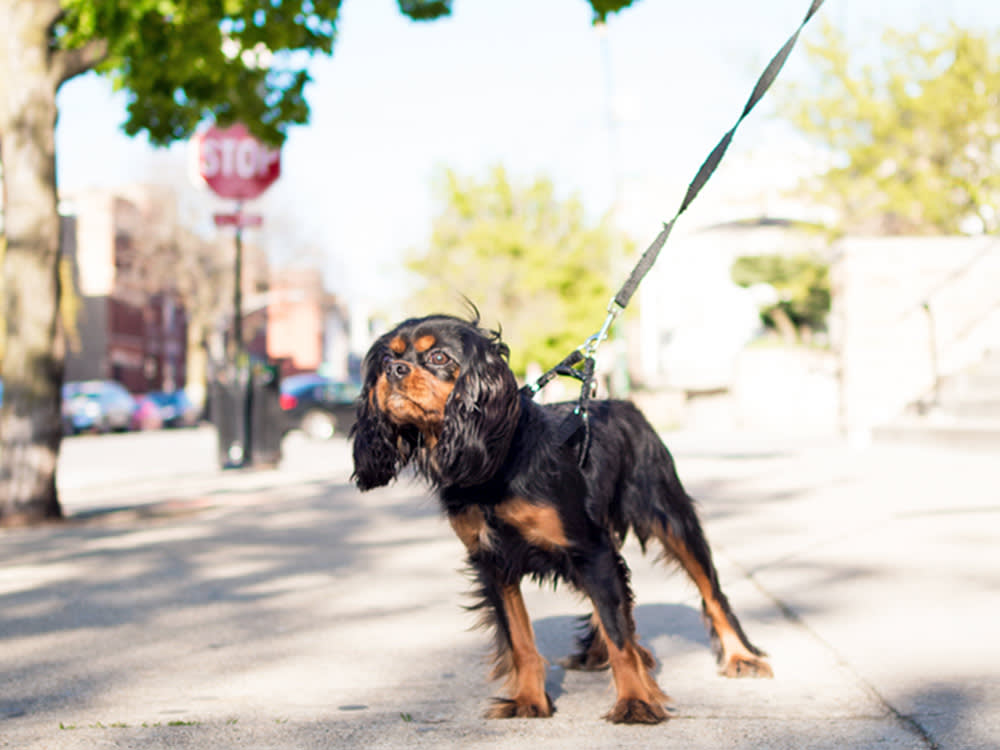
Chasing cars shows up in cartoons and comic strips as a harmless bit of dog comedy. In real life it is one of the most dangerous habits a dog can have, and one of the most misunderstood. Owners watch their dog fixate on a passing sedan, ears up, whole body coiled, and assume the dog is being disobedient or willful. They scold, and it doesn’t work, and they can’t figure out why.
Here’s why: your dog isn’t misbehaving. Their brain has flipped into hunting mode, and you can’t reason a reflex out of an animal. What you can do is understand what’s actually firing, keep everyone safe while you work on it, and patiently rewire the response. That last part is very doable, but it starts with dropping the idea that this is a discipline problem.
What’s really happening
Dogs come equipped with a prey-chase drive, sometimes called a predatory chase drive: an ancient, hardwired urge to pursue things that move fast. Other dogs, cats, squirrels, birds, and yes, cars. The trigger is motion itself. A fast-moving object taps straight into that instinct, and in certain breeds it taps a herding drive on top of it. That’s why it can feel like your dog loses their mind the instant a car accelerates past; on some level, they kind of do.
Breeding matters here. Dogs shaped over generations for hunting or herding often carry a stronger drive and are quicker to fixate on a passing vehicle. But motive varies dog to dog. Some chase because it’s flat-out fun and lights up the pleasure centers of the brain. Others aren’t excited at all; they’re stressed by the sound and rush of traffic and respond by lunging or barking at it. Knowing which flavor you’re dealing with shapes how you help.
The first thing I tell people is that their dog isn’t blowing them off, they’re responding to instinct. Once you stop treating it as defiance, you can actually do something useful, which is give that chase drive a legal outlet and change how your dog feels about traffic.
Safety comes before training
None of the training matters if your dog gets hurt in the meantime, so this part isn’t optional. Until your dog can reliably keep their cool around traffic, put physical distance between the two. How much depends on your dog. For some, standing on the sidewalk is plenty; for others, you’ll need to work much farther from the road. The rule of thumb is to hold your dog far enough back that cars stay visible but not thrilling enough to trigger a chase. If moving vehicles are clearly over-arousing your dog, back farther away and start there.
Equipment matters just as much. Use a short, fixed leash, around six feet, not a retractable or a long line, so a sudden lunge can’t put your dog in the road. Keep a secure grip, or better, use a hands-free waist tether so a hard pull can’t rip the leash out of your hand. Safety is genuinely the first priority; the training only happens once the danger is managed.
How to actually change the behavior
Before you tackle cars specifically, you need a few basics in place. A dependable “stay” so your dog will hold position until you release them. A “watch me” cue that pulls their focus onto you and off the world. And a recall you actually trust, so you know they’ll come even when something exciting is happening. These are the tools you’ll lean on around traffic.
The core technique is counterconditioning, which is a formal way of saying you change how your dog feels about cars. With your dog at that comfortable distance, wait for a car to appear, then mark the moment and reward it, a treat, or a click if you use a clicker, the instant they notice the vehicle. The sequence you’re teaching is: car appears, good thing happens. Do this consistently and the emotional meaning of a passing car starts to shift from “prey, chase it” to “oh, that’s the thing that pays.”
As your dog gets it, they’ll begin looking to you when a car goes by instead of locking onto it. When that response is reliable, shrink the distance to the road a little at a time, never faster than your dog can handle. The whole game is stacking up small successes, giving your dog chance after chance to get it right rather than setting them up to fail six feet from traffic.
Give the chase somewhere to go
You can’t delete a prey drive, and you shouldn’t try. You can satisfy it. A dog with a strong urge to chase needs legitimate outlets, or that energy finds its own, usually the worst possible one. Interactive and puzzle toys that engage a dog’s hunting and problem-solving instincts help take the edge off, and plain old exercise matters enormously. Games of fetch and tug, a flirt pole, or organized dog sports like herding trials or lure coursing let your dog chase to their heart’s content in a way that’s safe and even good for them. A dog whose chase drive gets a real workout has less left over to aim at your neighbor’s truck.
When to call in a pro
If you’ve put in consistent work and your dog is still fixated on cars, it’s worth bringing in a professional trainer or a veterinary behaviorist. A specialist can spot whether something specific, an unusually high drive, a strong breed trait, or an underlying anxiety, is fueling the behavior, and build a plan tailored to your particular dog. There’s no shame in it; car-chasing is a high-stakes habit, and expert help is a reasonable investment in keeping your dog alive.
References
- Cornell University College of Veterinary Medicine, Riney Canine Health Center. “Training ‘Stay’ vs. ‘Wait.’” vet.cornell.edu
- Feng, Lynna C., et al. “How clicker training works: Comparing reinforcing, marking, and bridging hypotheses.” Applied Animal Behaviour Science, vol. 181, 2016, pp. 34-40. doi.org
- Shabelansky, Anastasia, and Seana Dowling-Guyer. “Characteristics of Excitable Dog Behavior Based on Owners’ Report from a Self-Selected Study.” Animals, vol. 6, no. 3, 2016, p. 22. doi.org
- Canine Cognition and Human Interaction Lab, University of Nebraska. “Impulsivity as a Behavioural Trait in Dogs.” dogcog.unl.edu
Common questions
Why does my dog chase cars?
It's instinct. Fast movement triggers a dog's natural prey-chase drive, and in some herding breeds a herding drive, almost like a reflex. Some dogs also chase because it's fun and floods their brain with feel-good chemicals, and some are actually stressed by the noise and motion.
Can you train a dog to stop chasing cars?
Yes, with counterconditioning. Keep enough distance that your dog can see cars without reacting, reward calm attention on you when a car passes, and slowly close that distance over many sessions. Solid 'stay,' 'watch me,' and recall make it work.
What kind of leash should I use?
A short, fixed leash of about six feet, held with a secure grip or a hands-free waist tether. Skip retractable and long lines near traffic; they give a lunging dog too much room to reach a car.
Dr. Mehta is a board-certified veterinary nutritionist who evaluates pet food formulations, ingredient quality, and the science behind dietary trends. He writes and reviews all nutrition content at The Pet Times, including our food rankings and feeding guides.
Meet our experts ↗Keep reading
 TrainingYour Dog Follows You to the Bathroom. Here's How to Get Some Space BackDr. Mara Chen · 7 min
 TrainingYou Can't 'Cry It Out' a Dog. The Baby Advice Falls Apart Here.Dr. Lena Park · 5 min
 TrainingYou Can't Train Your Dog in a Moving Car. Start in the Driveway.Dr. Ravi Mehta · 8 min
 TrainingYour Dog's Licking Is a Map. Here's How to Read What That Tongue MeansDr. Mara Chen · 10 min
 TrainingReactive Dogs Have a Stress Budget. Spend It WiselyDr. Mara Chen · 8 min
 TrainingYour Dog Isn't Being Dramatic. They're Having a Panic Attack.Dr. Nina Kohl · 7 min