


Reactive Dogs Have a Stress Budget. Spend It Wisely
Reactivity isn't a discipline problem, it's a stress-budget problem. Learn to read your dog's threshold, manage trigger stacking, and use B.A.T. to slowly expand what they can handle.

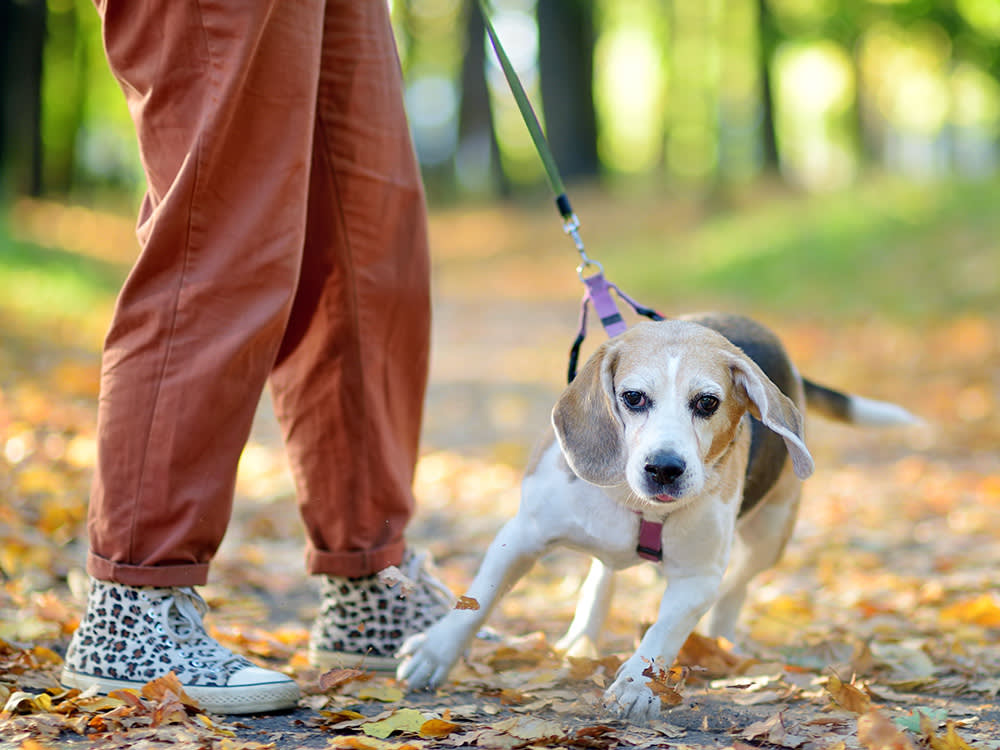
An off-leash Lab comes barreling toward you. Your stomach drops, because you already know your dog is about to lose it, and right on cue the other person calls out the four scariest words on any sidewalk: “Don’t worry, she’s friendly!” Here is the thing almost everyone gets wrong in that moment. The problem is not that your dog needs a lesson. The problem is that your dog has already run out of room to cope, and no lesson lands on a brain that is underwater.
Most advice treats a reactive dog like a discipline case: correct the lunge, train the calm, repeat. That framing is why so many owners feel stuck after months of work. A more useful way to think about reactivity is as a budget. Every dog walks out the door with a finite amount of stress tolerance for the day, and triggers spend it down. Manage the budget and your dog can think, learn, and recover. Blow through it and you get the snarling, the lunging, the dog who “won’t listen.” This piece is about reading that budget, protecting it, and then, only then, slowly expanding it with a method called Behavior Adjustment Training.
Why correcting the growl backfires
Your first instinct may be to correct your dog the instant they react. It is rarely the right move. Correcting does nothing to make your dog feel safer, and a growl is not defiance, it is information. Your dog is telling you they are uncomfortable. Punish the warning and you do not fix the discomfort, you just delete the early-warning system, which makes the next reaction more sudden and less predictable. It is the difference between a smoke detector that chirps and one whose batteries you pulled because the chirping annoyed you. The fire is still coming. You have just lost your heads-up.
So before any technique, adopt the mindset that your dog’s outbursts are fear or frustration looking for an exit, not disobedience looking for a boundary.
Read the threshold, and respect trigger stacking
The single most important skill is recognizing your dog’s threshold, the distance or intensity at which they tip from “noticing the trigger” to “reacting to it.” Under threshold, your dog can see the other dog, glance at you, take a treat, and move on. Over threshold, none of that is available, because the thinking part of the brain has handed the controls to the part that barks and lunges. Your job on every walk is to keep your dog under threshold as much as you can.
What makes this tricky is trigger stacking. Stress does not reset between triggers, it accumulates. A delivery truck, a doorbell, a skateboard, and a rude dog might each be survivable alone, but stack them inside an hour and the last one tips your dog over even though they normally handle it fine. This is why your dog can pass twenty dogs calmly on Tuesday and melt down at the first one on Wednesday. Nothing is “wrong” with them. Their budget was already half-spent before they left the building.
When a dog does cross threshold, the body floods with cortisol and adrenaline through the stress-response system. That chemistry does not clear in a few minutes. Cortisol typically peaks within 15 to 30 minutes and can take roughly 24 to 72 hours to fully return to baseline, depending on the dog and the intensity of the blowup. Translation: a single bad encounter can leave your dog more reactive for the next two or three days. Plan around that.
A reaction isn’t a setback you train away that afternoon. It’s a chemical hangover. Give the body a couple of quiet days to clear it before you ask for hard work again.
Build in decompression days
Because cortisol lingers, the smartest thing you can do after a meltdown is nothing demanding at all. Schedule a day or two of decompression: long sniff walks at quiet hours, calm chewing, a snuffle mat, low-stimulation time at home. Sniffing in particular shifts a dog toward the rest-and-digest side of the nervous system and actively lowers arousal. Decompression is not skipping training, it is the part of training that lets the next session work.
The everyday triage toolkit
These are the moves you reach for in real time, before your dog can manage a trigger on their own. They are not the cure, they are how you avoid spending the whole budget while the cure is still under construction.
- Make distance your default. Walk at off-peak hours, cross the street early, take the wide arc around the kid on the scooter, skip the elevator with a strange dog in it. Distance is the cheapest, most reliable way to keep your dog under threshold.
- Use a “slow stop” instead of a hard one. If your dog starts marching straight at a trigger, gradually slow your own pace and let a little leash slide through your hands, like easing onto a brake rather than slamming it. A dog jerked to a sudden halt is far more likely to ignite than one eased to a stop. Once stopped, loosen the leash a touch so they do not feel trapped.
- Mark and move. The instant your dog notices a trigger and makes any good choice, looking, sniffing, blinking, turning away, mark it with a word like “yes” or a clicker, then encourage them to move off and pay out a treat. It is clicker training with an escape route built in, perfect for surprises.
- Give them an exit, not a confrontation. Reactivity is a request for space. Honoring that request, instead of forcing a greeting, is itself good training. It teaches your dog that you will get them out, so they do not have to scream for distance themselves.
B.A.T.: the long game that actually changes the dog
Triage keeps the budget intact. Behavior Adjustment Training (B.A.T.) is how you grow the budget over time. It is a force-free method that deliberately sets up low-stakes encounters with a trigger at a distance the dog can handle, then lets the dog explore at their own pace and discover that the scary thing is not, in fact, scary.
The mechanism is the same one researchers call an expectancy violation. Your dog shows up braced for a bad outcome, the bad outcome does not happen, and that surprise is what shifts their outlook. It is not a fluke trainer’s metaphor; a 2024 study in Scientific Reports found that positive expectancy violations paired with sleep measurably affected how dogs consolidated new memories. Arrange enough of these small, pleasant surprises and you slowly rewrite what a trigger means to your dog.
What sets B.A.T. apart from other gentle methods is how much freedom it gives the dog. You are not luring with a constant stream of treats or micromanaging every step. You put the food away and follow your dog as they investigate. That runs against a lot of old advice about being the dominant center of your dog’s world, and it works precisely because control is the point. Being able to affect their own environment, to choose to approach or retreat, is a core need for any animal, and giving a stressed dog that agency pays off in sharper focus, better social skills, and more resilience to stress.
What a B.A.T. set-up actually looks like
Say your dog barks at children from about 25 feet. You arrange a session with a willing family. The child sits at a picnic table with a parent at the far end of a park, maybe 100 feet off. Your dog wears a harness and a long line, 15 feet or so, and the adults keep phones handy to coordinate. If there is any bite risk, add a barrier or pre-train a muzzle first.
Now you simply follow your dog as they wander. They might clock the child, then go back to sniffing the grass. You pay out leash when they drift, gather it as they circle back, and let them pick the route. To a passerby it should look aimless, a dog hunting for the perfect spot to pee, with the occasional glance toward the table. If your dog locks on and beelines for the child, do a slow stop and relax the line, or angle away and wait for them to disengage on their own. If you find yourself constantly redirecting, you are working too close, back up. Run your first few sessions with a certified B.A.T. instructor or another credentialed force-free trainer before going solo.
Here is the secret almost no one tells you: done right, B.A.T. is boring. The drama drains out of the walk. And a boring walk, for a dog who used to dread them, is the whole goal.
When to call in a pro
If your dog has bitten or you fear they might, if reactivity is escalating, or if you are dreading walks, loop in a certified, reward-based behavior consultant or a veterinary behaviorist. For some dogs, anxiety is severe enough that medication, prescribed and monitored by a vet, lowers the baseline enough that the training can finally take hold. That is not a failure. It is giving the dog a budget big enough to learn with.
References
- Iotchev, I. B., et al. “The interrelated effect of sleep and learning in dogs (Canis familiaris); an EEG and behavioural study.” Scientific Reports, 2017. https://www.nature.com/articles/srep41873
- Iotchev, I. B., et al. “Potential interactive effect of positive expectancy violation and sleep on memory consolidation in dogs.” Scientific Reports, 2024. https://www.nature.com/articles/s41598-024-60166-8
- American Veterinary Society of Animal Behavior. “Position Statement on Humane Dog Training.” https://avsab.org/resources/position-statements/
- Stewart, G. Behavior Adjustment Training 2.0: New Practical Techniques for Fear, Frustration, and Aggression in Dogs. Dogwise Publishing, 2016.
Dr. Chen is a small-animal veterinarian who leads health and safety coverage at The Pet Times. She writes and reviews the bulk of our illness, condition, and safety content, translating clinical guidance into clear, practical advice owners can act on at home.
Meet our experts ↗Keep reading
 TrainingYour Dog Isn't Being Bad When They Lunge at Cars. Their Brain Thinks It's HuntingDr. Ravi Mehta · 6 min
 TrainingWhat Corook's Anxious Rescue Dog Taught Them About Doing LessDr. Mara Chen · 9 min
 TrainingYou Can't Train Your Dog in a Moving Car. Start in the Driveway.Dr. Ravi Mehta · 8 min
 TrainingThe Stuffed Kong Won't Save You: 7 Lies About Separation AnxietyDr. Amara Solis · 9 min
 TrainingYou Can't 'Cry It Out' a Dog. The Baby Advice Falls Apart Here.Dr. Lena Park · 5 min
 TrainingYour Dog Isn't Being Dramatic. They're Having a Panic Attack.Dr. Nina Kohl · 7 min