


Your Dog Follows You to the Bathroom. Here's How to Get Some Space Back
A Velcro dog is usually just a dog who adores you. But there's a line between devoted and over-attached, and a few small daily habits can teach even the clingiest pup to relax on their own.

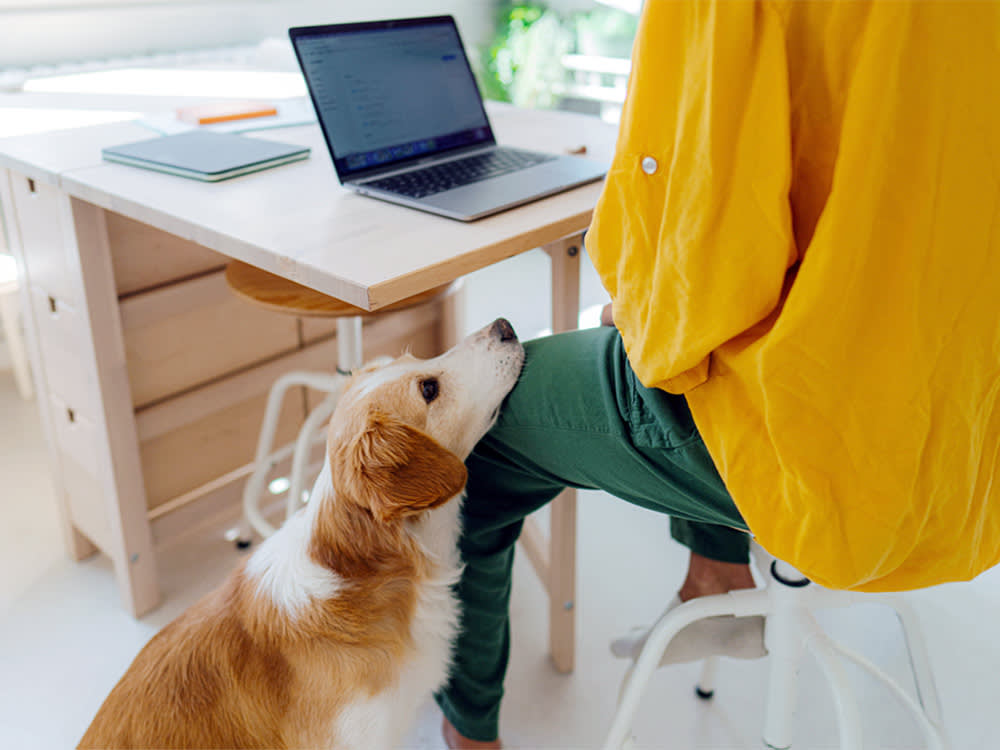
Working from the couch instead of my desk because a dog is glued to my side is a familiar bargain to a lot of us. You love that your dog is devoted. You love it slightly less when you’re on a video call and they’re staging an emotional protest three inches away. So where is the line between sweet and too much, and how do you get a little space back without making your dog miserable?
The honest answer starts with a reframe. Clinginess is a spectrum, not a diagnosis. On one end is a dog who simply likes being near you, which is lovely. On the other is a dog in real distress. Most Velcro dogs live near the happy end, and for them the fix is a set of small daily habits, not a big intervention. The trick is knowing which dog you have.
Why some dogs turn into your shadow
There are plenty of reasons a dog sticks close, and most are flattering. Often they follow you simply because they enjoy your company and are curious about what you’re doing. Sometimes they’re anticipating something good, like dinner or a walk. And crucially, following you around tends to earn pets, treats, and attention, which teaches the dog to do it more. That’s why, as hard as it is, it helps to avoid rewarding the neediest behaviors, including insistent whining, with the attention they’re fishing for.
Less charmingly, a dog may cling because they’re stressed or unsure. As their caretaker, you’re the safe harbor they turn to for reassurance.
A dog uses you the way a small child uses a parent, as a secure base to venture out from and come back to. That’s healthy up to a point. It becomes a problem when the dog can’t function unless they’re touching you.
A wobble in confidence or a recent change can also feed clinginess. Dogs who aren’t used to being alone, or who have been through a loss or upheaval, a move, a new baby, a shift in the household, often get stickier for a while as they recalibrate.
Clingy, or genuinely anxious? Tell them apart first
Before you “fix” anything, figure out which problem you actually have, because they call for very different responses.
Everyday clinginess happens while you’re home: the dog shadows you room to room, leans on you, and wants to be wherever you are. Separation anxiety happens when you leave: the dog panics in your absence, with signs like relentless barking or howling, pacing, drooling, destructive chewing (often at doors and windows), or house soiling from a dog who is otherwise reliably trained. If your dog is calm and settled when alone but a barnacle when you’re present, you’re dealing with clinginess, and the daily habits below will help. If your dog comes undone the moment you walk out, that’s separation anxiety, and it needs a different approach.
For true separation anxiety, the work has to be carefully structured, and it’s genuinely worth bringing in a professional trainer or veterinary behaviorist to guide you. The core method is gradual desensitization and counterconditioning: stretching out your dog’s solo stretches little by little, and paying off calm, self-sufficient behavior along the way. The single most important rule is patience.
“Separation anxiety does not run on your schedule, it runs on the dog’s,” says Dr. Chen. “The urge to speed it up is exactly what sets these plans back. You go at the pace the dog can handle, and not one step faster.”
Short-term help for a dog who won’t let you work
While you build longer-term independence, you still have a life to live and a job to do. A few in-the-moment tools can buy you focused time without leaving your dog distressed.
The best single option is usually a mentally engaging chew or food toy. A snuffle mat or a fillable toy keeps a dog happily occupied while you do the dishes or take a call. Fill a stuffable toy or a lick mat and freeze it overnight so it lasts longer and poses a real challenge. These aren’t just distractions; when a dog has to use its problem-solving brain, that thinking work tends to quiet the emotional brain, so your dog ends up calmer and more relaxed, not just busy.
Scent games are another strong tool, and they have a nice bonus: you can set one up in a different room from the one you’re trying to work in. Scatter or hide a handful of treats and let your dog use their nose to hunt them down. Sniffing is genuinely calming for dogs, and it can be set up in seconds. You can also leave your dog something that smells like you for comfort, and try dog-specific calming music or playlists, which are easy to find on streaming services.
Teaching real, lasting independence
If your dog is a puppy or newly adopted, you have a golden opportunity to prevent over-attachment before it sets in. Even with an older dog, the same habits gradually shift the baseline. Build these into ordinary days:
Reward the calm, not the clinging. Give attention when your dog is settled quietly on their own, and go a little neutral when they’re pestering for it. You’re teaching them that relaxed independence, not velcro-ing, is what earns the good stuff.
Teach a “place” or “go to bed” cue. Practicing a spot your dog goes to and stays on, a bit apart from you, teaches them that distance from you is normal and safe. Keep the reps short and rewarding at first, then build duration.
Make comings and goings boring. It’s tempting to have a big emotional goodbye and a bigger reunion, and the reunions genuinely are one of life’s great pleasures. But the calmer and less dramatic you make your departures and arrivals, the less loaded they become, and the less anxiety builds up around your exits and entrances.
Give your dog a full life. Plenty of exercise, social interaction, and mental stimulation makes a dog less dependent on you for everything. A tired, fulfilled dog is a more independent dog.
The pull of a clingy dog is obvious: everyone likes to feel needed. But a dog who can be comfortably alone is a happier, more resilient dog, and you get your desk chair back. Both of you win.
What newer research adds
The idea that enrichment isn’t just a distraction but an actual stress-reducer keeps gaining support. Studies on canine sniffing and foraging behavior have linked nose work to measurable calming effects and a more optimistic emotional state, which is a good argument for making snuffle mats and scent hunts a daily habit rather than an occasional novelty.
There’s also growing recognition among veterinary behaviorists that separation-related distress is common and very treatable, but that owners often wait too long or try to rush it. The current consensus leans hard on early, structured desensitization and, when needed, a combination of behavior work and veterinary support, rather than white-knuckling through it or hoping the dog “grows out of it.”
This piece covers behavior, and clinginess that tips into panic is a medical and behavioral issue. If your dog shows signs of separation anxiety, please involve your veterinarian or a qualified behaviorist.
References
- Duranton, C., and Horowitz, A. “Let me sniff! Nosework induces positive judgment bias in pet dogs.” Applied Animal Behaviour Science (2019). sciencedirect.com
- American Veterinary Medical Association. “Separation anxiety in dogs.” avma.org
- American College of Veterinary Behaviorists. “Separation Anxiety.” dacvb.org
Common questions
Why does my dog follow me everywhere?
Most of the time it's affection and curiosity. Dogs also shadow us because we're the source of food, walks, and attention, so following gets rewarded. Clinginess becomes a concern when it tips into distress the moment you're out of sight.
Is my dog clingy or does it have separation anxiety?
Clinginess is following you around while you're home. Separation anxiety is panic when you leave: pacing, drooling, barking, destruction, or house soiling that happens specifically in your absence. The second one needs a structured plan, ideally with professional help.
How do I make my dog more independent?
Reward calm, settled behavior rather than attention-seeking, teach a solid 'go to your bed,' practice low-drama departures and arrivals, and give your dog enrichment like snuffle mats and scent games that they can enjoy without you.
Dr. Chen is a small-animal veterinarian who leads health and safety coverage at The Pet Times. She writes and reviews the bulk of our illness, condition, and safety content, translating clinical guidance into clear, practical advice owners can act on at home.
Meet our experts ↗Keep reading
 TrainingYour Dog Isn't Being Dramatic. They're Having a Panic Attack.Dr. Nina Kohl · 7 min
 TrainingYour Dog Isn't Being Bad When They Lunge at Cars. Their Brain Thinks It's HuntingDr. Ravi Mehta · 6 min
 TrainingSome Dogs Hate Walks. Dragging Them Only Makes It Worse.Dr. Ravi Mehta · 8 min
 TrainingYou Can't 'Cry It Out' a Dog. The Baby Advice Falls Apart Here.Dr. Lena Park · 5 min
 TrainingYou Didn't Cause Your Dog's Leash Reactivity. Here's How to Manage ItDr. Amara Solis · 7 min
 TrainingThe Algorithm Rewards Bad Dog Training. Here Are 10 Tells.Dr. Mara Chen · 7 min