


Canine Dysfunctional Behavior: Why the First Step Is Ruling It Out
Canine dysfunctional behavior is real, but it is a last-resort label. Before you accept it, several treatable conditions have to be ruled out first. Here is what to check, what CDB looks like, and how to help.

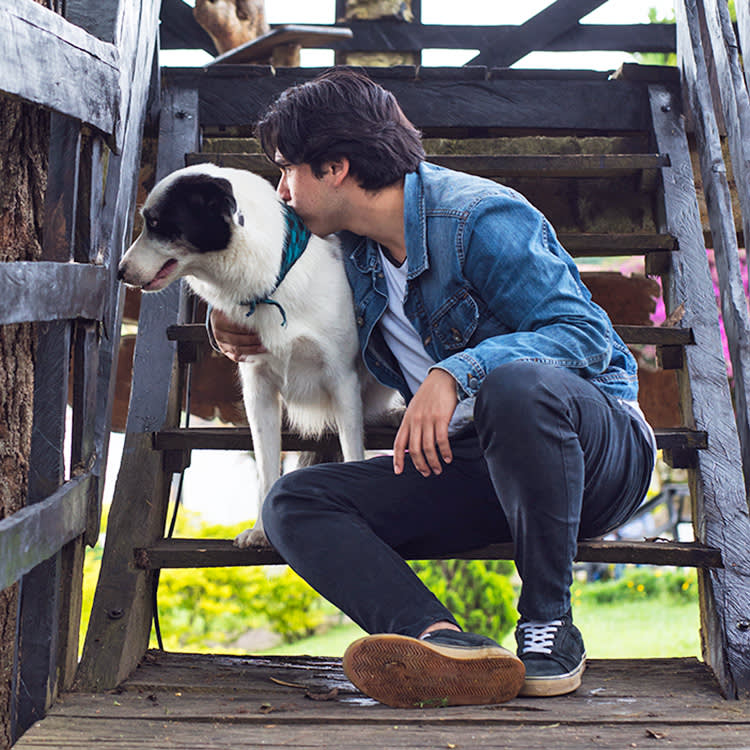
Every so often you meet a dog who genuinely marches to their own beat: one who spends huge stretches on repetitive rituals, cannot seem to read other dogs, or gets overloaded by ordinary household life. There is a name for that pattern, canine dysfunctional behavior (CDB), often compared to autism in humans. But here is the part most explainers skip, and the part that matters most for your dog: CDB is a diagnosis of exclusion. It is what you land on after you have ruled out the treatable things that imitate it, not the first box you check. Reaching for the label too early is the single most common mistake, because several of the look-alikes are fixable, and CDB is not.
So this guide runs in the order a good vet would: rule out the mimics first, then learn to recognize the real thing, then manage it.
First, rule out what looks like CDB but isn’t
A surprising number of medical problems can produce exactly the withdrawal, irritability, and repetitive behavior that CDB describes. Because those problems are treatable and CDB is not, they have to come off the table first.
Pain is the great imposter. A dog with an aching joint, a sore tooth, an ear infection, or a gut problem can become snappy, antisocial, or unwilling to be touched, and it reads as a personality change.
Skin allergies can drive obsessive, repetitive licking and scratching that looks compulsive but is really an itch the dog cannot escape.
Seizure disorders can cause brief, bizarre, repetitive episodes that mimic compulsions.
Canine cognitive dysfunction, the dog version of dementia, produces confusion, disrupted sleep, and social withdrawal in older dogs, and it overlaps heavily with the CDB picture.
Missed socialization early in life can leave a perfectly healthy dog fearful and awkward around other dogs and people, which is a training and behavior problem, not a neurological one.
Before we ever land on canine dysfunctional behavior, my job is to rule out the things that imitate it: pain, allergies, seizure activity, cognitive decline in an older dog. A dog who suddenly seems “off” deserves a medical exam first. Only once we have cleared those can we talk about CDB with any confidence.
The practical instruction here is concrete. If a dog’s behavior changes suddenly, that points toward a medical cause far more than toward CDB, which tends to show up early in life and persist. Sudden change means vet first.
What CDB actually is
Once the mimics are ruled out, CDB describes a persistent pattern of difference in three areas: social interaction, communication, and repetitive behavior. That trio is why it gets compared to autism. Most dogs live for their people, readily accept canine company, and enjoy familiar faces. A dog with CDB may want none of that. They may prefer to be alone, withdraw from social situations, struggle to learn basic cues, or simply fail to “tune in” to humans and other dogs the way we expect.
This is not a reason to shrug and let a dog be a dog. CDB can be genuinely dangerous. A dog who cannot process social stress hits their limit fast, and that can spill into biting or fighting, while extreme repetitive behaviors can cause real physical harm to the dog doing them.
What causes it (what we think we know)
Honesty matters here: the origins of CDB are still mostly theory, not settled science.
Genetics clearly plays a role, since CDB turns up more often in certain breeds, notably Bull Terriers. A dog’s genetic makeup may drive elevated blood levels of neurotensin and corticotropin-releasing hormone, two markers also raised in humans diagnosed with autism spectrum disorders. There is a separate theory that affected dogs have fewer mirror neurons, the brain cells behind social learning and imitation, which would fit the social and communication difficulties.
Environment matters too. Early trauma, stress, and anxiety may contribute, and poorly socialized dogs can develop unusual patterns around interacting and learning. In most real dogs it is probably some braid of genetics and experience rather than one clean cause.
The behaviors, made specific
“Dysfunctional” is a vague word, so here is what it actually looks like.
Aggression. Easily overwhelmed by stimulation, a dog with CDB can be tipped into lashing out by something as ordinary as a mail delivery, a visitor, or a new dog next door, sometimes even toward familiar people and pets.
Anxiety or fear. The same overload can produce hiding instead of greeting, or pacing, whining, and barking when alone or when a lot is happening.
Anti-social tendencies. Hanging back at the dog park, avoiding eye contact, zoning out during training, retreating rather than greeting.
Communication and learning difficulties. Endless barking in some dogs, an inability to pick up simple cues in others. Some may even fail to signal hunger or the need to go outside.
Compulsive behaviors. Circling, tail chasing, and obsessive licking, sometimes carried far enough to injure the body.
How it gets identified
There is no blood test and no single rule-out for CDB. It rests on behavioral assessment over time, which is where you become essential. You are looking for trends, not a one-off weird day: sudden aggression under stress, persistent repetitive behaviors, an inability to learn basic commands, inattentiveness to people and animals, and a steady pattern of social avoidance.
The most useful thing you can bring a professional is data. Keep a simple log: what happened, what preceded it, how your dog reacted, and how long it lasted. Note the triggers you can spot. That record helps your vet clear the medical mimics and, if needed, refer you to a veterinary behaviorist, who can turn scattered observations into a plan.
How to help a dog with CDB
You will not rewire your dog’s brain or erase their history, but you can meaningfully lower their stress and soften the behaviors.
Positive reinforcement, never punishment. These behaviors are frustrating, but punishment makes fear and reactivity worse. Redirect to a behavior you want and reward that, consistently, with clear and stable boundaries.
A predictable routine. Every dog benefits from routine; a dog with CDB depends on it. Reliable timing for meals, walks, and play removes a huge source of daily uncertainty and stress.
Real exercise. Regular physical activity lowers stress and lifts mood, leaving your dog with more capacity to cope with the situations that overwhelm them.
Professional support, including medication where appropriate. Your vet is a core member of the team. Some dogs do meaningfully better on anti-anxiety medication paired with a behavior-modification plan run by a qualified trainer or behaviorist.
Where the research actually points
The autism comparison is not just a loose metaphor. A study of Bull Terriers with compulsive tail-chasing, published in Translational Psychiatry, found that affected dogs had elevated blood levels of neurotensin and corticotropin-releasing hormone, the same markers seen raised in children with autism spectrum disorders. That is part of why researchers take the parallel seriously and why some now study dogs to better understand human neurodevelopment.
For a dog owner, the useful conclusion is calmer than the science sounds. These behaviors have a biological basis. Your dog is not being stubborn, spiteful, or badly raised. And the most effective, kindest response is the least dramatic one: rule out the treatable causes first, then build a life of routine, patient positive-reinforcement training, exercise, and professional guidance around the dog you have.
References
- Moon-Fanelli, A.A., et al. “Elevated serum neurotensin and CRH levels in children with autistic spectrum disorders and tail-chasing Bull Terriers with a phenotype similar to autism.” Translational Psychiatry, vol. 4, no. 10, 2014, e466. https://doi.org/10.1038/tp.2014.94
- Hamilton, A.F. de C. “Social decision making in autism: On the impact of mirror neurons, motor control, and imitative behaviors.” CNS Neuroscience & Therapeutics, vol. 24, no. 7, 2018. https://pmc.ncbi.nlm.nih.gov/articles/PMC6055683/
- American College of Veterinary Behaviorists. “Compulsive Disorders.” https://www.dacvb.org/
Dr. Mehta is a board-certified veterinary nutritionist who evaluates pet food formulations, ingredient quality, and the science behind dietary trends. He writes and reviews all nutrition content at The Pet Times, including our food rankings and feeding guides.
Meet our experts ↗Keep reading
 TrainingYour Reactive Dog Can't 'Settle.' Stop Asking and Give Them a Job.Dr. Mara Chen · 8 min
 TrainingYou Can't 'Cry It Out' a Dog. The Baby Advice Falls Apart Here.Dr. Lena Park · 5 min
 TrainingWhat Corook's Anxious Rescue Dog Taught Them About Doing LessDr. Mara Chen · 9 min
 TrainingThat Friendly On-Leash Hello Is Teaching Your Dog to Melt DownDr. Amara Solis · 6 min
 TrainingYour Dog Isn't Being Bad When They Lunge at Cars. Their Brain Thinks It's HuntingDr. Ravi Mehta · 6 min
 TrainingDog Anxiety Isn't One Thing. That's Why Treating It Like One FailsDr. Nina Kohl · 8 min