


Your Cat Isn't Aloof. Science Counted 276 Faces to Prove It
The 'unreadable cat' is a myth. Researchers who catalogued 276 distinct feline facial expressions found most are friendly, and the patterns they spotted give you a practical cheat sheet for reading your own cat.

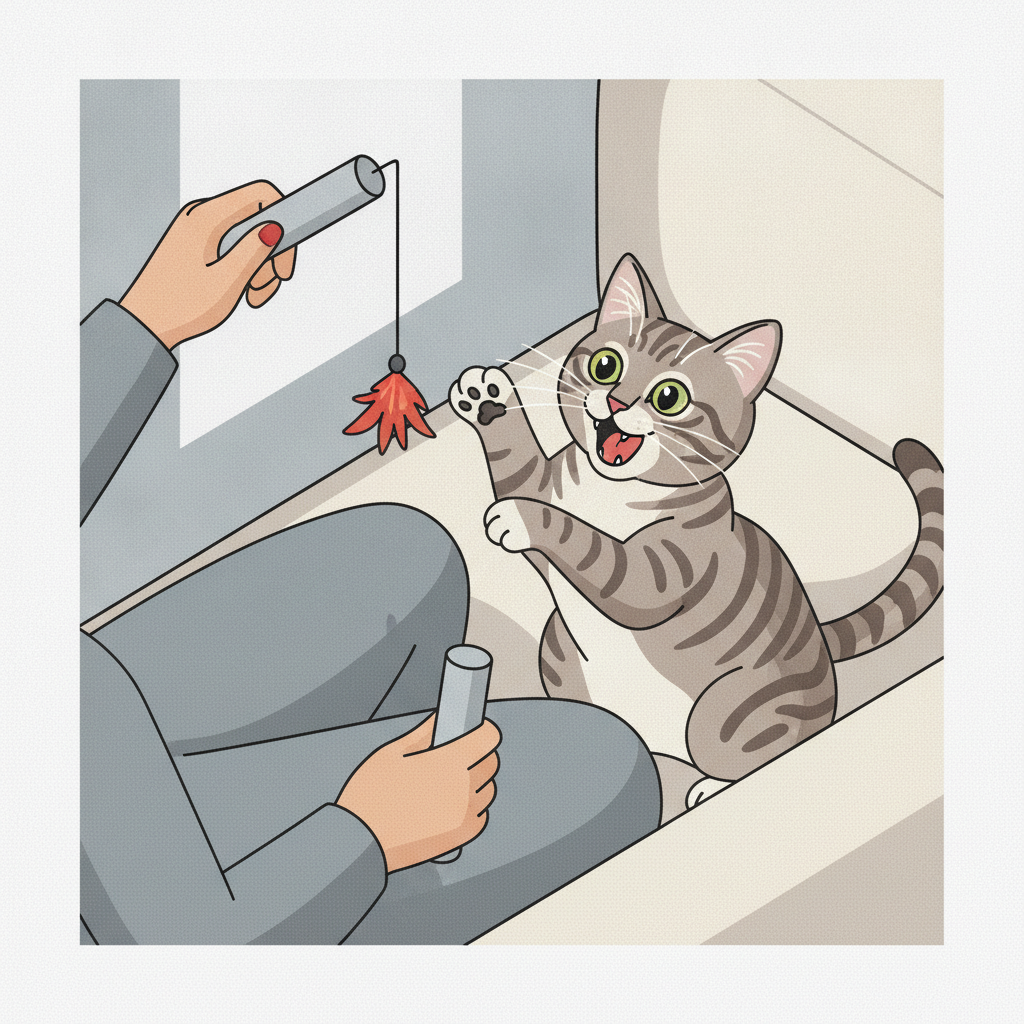
The stubborn myth about cats is that they are sealed envelopes: a dog broadcasts its mood with a wagging tail while a cat sits there being inscrutable. A landmark study published in the journal Behavioural Processes in November 2023 quietly demolished that idea, and the demolition is more useful than it first sounds. The researchers did not just prove cats are expressive; they mapped which expressions cats make and how often, and that map doubles as a cheat sheet for anyone trying to read the cat in their own living room. So rather than treat “276 faces” as a fun fact, let us pull the practical read out of it.
What the researchers actually did
The work grew out of a gap in the science. Most prior research on cat faces had narrowed to two things: expressions of pain, or how cats communicate with humans. Almost nobody had studied how cats use their faces with each other, which is odd, because cats are far more social than their solitary reputation suggests. They live in multi-cat homes and in colonies that can number in the hundreds.
To fill the gap, the team set up at a cat cafe in Los Angeles and, over roughly a year, observed 53 adult domestic shorthair cats. They analyzed the footage using the Facial Action Coding System (FACS), a rigorous, standardized method for identifying individual facial muscle movements (Action Units). Combinations of those movements add up to a complete expression. It is exacting work: coders must pass a certification test, memorize dozens of movements, and code footage by hand, frame by frame. After combing through hours of recordings and coding every facial movement one cat directed at another, they arrived at the headline: 276 distinct facial expressions, built from whisker movements, blinks, mouth movements, and ear positions.
The number is genuinely impressive
Set against other species whose Action Unit combinations have been documented, cats turned out to be strikingly expressive. Gibbons produce around 80 combinations; chimpanzees produce 357. Cats, at 276, land much closer to chimps than to the “one bored face” stereotype.
For years the working assumption was that cats just do not say much with their faces, at least not to each other. This research flips that. A vocabulary near 300 expressions, most of them social, tells us cats are constantly negotiating relationships in ways we were simply not trained to see.
The part you can actually use: read the ears, eyes, and whiskers
Here is where the study earns its keep for owners. Two concrete patterns emerged that you can watch for at home.
The first is a “common play face,” a lowered jaw with the corners of the mouth drawn back, that cats share with humans, dogs, and monkeys. If you see it during rough-and-tumble play, that is a cat signaling the interaction is friendly, not a fight.
The second is a whisker rule of thumb: cats moved their whiskers toward another cat during friendly interactions and away during unfriendly ones. Pair that with ear and eye position and you have a fast read. Ears forward and whiskers relaxed and aimed at a companion lean friendly; ears flattened and whiskers pulled back and tight lean tense. The mouth, meanwhile, is where a brewing fight often shows first.
The most reassuring finding was the breakdown of all 276 expressions: about 45 percent were friendly, only 37 percent aggressive, and 18 percent ambiguous. In other words, when two cats face off, they are more likely to offer a friendly hello than a cold shoulder, which flatly contradicts the moody-loner stereotype. (What faces cats make at humans is still an open question; this study looked only at cat-to-cat signaling.)
Why it matters beyond a cafe in LA
The applications are real, especially in shelters and homes where cats must learn to cohabit. Reading feline facial signals helps people judge how two cats are getting along and can improve the odds of successfully pairing cats who need to share space. The authors note the work also sheds light on how domestication shaped cat communication, and that shelters could use it to support adoptions and reduce failed introductions.
For your own household, the takeaway is a small behavior change: during a tense first meeting between cats, or a play session that might be tipping into a scuffle, stop watching the tails and start watching the faces. Whiskers pointing toward the other cat and a relaxed, forward set to the ears mean you can let things ride. Whiskers snapped back and a hard stare mean it is time to calmly create distance.
Where the research is heading now
The next frontier is automation. Teams have built machine-learning tools that analyze feline facial landmarks to detect pain, and the numbers are getting practical. In one study, two different approaches, a deep-learning image classifier and a landmark-based model built on the cat Facial Action Coding System, both cleared roughly 72 percent accuracy at identifying pain in cats recovering from surgery. A November 2024 study in Scientific Reports pushed the idea from still photos to video, tracking facial landmarks frame by frame to flag pain as it moves across a cat’s face. Some prototypes even pair a camera with a feeder to catch a wince while a cat eats, the idea being to catch discomfort a stoic cat would otherwise hide. The 276-expression study established just how much cats say with their faces; the current work is about teaching computers, and eventually us, to listen more reliably.
References
- Scott, Lauren, and Brittany N. Florkiewicz. “Feline Faces: Unraveling the Social Function of Domestic Cat Facial Signals.” Behavioural Processes, vol. 213, 2023.
- Finka, Lauren R., et al. “Geometric Morphometrics for the Study of Facial Expressions in Non-Human Animals, with Application to Face Shape Change in Domestic Cats.” Scientific Reports, vol. 9, 2019.
- Feighelstein, Marcelo, et al. “Automated Recognition of Pain in Cats.” Scientific Reports, vol. 12, 2022.
- Martvel, George, et al. “Automated Video-Based Pain Recognition in Cats Using Facial Landmarks.” Scientific Reports, vol. 14, 2024.
Dr. Solis is a board-certified veterinary dermatologist with over twelve years of clinical experience. She advises on skin conditions, allergies, and grooming practices that affect coat and skin health. All dermatology and allergy content at The Pet Times is reviewed by her team before publication.
Meet our experts ↗Keep reading
 TrainingScientists Pitted Kittens Against Puppies at Math. The Kittens Won.Dr. Mara Chen · 4 min
 TrainingYour Cat Isn't Being Dramatic. 8 Things That Genuinely Wound ThemDr. Nina Kohl · 6 min
 TrainingWhy a Cat Will Nurse a Duckling, and Why You Should Still Watch CloselyDr. Amara Solis · 6 min
 Training'My Cat Doesn't Like to Play' Is Almost Always a You ProblemDr. Lena Park · 8 min
 TrainingMaking Biscuits Isn't One Thing. How to Read What Your Cat MeansJames Okafor · 8 min
 TrainingYour Cat's Sleeping Position Is a Security Report. Here's How to Read ItDr. Mara Chen · 7 min