


Making Biscuits Isn't One Thing. How to Read What Your Cat Means
Kneading is a single instinct that can mean contentment, self-soothing, scent-marking, or a bid for attention. The useful skill isn't knowing the reasons, it's reading which one is happening right now. A behavior expert breaks it down.

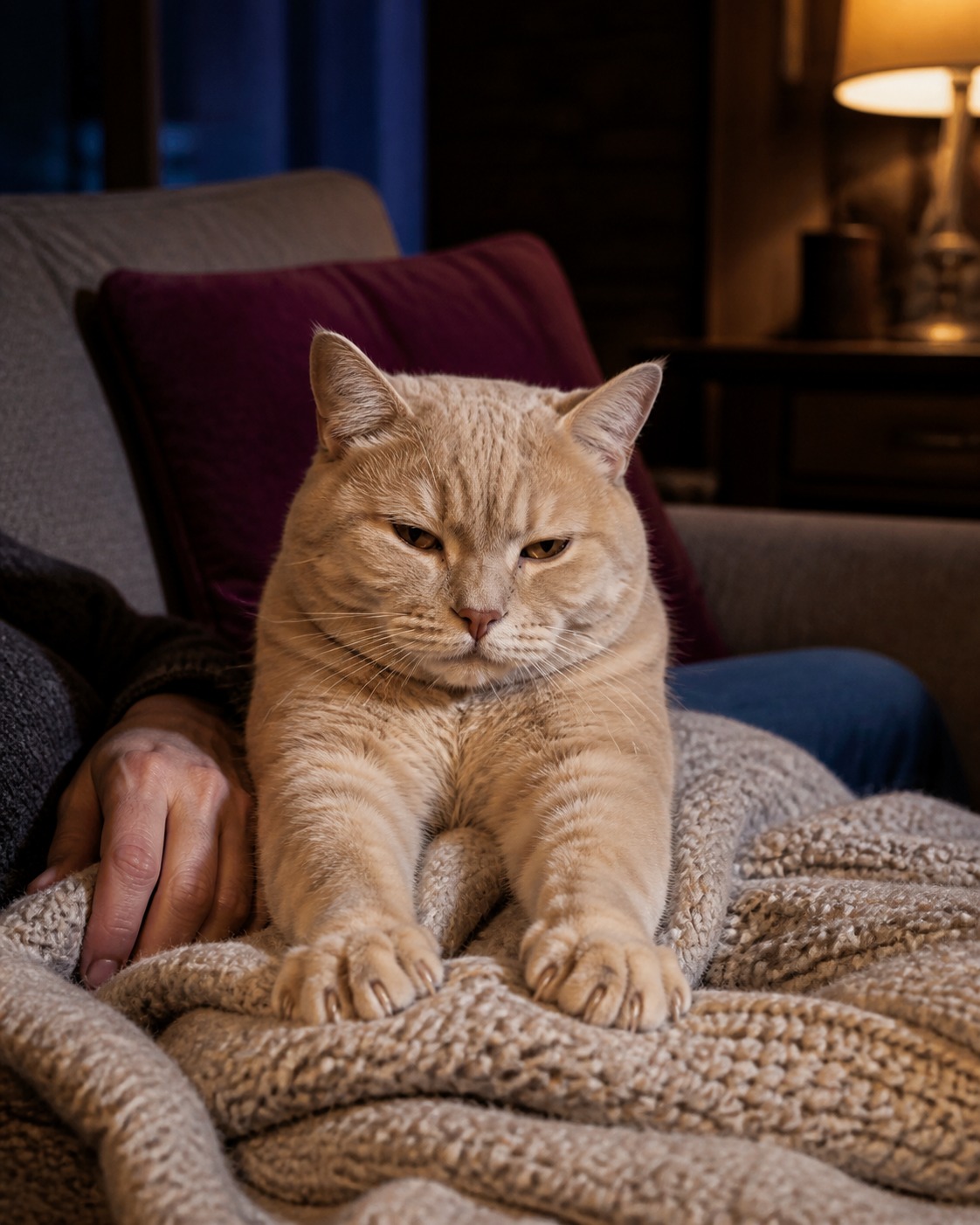
Here is the thing most explanations of kneading get wrong: they hand you a list of five reasons cats “make biscuits” and leave you to guess which applies to the cat currently churning its paws into your thigh. But kneading is not five separate behaviors. It is one instinct that shows up in different emotional weather, and the genuinely useful skill is not memorizing the reasons, it is reading the context so you know which one is playing out in front of you right now. A cat kneading in blissed-out contentment and a cat kneading to self-soothe through anxiety are doing the identical motion for opposite reasons, and the difference is written all over the rest of their body.
So let us do this in the order that actually helps: first the one instinct and where it comes from, then the field guide to telling the versions apart, and finally what to do if the kneading itself is a problem for you.
According to James Okafor, a certified feline behavior consultant on the Pet Times roster, nearly all cats knead, but it shows up especially often in cats who were weaned too early. You may even notice your cat suckling on a blanket or your sleeve while kneading, as if nursing.
“That combination is a sign of a deep bond, almost like the cat sees you as a mother figure,” Okafor says. “They are seeking comfort in your scent and your presence. The drooly, suckling part can be a little gross for whoever’s sweater is involved, but it signals maximum relaxation and contentment.”
The one instinct underneath all of it
Kneading is instinctual, kicking in almost from birth, and depending on the moment it can signal either comfort or stress. Everything else is a variation on that single root.
It starts with nursing
Kittens knead their mother’s belly while they nurse, and the motion helps stimulate the flow of milk. It also leaves their scent around a particular nipple, which may be part of why kittens tend to return to the same one each time. How a mother cat tolerates all those needle-sharp kitten claws is a mystery, but she does, and you will often see her kneading the air herself as her kittens feed. In those moments everyone feels safe and content, and for the kittens, the link between kneading and comfort gets cemented for life.
A sign of comfort and happiness
Although it does not begin as a comfort behavior, the act of kneading during nursing coincides with kittens feeling completely at ease. That is how kneading becomes something cats of any age do when they feel relaxed, secure, and content. You will most often see it when they are settled somewhere soft and cozy, paws stretching and scrunching against a blanket or against you. Cats also knead the air, paws reaching skyward while lying on their backs, and some knead while standing or sitting. A cat that rushes to greet you at the door may even knead out of sheer excitement.
Self-soothing under stress
When we are stressed, we reach for comforting rituals, a cup of tea, a blanket pulled up tight. Cats do the same. In anxious moments they use self-soothing behaviors like kneading and purring to calm themselves. If kneading is stress-driven, you will usually see other anxious body language alongside it: fidgeting, general nervousness or skittishness, an inability to relax, trying to make themselves small, or hiding.
Showing affection
Your cat may not be kneading on you to say “I love you” so much as to say “I feel safe here.” It signals that being near you, in the environment you have built for them, makes them comfortable enough to slip into this vulnerable, contented behavior. That is a genuine compliment.
Because cats also knead when anxious, context matters. If your cat has relaxed body language, soft eyes, and no other stress signals, it is almost certainly happy kneading. Learning to read the surrounding body language is what lets you tell the difference.
Scent marking
Here is a lesser-known angle: cats have scent glands in their paws, so kneading is also a way of marking territory. Even cats who were not weaned early will knead objects, people, and other pets to express pleasure, often purring, drifting off to sleep, or slipping into a blissed-out trance while they make biscuits.
Reading which kind of kneading you’re watching
This is the part that turns “cats knead for a bunch of reasons” into something you can actually use. The paw motion is the same every time, so ignore it and read what surrounds it. Here is the quick decode:
| What else you see | Most likely meaning | What it’s asking of you |
|---|---|---|
| Purring, half-closed “soft” eyes, slow breathing, maybe drooling or suckling | Contentment and bonding | Nothing. Enjoy it, or slide a blanket under the claws. |
| Rushing to you at the door, then kneading briefly | Excited greeting | A hello. Say hi back. |
| Tense body, dilated pupils, flattened or swiveling ears, hiding, trying to look small | Self-soothing through stress | Find and ease the stressor, don’t just stop the kneading. |
| Kneading you awake at 3 a.m., staring, vocalizing | A learned bid for attention | Meet the need on your schedule, not theirs (see below). |
Two cats doing the exact same thing can be telling you completely different things. The body around the paws is the message.
Is kneading ever abnormal?
Kneading is entirely normal and appropriate. It is one of the very first things a kitten does, and it serves real purposes, from stimulating milk flow during nursing to relieving stress later in life. The only time it is worth a second look is when it is clearly stress-driven, whether the stress comes from pain, fear, conflict with another pet, or something else. In that case, the underlying stress is what needs addressing, not the kneading itself.
How to redirect kneading you do not love
Stopping kneading altogether is neither kind nor necessary, since it is an important instinct. But there are times and places you might prefer to avoid, like the middle of the night, on your head. In those cases, redirect rather than eliminate.
Start by asking why your cat is kneading. Are they relaxed or anxious? Could it be a bid for attention? If you are asleep and your cat has learned that kneading your leg wakes you up and earns a cuddle against your chest, the kneading is really about that reward.
For attention-driven kneading, show your cat it no longer works. When they knead you in that moment, for that reason, ignore it. It may intensify at first, but it should fade with time. Just be sure to meet your cat’s need for closeness on your own terms, by building a cuddle session into your bedtime or wake-up routine, so they do not have to wake you to get it.
For relaxed kneading you would rather not have on a particular surface, neutrally interrupt it. This is not attention, good or bad. It is a brief, neutral distraction. Once you have interrupted the moment, move the off-limits item or gently lure your cat away. When they knead something acceptable instead, reward them with a little attention to reinforce the better choice.
It also helps to relocate tempting items permanently. If your cat loves to knead a family-heirloom quilt where they sleep, move the quilt to a chair your cat never uses, and it is out of the line of fire.
If the kneading is stress-driven, the real fix is identifying the trigger and either removing it or helping your cat feel better about it.
What newer research adds
Scientists continue to map the scent-signaling side of feline behavior, and the picture supports what behaviorists have long said: a cat’s paw pads carry scent glands, so kneading deposits a personal scent signature on whatever, or whoever, is being kneaded. In other words, when your cat makes biscuits on you, part of what they are doing is marking you as part of their safe territory.
The takeaway for owners is reassuring. Kneading is one of the clearest “I feel secure” signals a cat can give, so rather than discouraging it outright, the gentler approach is to redirect it to acceptable surfaces and manage the one real downside, which is claws.
On that last point, a genuinely practical fix beats willpower: keep a thick, dedicated “biscuit blanket” where your cat likes to knead you, and slide it between the paws and your skin when they start. Pair that with routine nail trims every couple of weeks, and the behavior you would never actually want to stop stops hurting. That, rather than discouraging a cat’s clearest signal of trust, is the version of this everyone can live with.
References
Common questions
Is my cat kneading a sign of affection?
It can be. Kneading usually means your cat is happy, relaxed, and comfortable with you, and they slip into the instinctual behavior as a result of that contentment.
Does kneading mean my cat is happy?
Often, yes. Kneading frequently signals happiness and security. But it can also be a self-soothing behavior a cat uses when anxious, so read the context and look at your cat's body language for signs of stress.
How can I read my cat's body language?
It takes practice. Cats communicate subtly through their tails, ears, and even the shape of their faces. Learning the basics of feline body language helps you tell relaxed kneading from anxious kneading.
Why does my cat knead me but not my partner?
Many factors play in: where that person tends to sit, how soft and squishy their clothing is, and the time of day they sit down to relax. It is not necessarily about preferring one person over another, though that can play a role.
Why does my cat knead me with claws?
A cat's claws naturally extend during kneading. It is not a deliberate attempt to dig into you, just part of how the motion works.
James Okafor covers rescue, adoption, and the causes shaping animal welfare. His work follows the people and organisations working to give more pets a home, and the issues owners and advocates care about most.
Meet our experts ↗Keep reading
 LivingYour Cat Isn't Embarrassed. Misreading That Scramble Is How People Make Cats Anxious.Dr. Nina Kohl · 6 min
 TrainingYour Cat's Meow Isn't Their Voice. It's a Tool They Built for You.Dr. Nina Kohl · 7 min
 TrainingThe Sideways Cat Crab-Walk Looks Alarming. It's Almost Always a BluffDr. Nina Kohl · 6 min
 TrainingYour Cat Knows When You're Watching. A Study Proved ItDr. Amara Solis · 5 min
 TrainingThat Sneer Is Your Cat Tasting the Air. Here's the Organ Doing ItDr. Amara Solis · 5 min
 TrainingYour Cat Doesn't Care About the Bathroom. They Care That You Finally Sat Down.Dr. Priya Nair · 8 min