


Cats and Avocado: The Flesh Isn't the Problem, Everything Around It Is
The persin scare gets avocado backwards for cats. The green part is low-risk; the real hazards are the pit, the fat load, and what guacamole hides. Here's how to think about it.

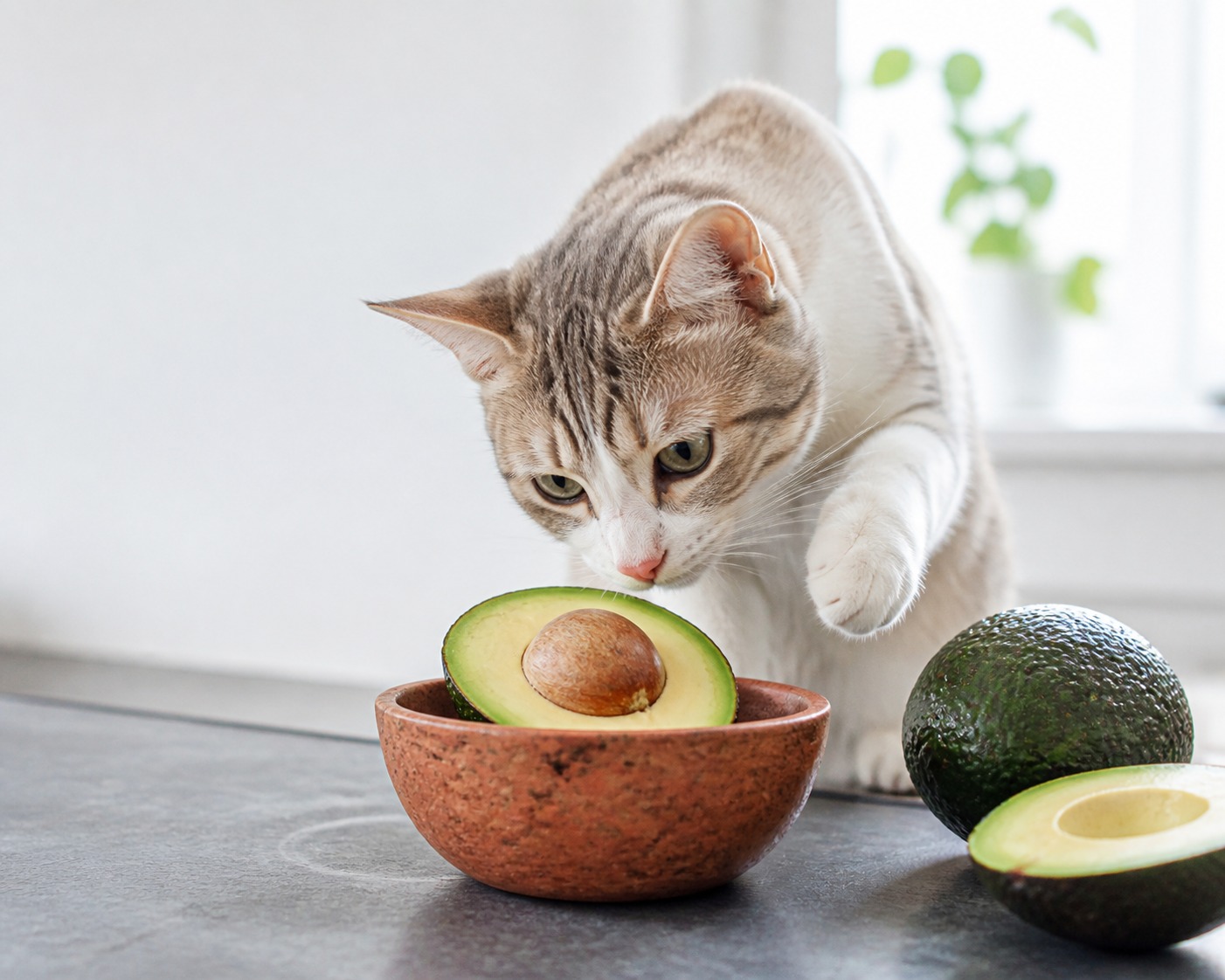
If you have ever Googled whether cats can eat avocado, you have probably hit a wall of warnings about a toxin called persin. Those warnings are not wrong, exactly, but they are aimed at the wrong audience. Persin is a serious threat to birds and rabbits and grazing animals. For a cat, the green flesh of a ripe avocado is one of the least worrying things on the fruit. The actual hazards are more mundane and more likely: a hard pit, a heavy dose of fat, and the company avocado tends to keep on a plate. Sort those three out and the persin panic mostly evaporates.
Sorting the real risks from the famous one
Let’s rank the parts of an avocado by how much a cat owner should actually care.
The pit (highest concern). This is the part to guard against, and not mainly because of persin. A pit is a smooth, slippery object roughly the size of a golf ball. A curious cat that bats one around and gets it into their mouth risks a choking emergency or an intestinal obstruction that needs surgery. It also happens to be the most concentrated source of persin in the fruit, but the mechanical danger is the bigger and more immediate one.
The avocado question I worry about isn’t the toast someone’s cat licked, it’s the pit left on the counter. A pit is the perfect size and shape to become a real problem if a playful cat decides it’s a toy.
The skin, leaves, and stems (avoid). These carry more persin than the flesh and offer a cat nothing, so there is no reason to let them anywhere near your pet.
Avocado oil (skip it). It can carry compounds pressed from the pit, so even though pure flesh is low-risk, the oil is an easy thing to leave out.
The flesh (low concern). Ripe avocado flesh is not toxic to cats the way onions or chocolate are. A small taste will not poison a healthy cat. There is even research exploring avocado meal, the leftover pulp from oil extraction, as a sustainable fiber source in commercial cat diets, which tells you the flesh is far from a poison.
The quiet problem: fat, not toxin
Here is the catch with the flesh. Avocado is famously rich in fat, and that is great for a human heart and not so great for a cat’s digestive tract. A nibble is usually fine. A generous portion can trigger vomiting or diarrhea, and for cats who are prone to it, a fatty treat is a known nudge toward pancreatitis.
That is why the cats who should skip avocado entirely are not the ones at risk from persin, but the ones with sensitive stomachs or a history of gastritis or pancreatitis. For them, the fat is the dealbreaker, full stop. For everyone else, “small and occasional” is the whole rule.
Guacamole is a different question entirely
If you take one practical thing from this article, make it this: the danger in your kitchen is rarely the avocado. It is the guacamole.
Plain mashed avocado is the safe part of guacamole. But the recipe usually adds onion and garlic, both members of the Allium family and both genuinely toxic to cats, capable of damaging red blood cells and causing anemia. Throw in salt and lime and you have a dip that is several kinds of wrong for a cat, none of which is the avocado itself. So when a cat noses up to the chip bowl at a party, the answer is a firm no, and the reason is the aromatics, not the green stuff.
If your cat gets into avocado
For a small amount of plain flesh, watch for mild vomiting or diarrhea over the next day; it usually passes on its own. Two situations call for a faster response: if your cat may have swallowed part of a pit (a choking or obstruction risk), or if they ate guacamole or anything containing onion or garlic. In either case, call your veterinarian or a pet poison hotline such as the ASPCA Animal Poison Control Center rather than waiting.
The bottom line
The persin headline gets avocado backwards for cats. The flesh is the safe part, best given rarely and in tiny amounts because of its fat, and skipped altogether for cats with sensitive stomachs. The pit, the skin, the oil, and especially garlicky, oniony guacamole are where the genuine risks live. Keep pits off the counter, keep guacamole to yourself, and avocado moves from “scary toxin” to “occasional, low-stakes nibble” in your cat’s life.
References
Common questions
What part of the avocado should a cat never have?
The pit (a choking and obstruction hazard and the most concentrated source of persin), plus the skin, leaves, and stems. Avocado oil is best skipped too, since it can carry pit-derived compounds.
Why is guacamole worse than plain avocado for a cat?
Because of the add-ins. Guacamole commonly contains onion and garlic, which are genuinely toxic to cats and can damage red blood cells, plus salt and lime. The avocado is the safe part; the recipe is the danger.
My cat ate a piece of avocado flesh. What should I watch for?
Watch for vomiting or diarrhea over the next day, which is usually mild and self-limiting. If your cat swallowed part of a pit, or ate guacamole with onion or garlic, call your vet or a pet poison hotline right away.
Not a substitute for your vet. Our guidance is educational. For urgent symptoms, contact a vet or emergency clinic right away. Editorial standards
Dr. Nair is a veterinarian focused on diet and feeding. She covers everyday nutrition, treats, and the many "can they eat this?" questions owners ask, grounding each answer in what is actually safe and sensible for dogs and cats.
Meet our experts ↗Keep reading
 FoodCats and Marshmallows: The Bag Your Dog Should Worry About MoreDr. Priya Nair · 6 min
 FoodYour Cat Can Eat Pomegranate. That's Not the Same as Should.Dr. Priya Nair · 5 min
 FoodCats and Almond Milk: You're Solving a Problem Your Cat Doesn't HaveDr. Priya Nair · 4 min
 FoodRice and Cats: Safe to Share, but Not for the Reason You ThinkDr. Ravi Mehta · 7 min
 FoodThe Foods That Poison Cats Are Hiding in Plain SightDr. Lena Park · 8 min
 FoodNever Feed a Cat Grapes. Science Finally Figured Out Why They're So DangerousDr. Amara Solis · 6 min