


The Foods That Poison Cats Are Hiding in Plain Sight
Most cats won't lap up a martini or steal a grape. The real danger is the onion powder in your baby food, the raisins in a cookie, and the xylitol in a stick of gum. A vet's guide to the foods that actually put cats in the ER, and what to do if yours gets into one.

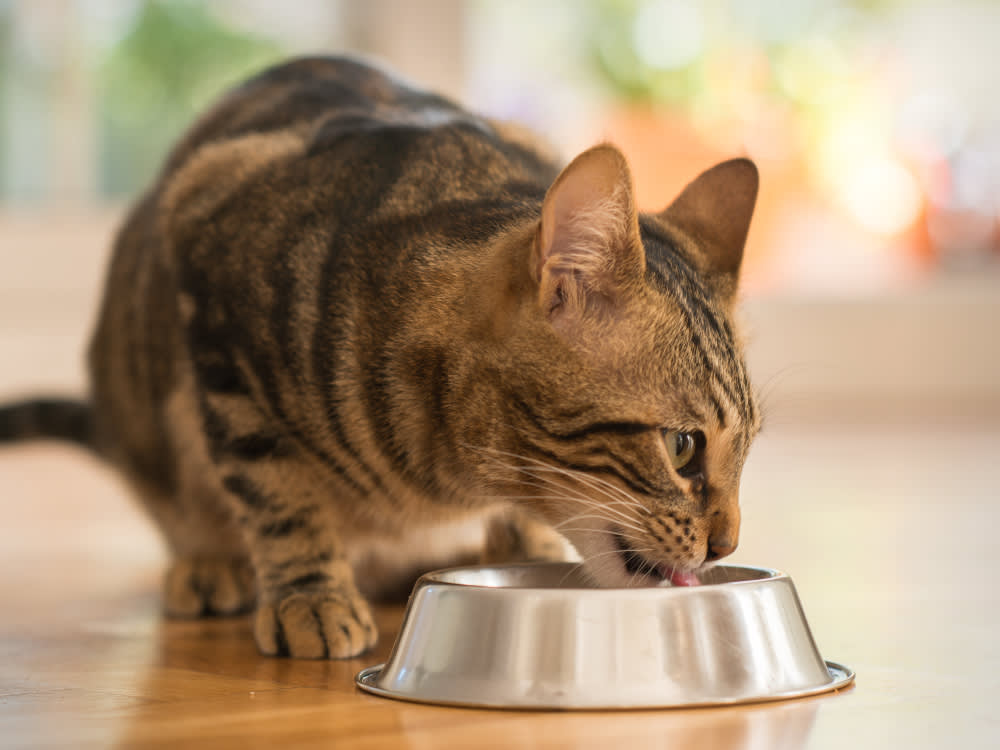
Ask most people to picture a food that’s dangerous for a cat and they’ll picture a cat drinking milk from a saucer, or maybe nosing at a chocolate bar. Fair enough. But cats are famously picky, and the honest truth is your cat probably isn’t going to chug beer or binge on raisins.
The foods that actually land cats at the emergency vet are the ones you’d never think to guard, because they’re ingredients, not meals. Onion powder in a jar of baby food. Raisins baked into a cookie. Xylitol in a piece of gum or a protein bar. The poison isn’t sitting on a plate looking obvious. It’s hidden inside something that looks harmless. Here’s what genuinely puts cats at risk, why, and what to do if your cat gets into one.
People guard against the dramatic stuff and miss the sneaky stuff. It’s almost never the cat who drank wine. It’s the cat who ate a bite of leftover casserole made with onion, or licked the frosting off a raisin cookie. When someone calls me worried, my first question isn’t what was on the plate, it’s what was mixed into it.
Why some foods hurt cats at all
It can be genuinely confusing that a food we eat happily can send a cat into organ failure. The reasons vary: some foods carry chemical compounds a cat’s body can’t process, some are so high in oil or fat they overwhelm the digestive system, and some cause trouble simply because of what they do to blood cells or the gut. Cats are usually choosier than dogs about what goes in their mouths, but “usually” isn’t “always,” and it only takes one determined nibble.
The foods that actually cause harm
1. Alliums (onion, garlic, leeks, shallots, scallions)
This is the big one, and the one most likely to hide. Onions and the rest of the Allium family damage a cat’s red blood cells, which can lead to anemia. The tell-tale signs, weakness, lethargy, loss of appetite, pale gums, and dark orange-red urine, often take a few days to show up.
A cat may vomit at first, then, over the next three to five days, turn lethargic with pale gums and reddish urine as the red blood cells break down and lose their ability to carry oxygen. The concentrated forms are the most dangerous precisely because they’re invisible: onion powder and onion soup mix pack far more allium into a small amount than a raw onion does, which is why baby food, gravies, and seasoning blends are such a common culprit.
2. Grapes and raisins
You probably know grapes and raisins are off-limits for dogs. They’re a danger to cats too, and can cause kidney failure. The problem is that raisins hide everywhere: trail mix, baked goods, breads, protein bars, cookies, even grape juice. Their cousins, currants and sultanas, are just as risky. Avoiding the fruit is easy; avoiding every baked good that contains it is the actual challenge.
3. Chocolate
Chocolate contains compounds called methylxanthines. The darker the chocolate, the more dangerous, baking chocolate carries the highest levels and white chocolate the lowest. A cat who eats it can experience vomiting and diarrhea, panting, excessive thirst and urination, hyperactivity, abnormal heart rhythm, tremors, seizures, and in severe cases death. The saving grace is that cats can’t taste sweetness, so they seldom eat the amount it would take to do more than upset the stomach, but “seldom” isn’t a reason to leave it out.
4. Alcohol
A cat who gets into alcohol might look drunk, wobbly and drowsy, but the risk goes far past clumsiness. In cats, alcohol can poison the system and set off tremors, a racing heart, seizures, loss of consciousness, and death. Because cats are small, ethanol poisoning is possible even from a little.
5. Caffeine
Coffee, tea, energy drinks, and the like hit cats hard. Caffeine can upset the stomach and cause vomiting and diarrhea, and in larger amounts it becomes true caffeine toxicity, raising blood pressure, triggering an irregular heartbeat, and, at the extreme, causing loss of muscle control and seizures.
6. Raw yeast and bread dough
Store the sourdough starter somewhere the cat can’t reach. Raw yeast is toxic even in small amounts, and raw dough is worse. Inside a warm stomach, the yeast keeps fermenting, converting the dough’s sugars into carbon dioxide gas and alcohol. The result can be a bloated, intoxicated cat and a genuine life-threatening emergency. Fully cooked bread, for the record, is fine as an occasional nibble.
7. Nuts
Almonds, pecans, walnuts, and the rest aren’t technically toxic to cats, but they’re loaded with oils and fats that can bring on vomiting and diarrhea, so they’re best skipped. Never offer salted or chocolate-covered nuts. One quirk worth knowing: macadamia nuts, which are seriously toxic to dogs, don’t appear to cause the same problems in cats.
8. Raw eggs
Raw eggs can carry E. coli or Salmonella, and both can make a cat sick. Expect anything from vomiting and dehydration to a fever. Steering clear of raw food generally is the simplest way to avoid spreading bacteria that could reach your cat or your family.
9. Milk and dairy
The children’s-book image of a cat lapping warm milk is wrong. Most cats lack lactase, the enzyme needed to digest dairy, so milk tends to cause upset stomach, gas, cramping, and diarrhea, feline lactose intolerance, essentially. And a kitten who needs bottle-feeding should get a proper kitten formula, never cow’s milk, which doesn’t have the nutrients a kitten needs to grow.
A quick note on citrus: the flesh of most citrus fruit won’t hurt a cat, but the peel and plant parts contain oils that can cause stomach upset. Happily, cats rarely find citrus appealing in the first place, so this one mostly guards itself.
What to do if your cat eats something toxic
Don’t panic. Try to reconstruct three things: roughly how much your cat ate, what was actually in it, and how long ago. With that in hand, phone your vet or a pet poison hotline, they can tell you the real level of danger and the right next step.
Sometimes you come home to the aftermath instead, a chewed wrapper and a cat who already looks off. If your cat is showing any symptoms at all, don’t wait it out; head straight to your vet or the nearest emergency clinic.
Signs of poisoning to watch for
Symptoms depend on the food, but a few patterns come up again and again:
- Vomiting and diarrhea. Almost any dietary misadventure irritates the stomach, and this is usually the first flag that something’s wrong.
- Lethargy. Severe stomach upset, kidney trouble, dehydration, or intoxication can all leave a cat sluggish. Alcohol, raw dough, and grapes or raisins are common triggers.
- Hyperactivity and trembling. Caffeine and chocolate can cause restlessness and shaking. You’ll often see vomiting first, but cats don’t always follow the script.
The thing I want owners to remember is that with some of these, alliums especially, your cat can look totally fine the day it happens. If you know they got into onion or garlic, don’t wait for symptoms. By the time the gums go pale, you’ve lost a few days you didn’t need to lose.
What newer data adds
If it feels like human food is a bigger cause of pet poisonings than it used to be, the numbers back you up. In the ASPCA Animal Poison Control Center’s 2024 report, human food and drinks were the second most common category of pet toxic exposures, and the center fielded more than 451,000 calls that year. The biggest offenders in that food category tell the whole story of this article: protein drinks and bars, xylitol gum, grapes, raisins, onions, and garlic, exactly the hidden, mixed-in ingredients rather than the obvious ones. Chocolate, tracked separately, keeps creeping up the overall list too.
One ingredient from that list deserves a flag: xylitol, the sugar substitute in many gums, mints, and protein bars. Its most dangerous, well-documented effects are in dogs, and its impact on cats is less clearly established, but there’s no upside to letting a cat have gum or a protein bar, and those products so often also contain chocolate, raisins, or caffeine that they’re worth treating as off-limits on principle.
References
- ASPCA Animal Poison Control Center. “The Official Top 10 Toxins of 2024.” 2025.
- ASPCA. “People Foods to Avoid Feeding Your Pets.”
- ASPCA. “Toxic and Non-Toxic Plants.”
Common questions
Is dog food toxic to cats?
It isn't poisonous, but it isn't complete nutrition for a cat either. A cat living on dog food will develop deficiencies in nutrients like taurine and can become seriously ill over time.
Is cat food toxic to dogs?
No. A dog who raids the cat's bowl might get an upset stomach, but cat food won't poison them. It's just formulated for cats, so it shouldn't be a dog's regular meal.
What should I do if my cat eats something toxic?
Try to figure out roughly what it was, how much, and how long ago, then get guidance from your vet or a pet poison hotline. If your cat is already showing symptoms, skip straight to the nearest vet or emergency clinic.
Not a substitute for your vet. Our guidance is educational. For urgent symptoms, contact a vet or emergency clinic right away. Editorial standards
Dr. Park is a board-certified emergency and critical care specialist. She reviews our health and safety content for clinical accuracy and contributes guides on recognising urgent conditions. Her focus is helping owners act quickly and correctly when it matters most.
Meet our experts ↗Keep reading
 FoodYour Cat Ate a Cockroach. The Bug Isn't the Problem. What's on It Is.Dr. Priya Nair · 5 min
 Health & WellnessCinnamon Won't Hurt Your Cat. Cinnamon Oil Can.Dr. Priya Nair · 5 min
 FoodCats and Peaches: The Sweet Flesh Is Safe. The Pit Is a Trip to the ERDr. Lena Park · 5 min
 FoodYour Cat Already Hates Lemons. The Part That Can Actually Poison Them Isn't the Sour FleshDr. Priya Nair · 5 min
 FoodCats and Cherries: Everyone Fears the Cyanide. The Pit Is What Actually Hurts ThemDr. Lena Park · 5 min
 FoodCats and Marshmallows: The Bag Your Dog Should Worry About MoreDr. Priya Nair · 6 min