


Cinnamon Won't Hurt Your Cat. Cinnamon Oil Can.
A dusting of cinnamon is a non-event for most cats. The real danger is the concentrated form hiding in your diffuser and holiday decor. Here's the line that matters.

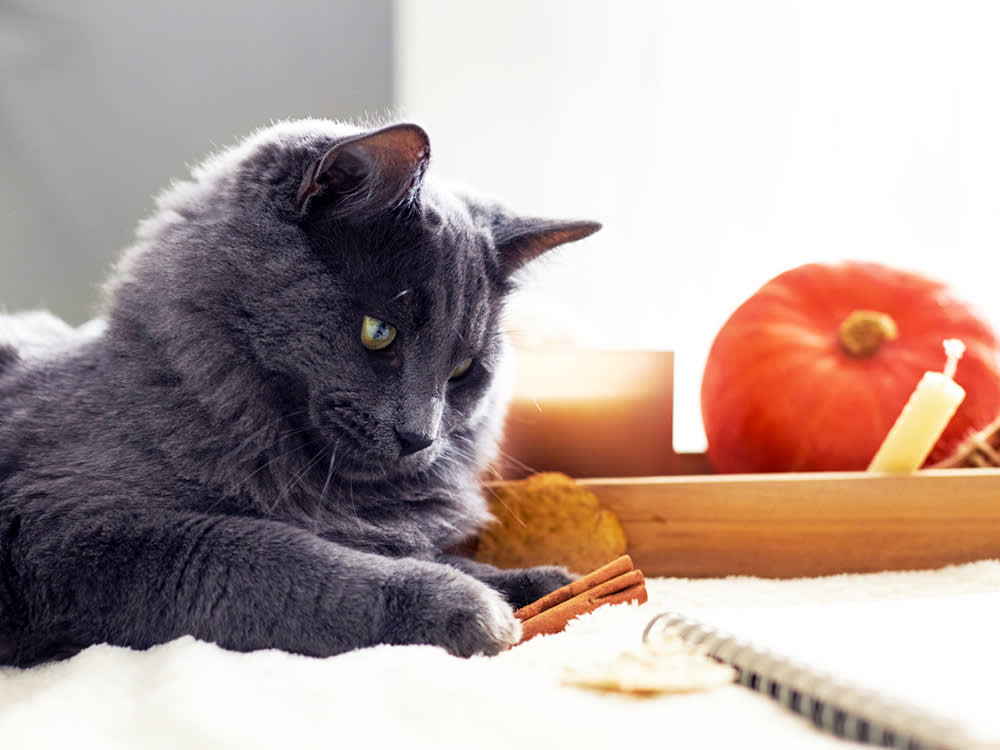
Here is the mistake almost everyone makes about cinnamon and cats: they ask whether the spice is toxic, get a reassuring “not really,” and stop there. That answer is true for the jar in your cabinet and dangerously wrong for the little brown bottle in your diffuser. With cinnamon, the form is the whole story. The powder is a minor nuisance. The concentrated oil is the thing that lands cats at the emergency vet.
So the useful question is not “can cats eat cinnamon.” It is “which cinnamon are we talking about,” because the gap between a dusting of spice and a few drops of essential oil is enormous.
The spice itself: low risk, low reward
If your cat licks a bit of cinnamon off a dropped snickerdoodle, you can relax. Powdered cinnamon is not on the list of foods that are outright poisonous in tiny amounts. A healthy cat that samples a trace of it will almost always be fine.
That said, there is no reason to offer it on purpose. Cats are obligate carnivores, and they lack the enzymes to break cinnamon down or pull anything useful from it. The insulin and anti-inflammatory benefits people chase from cinnamon simply do not translate to a feline body. So the spice sits in a strange middle zone: not worth feeding, not worth panicking over.
Where the powder does cause trouble is in volume. A cat would generally need to ingest more than roughly a teaspoon of cinnamon to risk real stomach upset, and a single cinnamon stick contains about that much. Cats also tend to sneeze and cough if they inhale loose powder, because it irritates their nasal passages. That reaction looks alarming and is usually harmless, but it is your cat telling you the spice does not belong near their face.
The powder question is the one people ask, but it is rarely the one that matters. I’d much rather a cat parent spend that worry on the cinnamon oil in a diffuser than on a crumb of cookie.
Not all cinnamon is the same: Ceylon versus cassia
Here is a distinction the usual “can cats eat cinnamon” article skips, and it matters. Most cinnamon sold in North American grocery stores is not true cinnamon at all. It is cassia, the cheaper, stronger-tasting cousin. True or “Ceylon” cinnamon is milder and sold at a premium.
The difference is a compound called coumarin, and cassia carries far more of it than Ceylon does. Coumarin is more than a flavor note. It acts as a blood thinner and a liver stressor, which is exactly why large or repeated doses are a concern rather than just a bellyache. Since the everyday cinnamon in most kitchens is the high-coumarin kind, “just a little cinnamon” is quietly a little more loaded than it sounds. It is still not a crisis at snack-crumb levels, but it is a good reason not to make cinnamon a habit for your cat.
The real danger: concentrated cinnamon oil
This is where the article should have started. Cinnamon essential oil, and the liquid potpourri and reed diffusers that contain it, is genuinely toxic to cats, and it works in a completely different league from the spice.
The reason comes down to feline biology. Cats have far fewer of the specific liver enzymes needed to process phenols, the aromatic compounds packed into cinnamon oil. In a person or a dog, those compounds get cleared. In a cat, they build up. Essential oil is that phenol content stripped down and concentrated many times over, so even a small exposure delivers a dose a cat cannot keep up with.
And cats do not have to drink it to be poisoned. They can be affected three ways:
- Ingestion, including licking spilled oil or grooming it off their coat
- Skin contact, because these oils absorb through the skin
- Inhalation, from an active diffuser filling a room with vapor
That last route is the one people never see coming. A diffuser feels clean and passive, but to a cat sharing that air it is a continuous low dose of something their liver cannot fully handle.
Signs of essential-oil poisoning include drooling, vomiting, wobbliness or trouble walking, tremors, lethargy, a low body temperature, and difficulty breathing. Left untreated, serious exposures can progress to liver damage and seizures.
When to call the vet
Use the exposure, not the symptom, as your trigger. Waiting for a cat to “look sick” wastes time you may need.
- A crumb or trace of the powder, cat acting normal: watch at home. Offer water. No emergency.
- A large amount of powder eaten, or ongoing vomiting or diarrhea: call your vet for advice.
- Any contact with cinnamon essential oil or liquid potpourri, eaten, on the skin, or breathed in: treat it as urgent. Move your cat to fresh air, do not try to make them vomit, and call your vet or the ASPCA Animal Poison Control Center at 888-426-4435 immediately.
The practical takeaway is simple. Keep doing what you are doing with the spice rack, which is basically nothing. But treat cinnamon oil, wax melts, simmer pots, and plug-in scents the way you would treat any household chemical: sealed, stored high, and never diffused in a room your cat cannot leave.
What’s new since this was written
Cinnamon has not changed, but our homes have. Scented diffusers, reed diffusers, and essential-oil “wellness” routines have become far more common, and veterinary poison centers have followed with clearer warnings that cats are uniquely vulnerable to diffused oils, cinnamon among them. The ASPCA now specifically flags home-scenting trends as a pet hazard.
The most useful update for cat parents is a mindset shift. The old worry was the food. The current worry is the air. If you have added any kind of oil diffuser to your home, the safest move is to run it only in rooms your cat cannot access, or to skip the cinnamon and other phenol-heavy oils entirely. Your cat gets no benefit from the scent and carries all of the risk.
References
- ASPCA. “Is the Latest Home Trend Harmful to Your Pets? What You Need to Know.” aspca.org
- VCA Animal Hospitals. “Essential Oil and Liquid Potpourri Poisoning in Cats.” vcahospitals.com
- ASPCA Animal Poison Control Center. “People Foods to Avoid Feeding Your Pets.” aspca.org
- National Center for Biotechnology Information. “Coumarin: Toxicity and metabolism.” ncbi.nlm.nih.gov
Common questions
How much cinnamon is dangerous for a cat?
A cat would generally need to eat more than about a teaspoon of powdered cinnamon to risk serious effects like stomach upset. A single cinnamon stick holds roughly that much. Any amount of cinnamon essential oil, however, can be toxic.
Why is cinnamon essential oil so much worse than the spice?
Essential oil is a hugely concentrated dose of the same phenol compounds, and cats lack enough of the liver enzymes needed to clear them. They can absorb it by eating it, licking it off their fur, or even breathing diffused vapor.
What should I do if my cat is exposed to cinnamon oil?
Treat it as an emergency. Move your cat to fresh air, do not induce vomiting, and call your vet or the ASPCA Animal Poison Control Center (888-426-4435) right away.
Not a substitute for your vet. Our guidance is educational. For urgent symptoms, contact a vet or emergency clinic right away. Editorial standards
Dr. Nair is a veterinarian focused on diet and feeding. She covers everyday nutrition, treats, and the many "can they eat this?" questions owners ask, grounding each answer in what is actually safe and sensible for dogs and cats.
Meet our experts ↗Keep reading
 FoodYour Cat Ate a Cockroach. The Bug Isn't the Problem. What's on It Is.Dr. Priya Nair · 5 min
 FoodThe Foods That Poison Cats Are Hiding in Plain SightDr. Lena Park · 8 min
 FoodCats and Marshmallows: The Bag Your Dog Should Worry About MoreDr. Priya Nair · 6 min
 FoodNever Feed a Cat Grapes. Science Finally Figured Out Why They're So DangerousDr. Amara Solis · 6 min
 FoodCats and Peaches: The Sweet Flesh Is Safe. The Pit Is a Trip to the ERDr. Lena Park · 5 min
 FoodCats and Cherries: Everyone Fears the Cyanide. The Pit Is What Actually Hurts ThemDr. Lena Park · 5 min