


Cats and Almond Milk: You're Solving a Problem Your Cat Doesn't Have
Almond milk isn't toxic to cats, but the real issue is the instinct behind offering it. The saucer-of-milk image is a myth, cats can't taste the sweetness, and almond milk brings risks without a single benefit. Here's what to give instead.

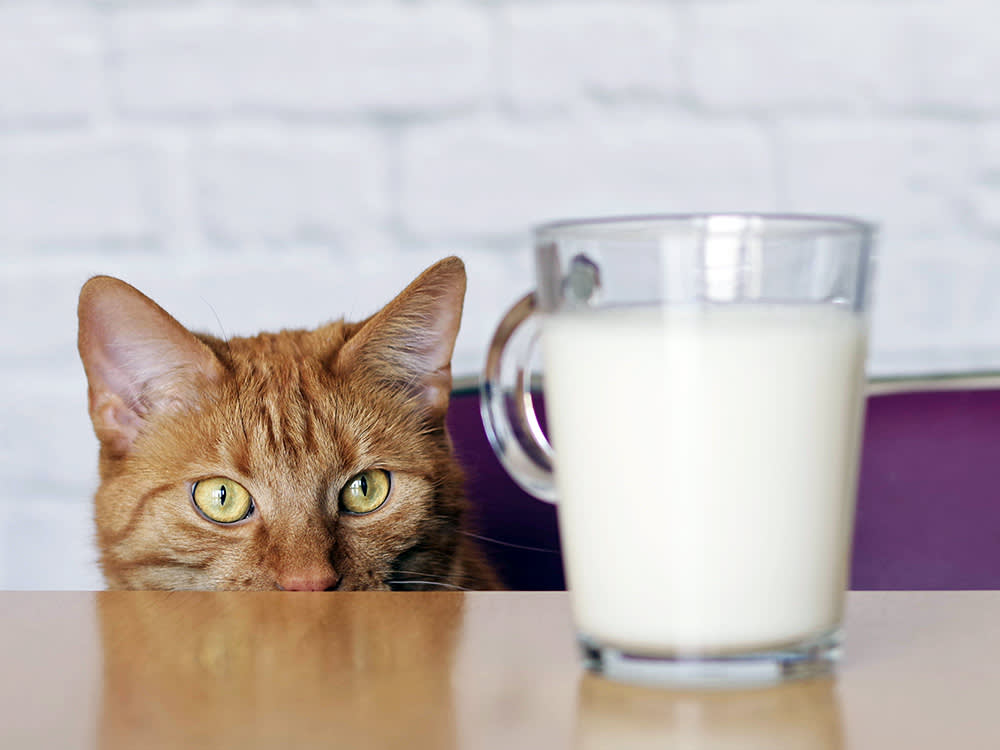
Picture the classic image: a contented cat lapping milk from a saucer. It is on greeting cards and in cartoons, and it is also wrong. That image is doing a lot of quiet damage, because it plants the idea that cats want milk, which leads well-meaning owners to go looking for a “better” version, like almond milk, to offer guilt-free. Before you pour, it is worth stepping back, because the honest answer to “can cats drink almond milk” is less about safety and more about why you are reaching for milk at all.
The instinct is based on a myth
Adult cats do not need milk, and most cannot digest it well. Kittens produce the enzyme lactase to break down their mother’s milk, but production drops off after weaning, leaving most adult cats lactose intolerant. Give them dairy and the undigested lactose ferments in the gut, which is how a “treat” turns into diarrhea and vomiting.
Almond milk skips the lactose, which sounds like a fix. But it only fixes a problem you created by offering milk in the first place. A weaned cat on a complete and balanced diet needs no milk, dairy or plant, at all. Swapping cow’s milk for almond milk is solving the wrong problem: the goal was never lactose-free milk, it was hydration and a happy cat, and almond milk delivers neither well.
Cats can’t even enjoy it
Here is the part that makes plant milks especially pointless for cats. Cats are genetically unable to taste sweetness. They carry a non-functioning version of the gene that builds the sweet-taste receptor in other mammals, a trait confirmed by researchers studying feline taste. So the mild sweetness that makes vanilla almond milk pleasant to you registers as nothing to your cat. Whatever interest a cat shows in your glass is about the smell, the novelty, or simple curiosity about what you are drinking, not the flavor.
That reframes the whole exercise. You are not treating your cat to something delicious. You are offering watery liquid with sugar it cannot taste and calories it does not need.
What almond milk actually brings to the bowl
Strip away the marketing and almond milk is mostly water with a little almond, often plus additives. For a cat, that breaks down into two real risks and zero benefits:
- Added sweeteners. Many almond milks are sweetened, and some flavored products contain artificial sweeteners. There is no nutritional reason for a cat to consume any of it, and you should be especially wary of anything containing xylitol, which has no place near a pet’s food.
- Empty calories. Sweetened plant milks add calories a cat does not need, nudging toward weight gain, and over time obesity raises the risk of diabetes and other problems. Unsweetened versions sidestep the sugar but still offer essentially no usable nutrition, so they are not worth giving either.
What almond milk does not bring is anything a cat’s body actually requires. Cats are obligate carnivores that need animal-based protein, specific fats, and amino acids like taurine. Almond milk contains none of that.
When a client asks which plant milk is best for their cat, my honest answer is none of them, and that’s not a dodge. There’s no version of milk a healthy adult cat needs. If the goal is to give your cat something special, milk is the wrong category entirely.
Better ways to treat (and hydrate) your cat
If the real wish is to give your cat a little something, or to get a reluctant drinker to take in more water, there are options that actually work:
- Flavored water. A splash of low-sodium chicken broth or the water from a can of plain tuna makes water more enticing for a cat that ignores its bowl. Freeze it into cubes for a hot-day treat.
- A water fountain. Many cats drink more from moving water than from a still bowl, which is a more meaningful hydration win than any milk.
- Commercial cat milk. If you specifically want the milk-in-a-saucer ritual, lactose-free milk formulated for cats exists and is made for a feline gut. Treat it as an occasional indulgence, not a daily drink.
- Real cat treats. Plenty of meat-based treats are both safer and genuinely satisfying to a carnivore in a way almond milk never will be.
The bottom line
Almond milk will not poison your cat, but that is the least interesting thing about it. The saucer-of-milk picture is a myth, your cat cannot taste the sweetness, and almond milk offers risks (sweeteners, empty calories) with no nutritional payoff. If you want to do something kind for your cat, reach for broth-flavored water, a fountain, or a proper cat treat, and let the almond milk stay in your own glass.
References
- Cortinovis, Cristina, and Francesca Caloni. “Household Food Items Toxic to Dogs and Cats.” Frontiers in Veterinary Science, 2016.
- Li, Xia, et al. “Pseudogenization of a Sweet-Receptor Gene Accounts for Cats’ Indifference toward Sugar.” PLOS Genetics, 2005.
- Cornell Feline Health Center: Feeding Your Cat
Common questions
Is almond milk a good lactose-free option for cats?
It's lactose-free, but that solves a problem cats don't need solved. Cats don't require milk of any kind once weaned, so swapping dairy for almond milk just trades one unnecessary drink for another.
What about oat, soy, or coconut milk for cats?
Same story. All plant milks are non-toxic in tiny amounts but nutritionally pointless for cats, and many contain added sugars or sweeteners. None are recommended as a regular treat.
Is almond milk with xylitol dangerous for cats?
Avoid any product with xylitol or other artificial sweeteners. While xylitol's clearest danger is documented in dogs, there's no upside to risking it, so read labels and skip flavored or sweetened plant milks entirely.
Not a substitute for your vet. Our guidance is educational. For urgent symptoms, contact a vet or emergency clinic right away. Editorial standards
Dr. Nair is a veterinarian focused on diet and feeding. She covers everyday nutrition, treats, and the many "can they eat this?" questions owners ask, grounding each answer in what is actually safe and sensible for dogs and cats.
Meet our experts ↗Keep reading
 FoodCats Can Eat Eggs. Just Never Raw.Dr. Mara Chen · 4 min
 FoodYour Cat Wants Your Salad. Here's What Lettuce Actually Does.Dr. Amara Solis · 4 min
 FoodRaw Chicken for Cats Got Measurably More DangerousDr. Mara Chen · 6 min
 FoodThe Tomato Is Safe for Your Cat. The Plant Can Poison Them.Dr. Priya Nair · 6 min
 FoodYour Cat Can't Taste Sweet. So Which Fruits Are Even Worth Offering?Dr. Amara Solis · 6 min
 FoodMango and Cats: The Flesh Is Fine, the Family Tree Is the CatchDr. Nina Kohl · 6 min