


The Cat Vitamin Aisle Is Selling to You, Not Your Cat
A healthy cat eating complete commercial food almost never needs a multivitamin, and piling one on can tip a balanced diet into harm. A vet on the handful of supplements that genuinely earn their place, and the one label test that separates real products from marketing.

Affiliate disclosure. This article contains affiliate links. We may earn a small commission if you buy through a link, at no extra cost to you. How we handle recommendations.
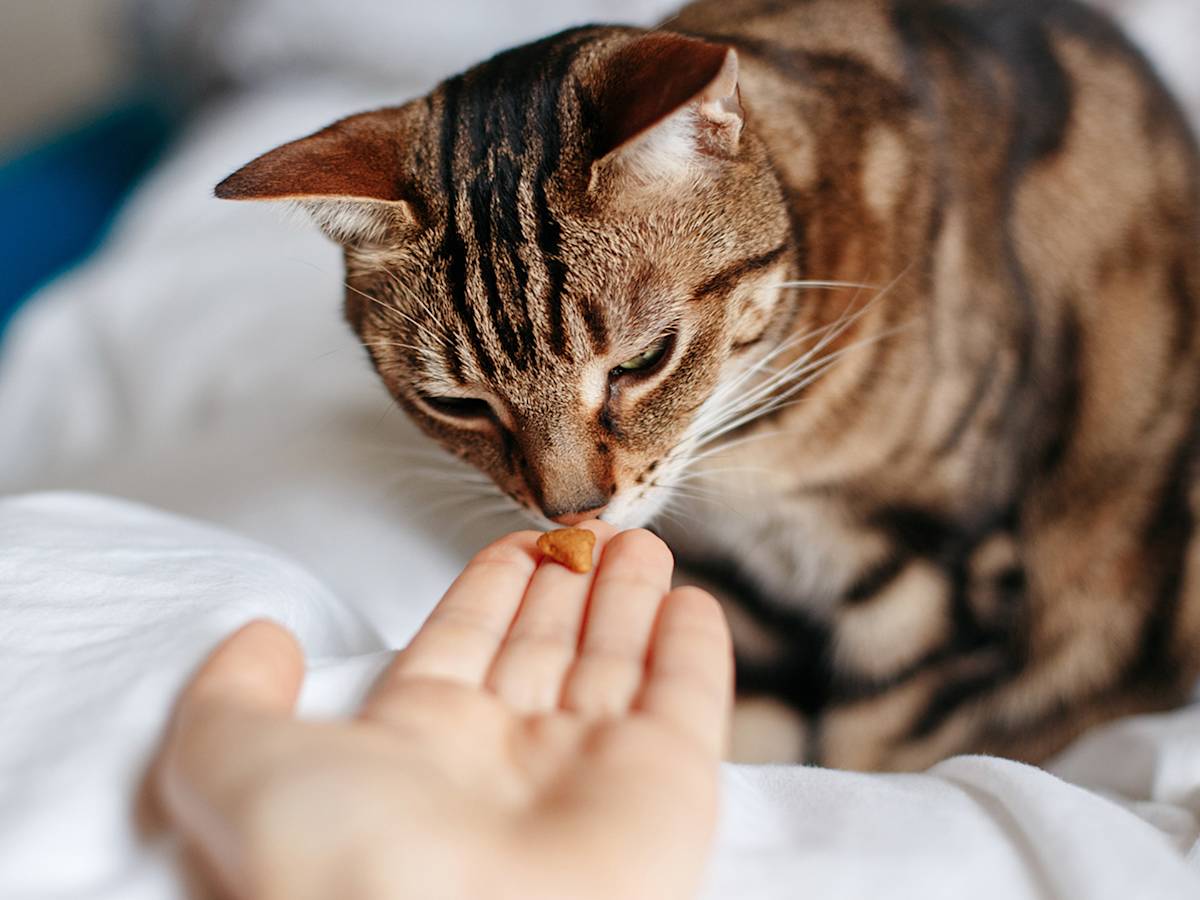
Walk down the pet supplement aisle and you’ll recognize the pitch, because it’s the same one aimed at you. Biotin for a glossier coat. Collagen for the joints. Antioxidants against the ravages of time. It’s your own medicine cabinet, shrunk down and repackaged with a cat on the label. And that’s the tell. The cat supplement boom is built on a very human anxiety, the sense that we should be doing more, and it mostly sells that feeling back to us.
Here’s the part the aisle won’t put on a shelf tag: a healthy cat eating complete, balanced commercial food is, nutritionally, already done. Not “could use a little boost.” Done. Understanding why is the difference between spending money on your cat’s health and spending it on your own peace of mind, or, in the wrong case, actively tipping a good diet out of balance.
Why your cat is probably already covered
The reason humans take multivitamins is that human diets are a mess. We skip vegetables, we eat on the run, we’re inconsistent. Cat food is the opposite. A diet labeled complete and balanced has been formulated to deliver every nutrient a cat needs in the right proportions, and that formulation is the whole product.
People assume their cat’s food is a starting point they should improve on. It’s not, it’s the finished thing. Commercial diets are built to be nutritionally complete, and most pet multivitamins are deliberately low-potency because the manufacturers know the food already did the work. You’re often paying for a pill that’s designed not to matter.
And when a supplement does matter, it can matter in the wrong direction. This is the part that gets lost in the wellness glow: adding nutrients to an already balanced diet isn’t automatically safe. Fat-soluble vitamins like A and D accumulate in the body and can reach toxic levels. Toss in extra phosphorus and you can knock the careful calcium-to-phosphorus ratio out of true. With cats, more is not a synonym for better. Sometimes it’s a synonym for harm.
When supplements genuinely help
None of this means supplements are useless. It means they’re medicine, not seasoning. They show the clearest, best-documented benefit when a cat has an actual gap to fill, a health condition or a real deficiency, rather than a healthy cat whose owner wants to optimize. Talk to your vet before starting any of these, both to confirm your cat needs it and to rule out interactions with other medications.
Here are the categories with the strongest case, and the real reason each one exists.
Omega-3 fatty acids (fish oil). The best-supported supplement on the list. Omega-3s are genuinely anti-inflammatory, with evidence behind their use for joint stiffness, itchy or allergic skin, and heart health. Cats also tend to accept fish oil without a fight, which helps. A well-regarded option is Check it on Amazon ↗ (around $14).
Probiotics. Live beneficial microbes that support gut health, useful for cats with digestive upset, and often recommended alongside recovery from GI illness or antibiotics. A targeted, evidence-minded choice here beats a generic one.
A skin and fiber supplement
For cats with itchy, inflamed skin, a seaweed-based supplement like
Heads up. (about $19) may ease irritation, and its fiber can support digestion as a bonus.
A multivitamin, for the cat who actually needs one
This is the category to be most skeptical of for a healthy cat, but it has real uses. Cats can’t make vitamin D from sunlight the way we do and depend entirely on diet, so a cat with a documented shortfall may benefit from a chewable like
Heads up. (roughly $9), on a vet’s advice.
Taurine, in the rare case it’s missing
Taurine deserves respect, it’s an essential amino acid, and a true deficiency can cause blindness and serious heart disease. But here’s the reassuring reality: it’s added to virtually all commercial cat food precisely because cats can’t do without it. A taurine supplement like the lickable
Heads up. (about $17) is really only relevant for cats on homemade, vegetarian, or otherwise non-standard diets, exactly the situations that put taurine at risk.
B12, as a prescribed support
Vitamin B12 is often recommended for cats with GI disease like inflammatory bowel disease or pancreatitis, where deficiency is common. A liver-flavored liquid such as
Heads up. (around $28) can be dropped onto food, but this is a support-your-vet’s-plan item, not a wellness flex.
Antioxidants, for specific conditions
Combination antioxidant supplements (vitamins C and E, beta-carotene) have shown benefit against the chronic inflammation of conditions like allergic skin disease and arthritis, and for cats in renal failure. A combo product such as Vetoquinol Select Antioxidant Tablets (about $13) delivers more than chasing single nutrients. This one isn’t sold on Amazon, so you’ll find it through the manufacturer or a veterinary supplier.
The one label test that matters
The supplement market is loosely regulated, which means the burden of quality control lands on you. There’s a shortcut, though, and it’s more reliable than reading a hundred reviews.
Look for the NASC Quality Seal from the National Animal Supplement Council. It isn’t a marketing badge a company can print at will. To carry it, a manufacturer has to pass an independent, third-party audit, then keep passing one every two years, and comply with ongoing standards for quality control, labeling, adverse-event reporting, and random product testing. It’s widely treated as the industry’s gold standard for exactly the reason it’s useful to you: it’s checked by someone other than the company selling the product.
“If I’m going to recommend a supplement, I want to know someone independent has looked under the hood,” Dr. Mehta says. “The NASC seal tells me that. After that, I want a company that can point to actual studies on their product, not a bottle covered in adjectives. Anything promising to cure a long list of unrelated problems, I put back on the shelf.”
Getting the pill into the cat
Even the right supplement does nothing in the bottle. If you’re dealing with a pill, a few tactics help: tuck it into a small amount of wet food or a lick of tuna, molding the food around it; then actually watch your cat eat, because cats are gifted at swallowing the food and spitting out the pill. If they dodge it, you may need to give it by hand, grease it with a little food gravy so it slides, gently tip the head back, place it as far back on the tongue as you can, then close the mouth and stroke the throat or nose to trigger a swallow. Lickable gels and liquids that go on food sidestep the whole wrestling match, which is part of their appeal.
What the current evidence adds
Two updates are worth knowing. First, the quality question has a clearer answer than it used to. The NASC seal has become the practical benchmark for a market that regulators don’t police tightly, so it’s now the first thing to look for rather than an obscure detail. Use it as your filter and a lot of junk falls away.
Second, on the grain-free and taurine worries that swept pet forums: the FDA’s investigation into a possible link between grain-free diets and dilated cardiomyopathy centered mainly on dogs, and current evidence does not establish that link in healthy cats. That’s genuinely reassuring, and it also underlines the core point of this whole piece, a cat eating a complete, balanced, properly formulated diet is getting the taurine and the rest of it already. The supplement aisle is betting you won’t believe that. Usually, you can.
References
- “What Is the National Animal Supplement Council (NASC)?” PetMD. https://www.petmd.com/nutrition/what-is-national-animal-supplement-council-nasc
- “Taurine Deficiency in Cats.” National Animal Supplement Council. https://www.nasc.cc/pet-university/taurine-deficiency-cats/
- Zoran, Debra L. “The Carnivore Connection to Nutrition in Cats.” Journal of the American Veterinary Medical Association, vol. 221, no. 11, 2002, pp. 1559–1567. https://doi.org/10.2460/javma.2002.221.1559
- U.S. Food and Drug Administration. “FDA Investigation into Potential Link between Certain Diets and Canine Dilated Cardiomyopathy.” https://www.fda.gov/animal-veterinary/outbreaks-and-advisories/fda-investigation-potential-link-between-certain-diets-and-canine-dilated-cardiomyopathy
Common questions
What supplements are actually worth giving a cat?
The ones with the best evidence are targeted, not general: omega-3 fatty acids for joint, skin, and heart support; probiotics for gut health; and specific vitamins like B12 when a condition or diet creates a real gap. Taurine matters enormously, but nearly all commercial cat food already contains it, so a supplement is only needed in unusual diets.
Can you give a cat too many vitamins?
Yes, and it's a real risk, not a theoretical one. Fat-soluble vitamins like A and D can build up to toxic levels, and adding minerals like phosphorus on top of an already balanced diet can throw off crucial ratios. More is not safer with cat supplements. Check with your vet before adding anything.
How can I tell if a cat supplement is good quality?
Look for the NASC Quality Seal from the National Animal Supplement Council. It means the company passed an independent third-party audit and follows real quality-control, labeling, and testing standards. Beyond that, favor brands that back their products with clinical studies and skip anything making dramatic cure-all promises.
Not a substitute for your vet. Our guidance is educational. For urgent symptoms, contact a vet or emergency clinic right away. Editorial standards
Dr. Mehta is a board-certified veterinary nutritionist who evaluates pet food formulations, ingredient quality, and the science behind dietary trends. He writes and reviews all nutrition content at The Pet Times, including our food rankings and feeding guides.
Meet our experts ↗Keep reading
 FoodYogurt Won't Fix Your Cat's Gut. Here's What Actually Might.Dr. Lena Park · 6 min
 FoodMost Cat 'Probiotics' Are Selling You Hope. Buy the Strain, Not the Label.Dr. Priya Nair · 7 min
 TrainingYour Cat's Meow Isn't Their Voice. It's a Tool They Built for You.Dr. Nina Kohl · 7 min
 FoodWet Food Beats Kibble. That Doesn't Mean All-You-Can-Eat.Dr. Mara Chen · 6 min
 FoodPeas Off Your Plate Are Fine for Cats. Peas in the Bag Are the Ones to Read AboutDr. Amara Solis · 6 min
 Health & WellnessWet Food Rarely Gives a Cat Diarrhea. The Way You Switched It Usually DoesDr. Mara Chen · 9 min