


Wet Food Beats Kibble. That Doesn't Mean All-You-Can-Eat.
Wet food is the better default for most cats: more moisture, more protein, fewer carbs. But 'better' quietly turns into overfeeding. The amount is set by calories and body condition, not by how many cans your cat can guilt out of you.

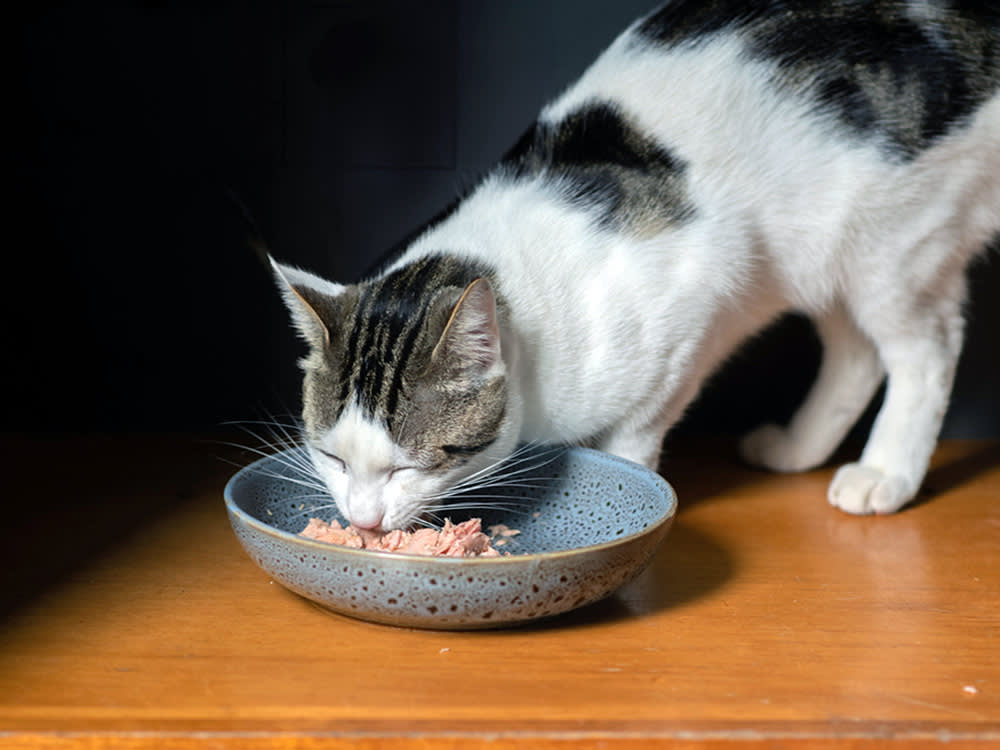
Ask whether wet food or dry food is better for cats and you will get an argument that never ends, with the consensus swinging one way and then back every few years. But strip away the noise and, for most cats, the evidence leans clearly toward wet. The trouble is that being the better food quietly creates a different problem. Once you have decided canned food is the healthier choice, it is dangerously easy to let “healthier” slide into “more,” and to let your cat’s Oscar-worthy begging set the portion size. It should not. The right amount of wet food is a number driven by calories and body condition, and it has nothing to do with how convincingly your cat insists the bowl is empty.
Why wet food usually wins
Diet is central to a cat’s health, which is why this debate is worth having, and a few real advantages tip it toward canned food for most cats.
- Moisture. This is the big one. Cats evolved from desert animals and are famously bad at drinking enough water on their own. Dry food does not carry enough moisture to close that gap, while canned food is mostly water, which supports hydration and, in turn, urinary and kidney health.
- Carbohydrates. Canned food is generally lower in carbs than kibble. Cats are obligate carnivores with little biological need for carbohydrates, and keeping them lower helps with weight regulation and can reduce diabetes risk.
- Protein. Wet foods tend to be more protein-forward, which suits a carnivore’s metabolism and helps keep a cat feeling full.
One myth deserves a direct debunk while we are here: dry food does not keep your cat’s teeth clean. Most cats do not chew kibble enough for any meaningful scraping effect, and the crunch is not a substitute for actual dental care.
The actual amount: feed to calories, not cans
Forget counting cans and start counting calories, because that is the only number that scales to your specific cat. A rough working figure for a lean, mostly sedentary indoor adult cat is around 20 calories per pound of ideal body weight per day. So a typical 10-pound cat needs somewhere in the neighborhood of 180 to 220 calories daily.
Now translate that into food. Most standard 3-ounce pate-style cans land between about 70 and 100 calories, though this varies a lot by brand and formula, which is exactly why you check the label. Do the division and that 10-pound cat needs roughly two to three of those cans a day, divided into meals. Bigger, more active, growing, or nursing cats need more; smaller or less active cats need less.
The label’s calorie content, usually listed as kcal per can or per serving, is the real instruction. Two different “3-ounce cans” can differ by 40 or 50 calories, so two cans of one food is not the same meal as two cans of another.
A simple wet-food starting chart
Use this as a rough daily starting point for an average, healthy adult cat eating a pate-style canned food, then adjust to body condition. Calorie needs, not can counts, are what actually matter.
| Cat’s ideal weight | Approx. daily calories | Approx. 3 oz cans/day (~90 cal each) |
|---|---|---|
| 6 lb | 120–140 | ~1.5 |
| 8 lb | 150–180 | ~2 |
| 10 lb | 180–220 | ~2 to 2.5 |
| 12 lb | 210–250 | ~2.5 to 3 |
| 15 lb | 250–300 | ~3 |
These are starting estimates, not prescriptions. Kittens, pregnant and nursing cats, and cats with medical conditions have very different needs, so treat the chart as a conversation-starter with your vet, not the last word.
The variables that move the number
The chart is only a baseline because several things shift a cat’s real requirement:
- Life stage. Kittens and pregnant or nursing cats need far more calories per pound than a sedentary adult. Senior cats often need fewer.
- Body condition. An overweight cat should be fed to its ideal weight, not its current one, and any weight-loss plan belongs under a vet’s supervision.
- Activity level. A cat that tears around the house burns more than one that sleeps 20 hours a day.
- Health. Conditions like kidney disease, diabetes, or hyperthyroidism change both how much and what kind of food is appropriate.
The single most common feeding mistake I see with wet food is portioning by the cat’s enthusiasm instead of by the label. Weigh your cat, find its ideal body condition, and feed to that calorie target. A begging cat is not a hungry cat, it’s a cat that has trained you well.
Balancing wet and dry, serving, and storing
You do not have to pick a single camp. Many cats do well on a mix, with wet food providing hydration and a lower-carb base and a small, measured amount of dry food added for convenience or to keep a cat full a little longer, since kibble may linger in the stomach. If you combine them, count the calories from both toward the daily total so the mix does not become a surplus.
Serve wet food at room temperature or slightly warmed, as many cats refuse it cold and the warmth releases aroma that makes it more appealing. Once opened, cover the can and refrigerate it, use it within a couple of days, and toss anything left sitting out for more than an hour or so, especially in a warm kitchen.
Signs you are over- or underfeeding
Your cat’s body is the feedback loop. The clearest tool is a body condition check: you should be able to feel the ribs under a light layer of fat, see a visible waist from above, and notice a slight tuck of the belly from the side. If the ribs are buried and the waist is gone, you are overfeeding. If the ribs, spine, and hips are sharply visible and the belly is sunken, you are underfeeding, or something medical is going on. Weigh your cat periodically, because a steady creep up or down is easier to catch on a scale than by eye.
The bottom line
Wet food is the sensible default for most cats, thanks to its moisture, lower carbs, and higher protein, but “better food” is not a license for a bottomless bowl. Feed to a calorie target built on your cat’s ideal weight, read the label rather than counting cans, and let your cat’s body condition, not its performance at dinnertime, tell you whether you have the amount right.
What’s new since this was written
The push toward hydration-first feeding has only grown, with more vets emphasizing moisture-rich diets to support urinary and kidney health, an area where cats are especially vulnerable. On the practical side, technology has made “feed to calories” much easier: smart feeders can dispense measured portions on a schedule, and connected scales help owners track the slow weight changes that matter, both of which studies now back as useful tools in supervised weight management. The core advice is unchanged, but the tools for actually hitting the right number have gotten a lot better.
References
- National Research Council. Nutrient Requirements of Dogs and Cats. National Academies Press, 2006, doi.org/10.17226/10668.
- Association of American Feed Control Officials. “AAFCO Methods for Substantiating Nutritional Adequacy of Dog and Cat Foods.” AAFCO, aafco.org.
Common questions
Is wet food better than dry food for cats?
For most cats, wet food has real advantages: much higher moisture, which helps hydration, generally lower carbohydrates, and typically higher protein. Dry food is convenient and may keep a cat full a bit longer, but it does not clean teeth the way many people believe. A vet can help you pick the right balance.
Not a substitute for your vet. Our guidance is educational. For urgent symptoms, contact a vet or emergency clinic right away. Editorial standards
Dr. Chen is a small-animal veterinarian who leads health and safety coverage at The Pet Times. She writes and reviews the bulk of our illness, condition, and safety content, translating clinical guidance into clear, practical advice owners can act on at home.
Meet our experts ↗Keep reading
 FoodYour Cat Isn't Hungry. Unless These Three Things Are Also True.Dr. Priya Nair · 10 min
 FoodA Kitten's Diet Changes Every Few Weeks. Here's the Whole Schedule on One Chart.Dr. Priya Nair · 7 min
 FoodYour Kitten Isn't Starving. Weigh Them Every Week.Dr. Priya Nair · 7 min
 FoodYou're Probably Overfeeding Your Cat. The Bag Is Part of the Problem.Dr. Nina Kohl · 4 min
 FoodHigh Protein Isn't a Health Upgrade for Cats. It's a Prescription.Dr. Mara Chen · 7 min
 Health & WellnessYour Cat's Diabetes Can Go Into Remission. The Window Is Smaller Than You ThinkDr. Mara Chen · 11 min