


Your Cat's Diabetes Can Go Into Remission. The Window Is Smaller Than You Think
Feline diabetes is one of the few chronic cat diseases that can actually reverse, but remission favors cats caught early and managed tightly. Here is how to spot it fast, what treatment really involves, and the newer options that changed the playbook.

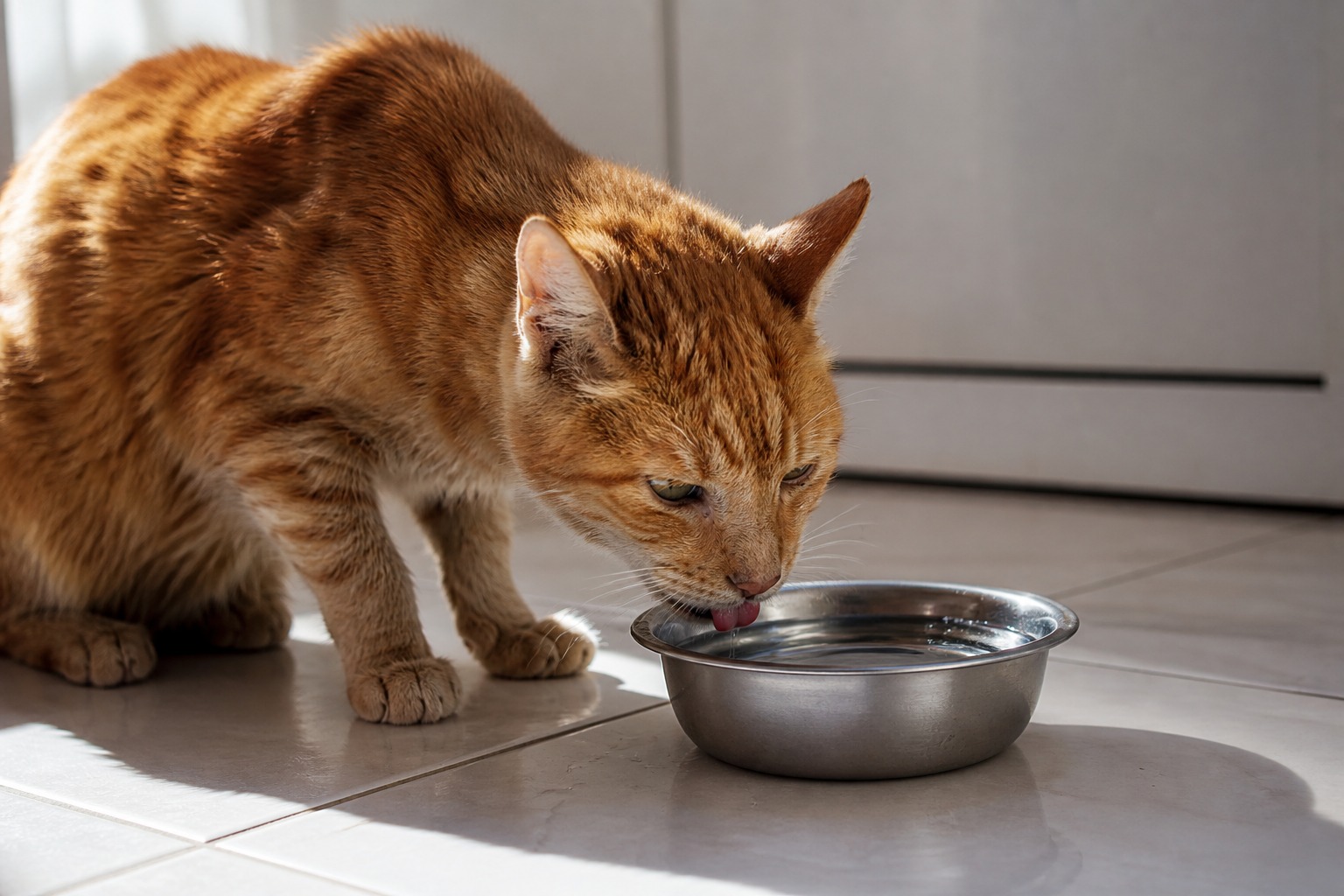
Most chronic diseases in cats are things you learn to manage for life. Feline diabetes is one of the rare ones that can actually go the other way. A meaningful number of diabetic cats reach remission, meaning they hold normal blood sugar without insulin, and go back to living like the disease was a bad chapter rather than a life sentence.
But that outcome is not evenly distributed, and this is the part that does not get said plainly enough. Remission strongly favors cats who are caught early and managed tightly from the start. The cat diagnosed in the first weeks of trouble, started promptly on the right diet, kept lean, and monitored carefully has real odds. The cat who was quietly diabetic for months before anyone noticed, or whose treatment drifts, has worse ones. So the most important thing you can do for a diabetic cat is not heroic. It is early. Everything in this guide is built around that: recognize it fast, treat it seriously, and give your cat a shot at the window before it narrows.
What diabetes actually is, in one paragraph
Diabetes mellitus is a problem with insulin, the hormone the pancreas makes to let the body move glucose (sugar) out of the blood and into cells for energy. In Type 1 diabetes, the pancreas cannot make enough insulin. In Type 2, the body stops responding to the insulin it does make. Either way, glucose piles up in the blood while the cells go hungry in the middle of plenty. Cats overwhelmingly get Type 2, and that matters, because Type 2 is the form that can go into remission when the underlying insulin resistance is unwound.
Learn the early signs, because they are subtle on purpose
Cats are built to hide illness, and early diabetes is quiet. The signs are easy to file under “getting older” until they are not. Watch for:
- A sudden thirst, paired with heavier or more frequent litter clumps as the extra water comes back out
- Hunger that ramps up while the number on the scale drops
- A coat that goes dull and looks poorly groomed
- A rounder, pot-bellied silhouette
- Back legs that seem weak, or a low, flat-footed way of walking
- A general slowdown, less energy, less spark than usual
- Vomiting
The pattern that should make you pick up the phone is the paradoxical one: a cat who is hungry and eating but losing weight, and who is suddenly emptying the water bowl. None of these signs is subtle in hindsight. The trouble is that they creep. Trust the trend, not any single day.
How vets confirm it, and the one trap in the process
Diagnosis rests on lab work plus what you are seeing at home. A cat who lands on the exam table because they’ve been parked at the water bowl and flooding the litter box usually gets bloodwork and a urinalysis right away. Two findings raise the flag: high blood sugar (hyperglycemia) and sugar spilling into the urine (glucosuria). Glucosuria shows up when blood sugar climbs so high the kidneys can no longer reabsorb it all, so the excess overflows into the urine.
Here is the trap, and it is a genuinely important one. A cat’s blood sugar can spike from stress alone, and few things stress a cat like a car ride and a vet table. That is called stress hyperglycemia, and it can mimic diabetes on a single reading. To tell the difference, vets often run a fructosamine test, which averages out a cat’s blood sugar across the preceding week or two. If fructosamine is elevated, the high sugar has been going on for a while and is not just white-coat nerves. This is why a diabetes diagnosis should never hang on one glucose value taken from a frightened cat.
Why it happens: the risk factors you can and can’t change
There is no single cause, but the risk factors are well mapped, and the biggest one is squarely in your control.
- Obesity. This is the primary modifiable risk factor. Extra body fat drives the insulin resistance behind Type 2 diabetes, and an overweight cat is far more likely to become diabetic than a lean one.
- Inactivity. A sedentary life feeds weight gain and insulin resistance both.
- Other diseases. Chronic kidney disease, pancreatitis, chronic infections, and acromegaly (excess growth hormone, often from a small pituitary tumor) travel alongside diabetes.
- Being male. Male cats develop diabetes more often than females.
- Age. It is far more common in cats eight years and older.
- Certain medications. Long courses of steroids can push blood sugar up and worsen insulin resistance.
- Genetics. The exact role is unclear, but Burmese, Russian Blue, Norwegian Forest, Abyssinian, and Tonkinese cats show higher rates.
You cannot change your cat’s breed, sex, or age. You can change their weight, and that single lever moves the odds more than any other.
Treatment: the goal is remission, and the tools work together
The point of treatment is not just to survive diabetes but, where possible, to reverse it. The realistic targets are to hold blood sugar near normal, get your cat to a healthy weight, and shut down the thirst and urination. These are reached with a combination of tools, not any one of them alone.
Insulin remains the backbone of treatment for most cats, usually given as two small injections a day. It sounds daunting and it is not, once your veterinary team walks you through the technique. The needles are tiny, most cats barely register them, and a written household schedule keeps doses from being missed or accidentally doubled. One safety rule is non-negotiable: insulin comes in different syringe sizes (U-100 and U-40) for different insulin concentrations. Know which your cat needs and never substitute the other, ever.
Diet does heavy lifting here. A high-protein, low-carbohydrate diet is the standard, because it improves insulin sensitivity, protects muscle, helps with weight loss, and keeps cats feeling full. Many cats also do better on scheduled meals instead of all-day grazing, and on canned food rather than dry kibble, which tends to be higher in carbs.
Oral medications have become a real option for the right cat, which we will come back to, because this is where the field has genuinely changed.
Close monitoring is not optional glue holding the plan together. Diabetic cats commonly need dose adjustments, especially early on, and the only way to catch a cat trending too high or too low is to watch. This is the part that separates cats who reach remission from cats who merely coast.
The complications you are working to prevent
Well-managed diabetes is a livable condition. Poorly managed diabetes is dangerous, and knowing what you are preventing makes the daily work make sense.
- Diabetic ketoacidosis (DKA). When cells cannot use glucose, the body burns fat instead, throwing off acidic ketones that can make a cat critically ill fast. Vomiting, lethargy, and rapid decline are red flags. DKA is an emergency.
- Infections. Persistently high blood sugar blunts the immune system, and sugary urine makes urinary tract infections more likely.
- Diabetic neuropathy. Chronically high sugar damages nerves, usually in the back legs, causing weakness and a distinctive flat-footed, hocks-to-the-floor stance called a plantigrade posture.
- Slow wound healing. High blood sugar thickens the blood and slows circulation, so oxygen and nutrients reach injured tissue less efficiently.
- Hyperglycemic hyperosmolar syndrome (HHS). Rarer than DKA but more often fatal, this is blood sugar climbing to extreme levels with severe dehydration and disorientation.
Living with it: the honest version
Caring for a diabetic cat is a commitment, and it is not a job you can half-do. It reshapes the daily rhythm for both of you, and the cats who thrive belong to people who treat the routine as fixed.
Injections become a twice-daily habit anchored to a schedule. Your veterinary team can coach you through the technique even if needles make you queasy, and a shared household calendar prevents missed or doubled doses.
Feeding may change in both what and how. Some cats resist prescription food, so keep a close eye on how much actually goes down, because the golden rule is simple: no meal, no insulin. A cat who turns up their nose at dinner should not get their dose until you’ve checked with your vet, since insulin on an empty stomach is exactly how a cat crashes into dangerous low blood sugar.
Monitoring can be done with a classic glucometer and a drop of blood, or, increasingly, with a wearable continuous glucose monitor that skips the pricks. Either way, learn the signs of hypoglycemia (low blood sugar), because even a well-cared-for cat can dip if their insulin needs shift: weakness or lethargy, dullness, a wobbly gait, tremors or seizures, and in the worst case, coma. A diabetic cat showing these signs should be offered food or a fast sugar source (honey, corn syrup, or dextrose gel rubbed on the gums) and taken to a vet immediately. Untreated hypoglycemia can be fatal, and it moves faster than high blood sugar does.
The outlook, and why early is everything
Here is the encouraging truth: with committed care, feline diabetes is very manageable, and Type 2 cats genuinely do reach remission and maintain normal blood sugar without insulin. When it comes, it usually arrives in the opening months of treatment, and the levers that tilt the odds in your favor are mostly ones within your reach: catching the disease early, monitoring carefully at home, feeding the right diet, holding your cat at a healthy weight, and dosing insulin accurately for as long as it’s needed.
That list is why the framing of this whole piece is about speed. The cat caught in week two has a head start the cat caught in month six will never get back. Remission is also not always permanent, so even a cat who comes off insulin keeps their healthy diet, their lean weight, and their regular check-ups. You are not just treating a disease. You are protecting a window.
The diabetic cats who go into remission almost always have one thing in common, and it isn’t luck. Their owners moved fast at the first weird water-bowl week, and then they stayed boringly consistent for the next few months. That unglamorous consistency is the whole ballgame. I would take an anxious owner who texts me every low reading over a relaxed one who eyeballs it, every single time.
What newer research adds
The biggest change in feline diabetes care in years is that some cats can now be treated without a single injection. In 2022 and 2023, the FDA approved the first oral diabetes drugs for cats: bexagliflozin (sold as Bexacat) and velagliflozin (sold as Senvelgo). Both belong to a class called SGLT2 inhibitors, and they work in a clever way, by telling the kidneys to dump excess sugar into the urine instead of reabsorbing it, which lowers blood sugar without needing to add insulin. One is a once-daily pill, the other a once-daily liquid, and for the right cat they can bring blood sugar and symptoms under control quickly.
The catch is real and worth understanding, because these drugs are not a universal replacement for insulin. They are approved for newly diagnosed cats who have not yet been on insulin, and a good candidate needs some remaining insulin production of their own, because without it the cat is at risk of a dangerous, hard-to-spot form of ketoacidosis that can occur even when blood sugar looks near-normal. That means careful patient selection and monitoring, not a casual switch. If your cat is newly diagnosed, it is absolutely worth asking your vet whether an oral option fits, but the decision, and the watching that follows, belongs in your vet’s hands.
The other quiet improvement is monitoring itself. Wearable continuous glucose monitors, adapted from human diabetes care, are now used in cats, giving a running picture of blood sugar instead of scattered snapshots and sparing your cat repeated needle pricks. Better data makes tighter management possible, and tighter management is what remission runs on.
This article covers a medical condition and is meant to inform, not replace, your veterinarian’s guidance. Any cat you suspect is diabetic, or any diabetic cat who seems off, should be seen by a vet.
References
- U.S. Food and Drug Administration. “FDA Approves First Oral Treatment for Cats with Diabetes Mellitus.” fda.gov
- Cook, A. K., et al. “SGLT2 inhibitor use in the management of feline diabetes mellitus.” Journal of Veterinary Pharmacology and Therapeutics, 2025. Wiley Online Library
- American Animal Hospital Association. “AAHA Diabetes Management Guidelines for Dogs and Cats.” aaha.org
- “SGLT2 inhibitor use in the management of feline diabetes mellitus.” PMC. ncbi.nlm.nih.gov
Common questions
Is a cat with diabetes in pain?
Diabetes itself is not painful. But conditions that travel with it can be, including diabetic neuropathy, pancreatitis, urinary tract infections, and kidney disease. A well-managed diabetic cat is usually comfortable; a cat in obvious distress needs to be seen.
Can you treat diabetes in cats without insulin?
Sometimes. Diet change and weight loss are part of every plan, and there are now once-daily oral medications (SGLT2 inhibitors) approved for certain newly diagnosed cats that lower blood sugar without injections. But not every cat is a candidate, and some cats will deteriorate without insulin, so this is a decision your vet makes case by case, not a DIY swap.
How likely is remission?
It happens most often in cats caught early, started on a high-protein low-carb diet, kept lean, and monitored closely, usually within the first few months of treatment. Remission is real but not guaranteed, and it is not always permanent, so healthy habits and check-ups continue even after a cat comes off insulin.
Not a substitute for your vet. Our guidance is educational. For urgent symptoms, contact a vet or emergency clinic right away. Editorial standards
Dr. Chen is a small-animal veterinarian who leads health and safety coverage at The Pet Times. She writes and reviews the bulk of our illness, condition, and safety content, translating clinical guidance into clear, practical advice owners can act on at home.
Meet our experts ↗Keep reading
 Health & WellnessA Six-Month 'Ozempic' Implant for Fat Cats Is Already in TrialsDr. Lena Park · 5 min
 FoodThe Scale Is Lying About Your Cat's WeightDr. Lena Park · 5 min
 FoodForget the Clock: Build Your Cat's Feeding Schedule From Calories, Not Meal TimesDr. Mara Chen · 7 min
 Health & WellnessNeutering Won't Change Your Cat's Personality. It Will Change His Appetite.Dr. Amara Solis · 8 min
 Health & WellnessThis Cat Is 26. Her Secret Is 15 Boring Habits, Not One Magic Trick.Dr. Priya Nair · 9 min
 Health & WellnessYour Kitten Stops Growing Months Before You Stop Feeding Them Like OneDr. Priya Nair · 7 min