


Your Kitten Stops Growing Months Before You Stop Feeding Them Like One
Most cats finish growing around 12 months. Most people keep pouring calorie-dense kitten food well past that, and the extra weight never comes back off. Here's how to catch the moment it ends.

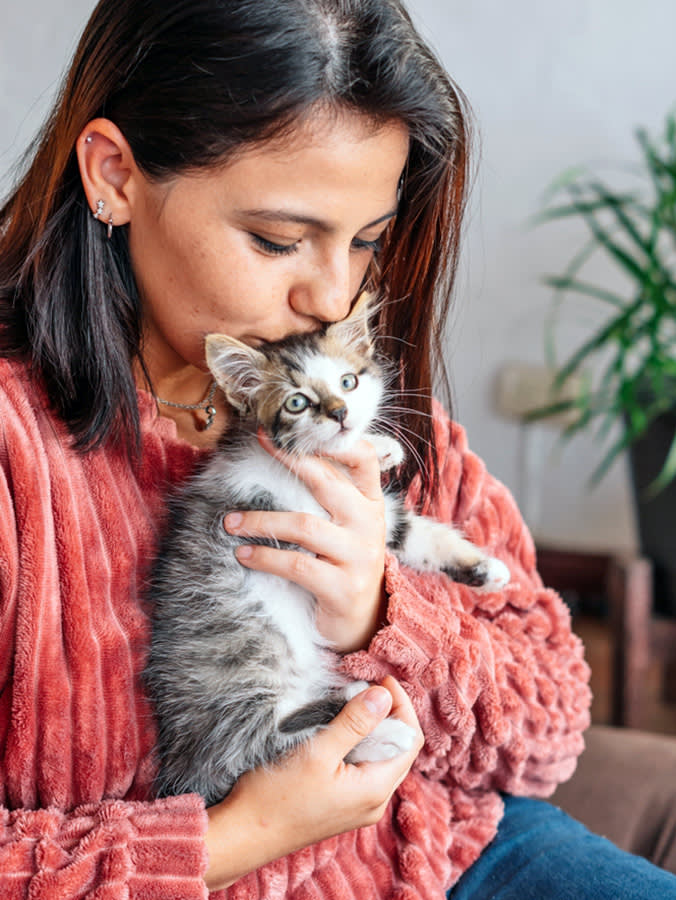
Here is the sentence that should be at the top of every kitten article and never is:
The day your kitten stops growing, their calorie needs fall off a cliff, and almost nobody notices for months.
Growth is expensive. Building bone, muscle, and organ tissue burns an enormous amount of energy, and kitten food is formulated to fund exactly that: dense, rich, and generous. Then one day, usually somewhere around the first birthday, construction ends. The furnace switches off. And the food keeps arriving at the same rate.
That gap, between the end of growth and the moment you change the bag, is where a surprising number of overweight adult cats are quietly made. Feline obesity is not usually a single dramatic mistake. It is a few months of kitten food fed to a cat who is no longer a kitten.
So this piece is not really about when kittens stop growing. It is about how to catch the moment they do.
The short answer, with the caveats that matter
Most kittens reach adult size between 12 and 18 months. By around one year old, most have hit their adult height, though they may keep filling out with a little weight and muscle for a few months after.
That range exists because of breed and genetics:
- Small breeds (Cornish Rex, Devon Rex) may be done before 12 months.
- Regular-sized breeds (Siamese, domestic shorthairs) typically stop around their first birthday.
- Large breeds (Maine Coon) can keep growing for two, three, or even four years.
Cats do not have anything like the dog world’s Chihuahua-to-Great-Dane spread, so the variation is narrower than people expect. But it is real, and if you have a Maine Coon, none of the one-year advice applies to you. Yours is going to keep going for a long time.
Within a breed, genetics still rules. Big parents, big kitten. Small parents, small kitten.
The three stages, and what your job is in each
Newborn to two months: the fastest change of their life
No other eight weeks of your cat’s life will come close. They arrive unable to see or hear and nearly unable to move, running entirely on touch and warmth to find mom and their littermates. Two months later they are bold, funny, mobile, and ready to leave.
The milestones, in order:
- Ears and eyes open by two weeks.
- Baby teeth come in between three and six weeks.
- Mobility increases rapidly across the whole period.
- Solid food starts at four to six weeks.
- Weaning is in full swing at six to eight weeks.
Your job: mostly stay out of the way. Mom is handling nutrition. What you are doing is gentle, unhurried human handling so both kitten and mother get comfortable with people. Do not overdo it. Around the four-week mark you can start offering solid food, increasing the amount as they approach two months.
Two to six months: the main growth phase, and the socialization window
Growth is no longer explosive, but a great deal of it is still happening. Your kitten will visibly change week to week in both size and personality, and they will have an amount of energy that is difficult to describe to people who have not lived with it.
Your job here is the most consequential of the entire year, and it has nothing to do with food. This is the socialization period. Expose them to as many different situations, surfaces, sounds, people, and animals as you safely can. This is how they learn to handle change without anxiety, and this window does not reopen. A kitten who meets the world now becomes a cat who copes with it later.
The health checklist:
- A lot of muscle and bone growth is happening, so let them play hard. Exercise builds strength and helps prevent injury.
- First vet visit and vaccinations start at six to eight weeks.
- Feed a kitten-specific diet. This is not marketing. Growth requires nutrient ratios adult food does not provide.
- Spay or neuter around five to six months.
Six to 12 months: growth ends, quietly
Most cats reach sexual maturity between four and six months old, which is well before they are physically finished, and if they are not yet spayed or neutered you will see it in their behavior and appearance.
Growth in this stretch slows so dramatically that you probably will not notice it. Height and weight are still inching up. Activity may start to dip. And then, mostly around the 12-month mark, it stops.
Your job:
- Transition to adult food as the one-year mark nears. This is the whole ballgame. See below.
- Vet visits every six to 12 months, for life.
How to actually catch the moment it ends
Because the slowdown is invisible day to day, you need a number, not an impression. This is the part of kitten care people skip and then regret.
Weigh them. A kitchen scale works for a small kitten; a bathroom scale works for a bigger one if you weigh yourself holding them and subtract. Do it every couple of weeks from six months on and write it down. Growth has stopped when the number stops moving. That is the signal, and it is unambiguous.
Alongside the number, three physical tells:
- The appetite regulates. They stop trying to eat everything in the visible world.
- The proportions even out. The lanky, slightly-assembled-from-spare-parts look resolves into a proportional adult cat.
- Activity levels plateau. The 3am zoomies do not vanish, but the frantic edge comes off.
When those three line up and the scale has gone flat, the growth project is complete. That is your cue to change the food, not the birthday.
The switch, and why it is the whole point
Growing takes a lot of energy. When growing stops, a cat still eating growth rations suddenly has a surplus of calories and nowhere to put them except fat.
So: transition to an adult diet as growth ends, gradually, over about a week, mixing increasing proportions of the new food into the old to avoid stomach upset. Then keep weighing. If the number climbs after the switch, cut the portion, and do it while the gain is measured in ounces rather than pounds. Weight is far easier to prevent than to remove from a cat, who will not be participating enthusiastically in the diet.
What else can throw growth off
Nutrition. Kittens on a high-quality, kitten-appropriate diet are more likely to reach their full mature size. Kittens deprived of nutrients during growth often never do. This is one of the few windows where feeding really is destiny.
Illness and parasites. Infections and parasite burdens during any growth stage can leave a cat smaller than they would otherwise have been. If a kitten is not growing on schedule, worms are near the top of the list to rule out, not the bottom.
What newer guidance adds
The framework behind all of this comes from the 2021 AAHA/AAFP Feline Life Stage Guidelines, which replaced the old, vaguer categories with clearer life stages and tied specific care recommendations to each one. The practical shift for anyone raising a kitten is that “kitten” is now understood as a defined stage with an end point, and the transition out of it, in diet, in exercise expectations, in vet visit cadence, is treated as a real clinical event rather than a birthday.
The other thing worth knowing is that these guidelines put weight monitoring at the center of preventive care rather than treating it as an afterthought. Feline obesity remains one of the most common preventable health problems in cats, and the guidelines are explicit that catching it starts before it happens, in the first two years, with a scale.
So: weigh your kitten. Write it down. When the number stops moving, change the food. It is the least glamorous advice in cat ownership and it will do more for your cat’s next fifteen years than almost anything else you buy them.
Bottom line
Kittenhood is a year of extraordinary growth compressed into three stages, and most cats reach their adult size around 12 months, with small breeds finishing sooner and large breeds like Maine Coons taking years. Breed, genetics, nutrition, and health all shape where they land.
The moment that growth stops is the moment their nutritional needs change. Catch it with a scale, not a guess.
References
- “2021 AAHA/AAFP Feline Life Stage Guidelines.” Journal of Feline Medicine and Surgery, 2021.
Common questions
How can I tell my kitten is done growing?
Weigh or measure them regularly. When the numbers stop changing, growth has stopped. You'll also see appetite regulate, body proportions even out as they lose their lanky look, and activity levels start to level off.
When should I switch from kitten food to adult food?
Around the one-year mark for most cats, which is when growth ends. This is the single most-missed transition in cat care. Kitten food is calorie-dense by design, and a cat who has stopped growing but is still eating it is being fed for construction work that has finished.
Does nutrition affect how big my kitten gets?
Yes. Kittens fed a high-quality, kitten-specific diet are more likely to reach their full mature size. Kittens deprived of nutrients during growth often do not reach their genetic potential. Illness and parasites during kittenhood can also stunt growth.
Not a substitute for your vet. Our guidance is educational. For urgent symptoms, contact a vet or emergency clinic right away. Editorial standards
Dr. Nair is a veterinarian focused on diet and feeding. She covers everyday nutrition, treats, and the many "can they eat this?" questions owners ask, grounding each answer in what is actually safe and sensible for dogs and cats.
Meet our experts ↗Keep reading
 FoodA Kitten's Diet Changes Every Few Weeks. Here's the Whole Schedule on One Chart.Dr. Priya Nair · 7 min
 FoodYour Kitten Isn't Starving. Weigh Them Every Week.Dr. Priya Nair · 7 min
 First DaysThe Kitten Feeding Rule Flips at 16 WeeksDr. Priya Nair · 8 min
 Health & WellnessYour Cat's Diabetes Can Go Into Remission. The Window Is Smaller Than You ThinkDr. Mara Chen · 11 min
 FoodHigh-Calorie Cat Food Isn't an Upgrade. It's a Prescription.Dr. Lena Park · 6 min
 FoodYour Cat's 'I'm Starving' Act Is Fake. A Skipped Meal Isn't.Dr. Lena Park · 6 min