


Your Cat's 'I'm Starving' Act Is Fake. A Skipped Meal Isn't.
The 4 a.m. yowling is theater. A cat can wait about eight hours between meals. The real danger runs the other way: a cat that genuinely stops eating, especially an overweight one, can spiral into fatal fatty liver. Here's the difference.

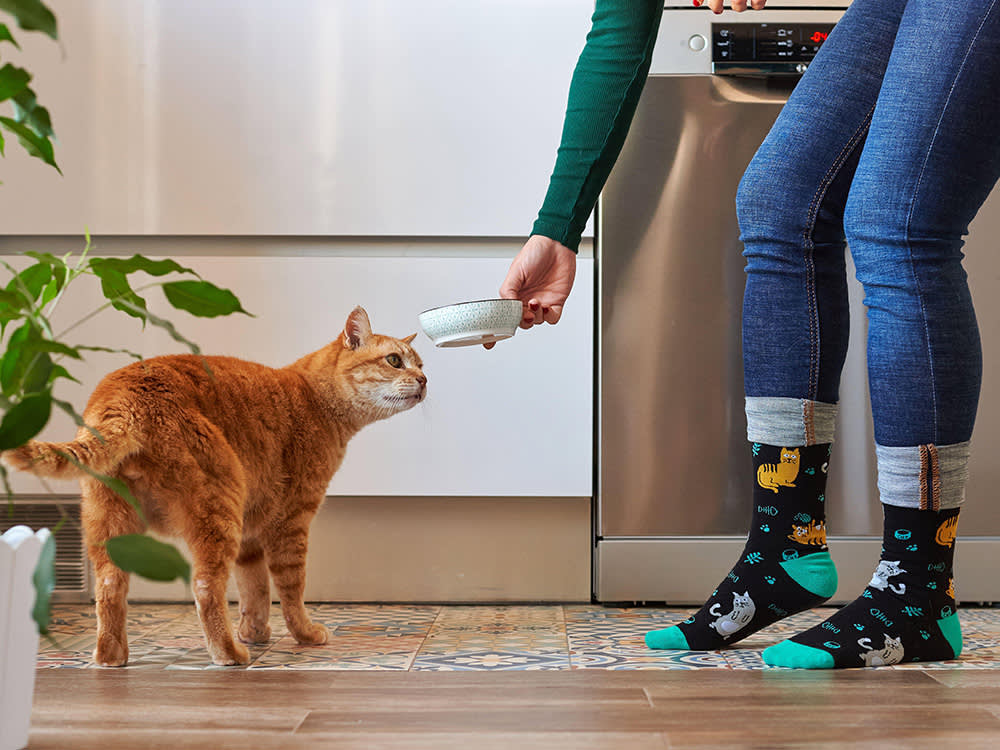
Cats are gifted actors, and their most reliable role is the starving orphan. The performance usually opens around 4 a.m. with a headbutt to your face, escalates to toe-biting, and builds toward a big finish of countertop demolition and relentless yowling at an empty bowl. It is convincing. It is also, almost always, complete fiction.
The genuinely important question is not whether your cat is faking hunger, because it is. It is how to tell the con from the crisis. Because while the daily drama is theater, there is a real red line with cats, and it runs in the opposite direction from what most owners fear. The danger is not your cat waiting a little longer for dinner. It is your cat actually stopping.
How long a cat can really wait
Honestly, it varies, and there is no precise figure anyone can give you. But the working numbers are reassuring. Depending on the food, a cat’s stomach clears roughly four to eight hours after eating, which means a healthy adult can usually hold out about eight hours between meals without trouble.
That said, “can manage” is not “should.” In the wild, hunting cats eat many tiny meals across the day, taking down something like eight to ten small prey animals and spending most of their waking hours stalking and chasing to do it. Our indoor cats burn far fewer calories and eat far richer food, so their needs differ, but their bodies are still built for grazing. Most feline nutritionists recommend feeding several small meals throughout the day rather than one or two big ones, both for physical health and for mental well-being. Practically, that means if you are heading out of town, your cat sitter needs specific instructions on how often your particular cat should eat, not just a heaping bowl on day one.
What actually keeps a cat full
If your cat seems hungry again suspiciously fast, what you feed matters as much as how much. A few levers move the needle on satiety:
- Protein does the most work. In cats, protein content is the biggest driver of feeling full, so a higher-protein diet tends to keep a healthy cat satisfied longest. The caveat is real: some cats, such as those with kidney disease, should not be on high-protein diets, so clear any switch with your vet first.
- Fiber helps, but modestly. Fiber slows stomach emptying and adds fullness, though it plays a smaller role in cats than in people or dogs. Standard high-fiber cat foods have not shown a big effect on feline fullness, while certain fiber supplements containing inulin seem to do more. Any supplement should be run past your vet, and fiber should be added gradually, since too much too fast can cause nausea and diarrhea.
- Kibble may outlast wet food in the stomach. There is some evidence that dry food lingers longer than wet, which can extend fullness. But that is only one factor in the endless wet-versus-dry debate. Canned food carries far more water, which is important for keeping cats hydrated, and its pureed texture may digest more quickly. In most cases a cat should not live on dry food alone, though small, strategic amounts can have a place.
How to quiet the crying without overfeeding
The goal is a satisfied cat and a full night’s sleep, and the right tactic depends on your cat’s life stage and health.
Kittens and pregnant cats genuinely need to eat often, and for them a timed automatic feeder can be a good way to deliver overnight and early-morning meals. For most other cats, though, timed feeders are not recommended, because free access to food invites overeating and obesity.
For healthy adult cats, food puzzles are the better answer. Puzzle feeders let your cat “work” for smaller, more frequent portions, which slows down eating, adds mental enrichment, and burns a little energy in the process. They range from elaborate commercial designs to the simplest possible version: scatter a portion of kibble around a room and let your cat hunt it down. Pair frequent small meals with a bit more protein, and for cats without health concerns a touch more fiber, and you have a cat that feels fuller and complains less.
The real red line: when a cat stops eating
Here is the part that actually matters for your cat’s safety, and it is the mirror image of the starving act. Going meal after meal with no food at all is something a cat genuinely cannot afford, and the danger is sharpest for a few groups: young kittens, pregnant queens, cats with a chronic illness, and, counterintuitively, cats carrying extra weight.
That last group is the reason you must never, ever fast a cat to make it lose weight. In heavier cats especially, going without food can set off hepatic lipidosis, better known as fatty liver. When the body suddenly mobilizes fat for energy, it can overwhelm the liver, and the result is a dangerous, potentially fatal illness that starts from what looks like a diet.
The instinct with a chubby cat is to cut back hard, but a cat that suddenly stops eating can be in real trouble within a day or two. If your cat goes a day or two refusing food, that is not stubbornness, it is a symptom, and it warrants a same-day vet visit rather than waiting it out.
So the rule is simple and firm: a cat that skips multiple meals is showing a symptom and needs a vet’s eyes on it right away, and weight loss should always happen under a vet’s guidance through the right food and portions, never through withheld meals.
The bottom line
Trust your cat’s stomach, not its acting. A healthy adult can wait roughly eight hours between meals, but grazing on small, frequent, protein-forward portions keeps it fuller and calmer. The performance at the food bowl is nothing to worry about. A cat that genuinely refuses to eat for a day or more is the opposite, an emergency wearing the costume of a picky eater.
What’s new since this was written
The link between not eating and fatty liver has, if anything, gotten more emphasis in current feline nutrition guidance, with vets increasingly warning against crash diets and any feeding gap for overweight cats. The other shift is technological: smart feeders and connected scales have moved from novelty to genuinely useful tools, and studies now support them as effective aids in supervised cat weight-loss programs, letting owners deliver small, measured meals on a schedule instead of one big bowl, which is exactly what a cat’s grazing biology prefers.
References
- Little, Susan. “Feeding the Healthy Cat.” The Cat: Clinical Medicine and Management, Elsevier, 2012.
- Center, Sharon A. “Feline Hepatic Lipidosis.” Veterinary Clinics of North America: Small Animal Practice, vol. 35, no. 1, 2005, pp. 225–269, doi.org/10.1016/j.cvsm.2004.10.002.
Common questions
Why is skipping meals dangerous for cats?
Cats, especially heavier ones, are prone to hepatic lipidosis, or fatty liver, which not eating can trigger. Never fast a cat to make it lose weight, and get a cat that refuses multiple meals to a vet right away.
Not a substitute for your vet. Our guidance is educational. For urgent symptoms, contact a vet or emergency clinic right away. Editorial standards
Dr. Park is a board-certified emergency and critical care specialist. She reviews our health and safety content for clinical accuracy and contributes guides on recognising urgent conditions. Her focus is helping owners act quickly and correctly when it matters most.
Meet our experts ↗Keep reading
 Health & WellnessYour Cat's Diabetes Can Go Into Remission. The Window Is Smaller Than You ThinkDr. Mara Chen · 11 min
 Health & WellnessA Six-Month 'Ozempic' Implant for Fat Cats Is Already in TrialsDr. Lena Park · 5 min
 FoodForget the Clock: Build Your Cat's Feeding Schedule From Calories, Not Meal TimesDr. Mara Chen · 7 min
 Health & WellnessIs Your Kitten Actually Too Skinny? There's a Simple Rule That Settles ItDr. Amara Solis · 8 min
 Health & WellnessThis Cat Is 26. Her Secret Is 15 Boring Habits, Not One Magic Trick.Dr. Priya Nair · 9 min
 Health & WellnessYour Kitten Stops Growing Months Before You Stop Feeding Them Like OneDr. Priya Nair · 7 min