


Is Your Kitten Actually Too Skinny? There's a Simple Rule That Settles It
Kittens are supposed to look lanky, so most 'underweight' kittens are perfectly fine. A one-pound-a-month yardstick tells you when to relax and when a thin kitten is a red flag worth a vet visit.

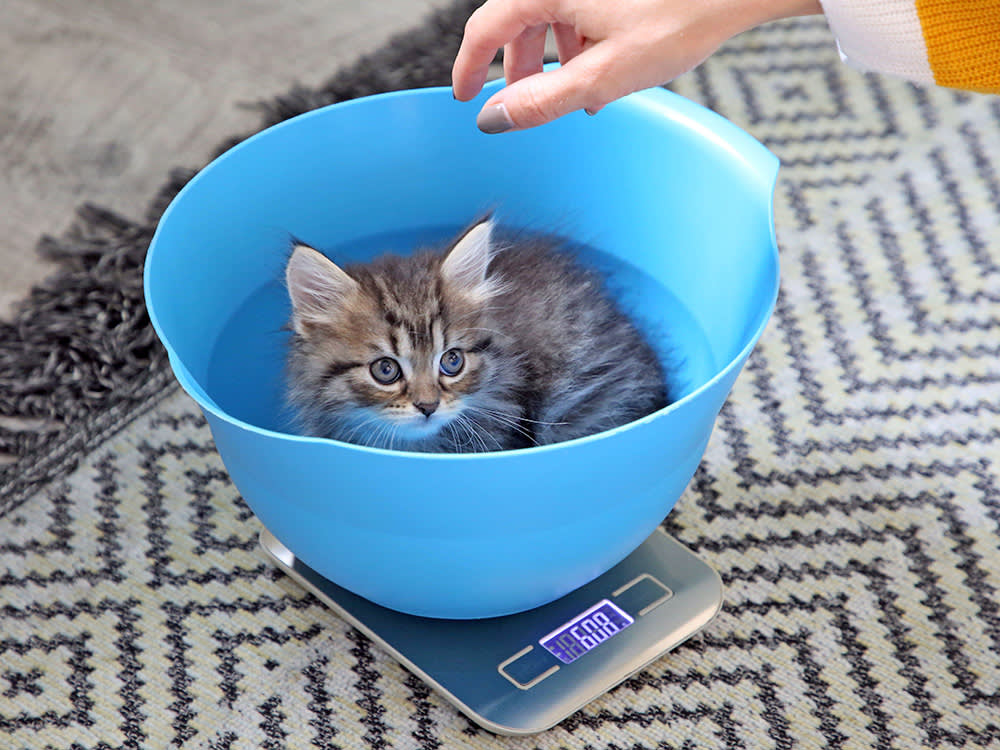
Bring home a new kitten and it is almost a rite of passage to worry that they are too thin. Those long, lanky bodies, the visible little shoulder blades, the way they look nothing like the round, loaf-shaped adult cats you picture. Here is the reassuring truth most first-time kitten parents need: that shape is normal. A healthy growing kitten is supposed to look leggy and lean. Most kittens people fret about are gaining weight exactly as they should.
But “most” isn’t “all,” and a genuinely underweight kitten can be the first sign of something that needs attention. So the useful skill isn’t panicking or dismissing; it’s knowing how to tell the difference. And there’s a simple yardstick that does most of the work.
The one-pound-a-month rule
For the first few months of life, a kitten gains roughly one pound per month. That gives you an easy mental checkpoint: a two-month-old should be somewhere around two pounds, a three-month-old around three. If your kitten is tracking near that line, they are almost certainly at a healthy weight, no matter how skinny they look next to the family’s chonky adult cat.
The rule cuts both ways. If your kitten is well under the mark for their age, or if you have an older kitten who seems too thin, that is your cue to book a vet exam rather than trying to fatten them up at home. A truly underweight kitten is telling you something, and it is worth finding out what.
Parents look at those bony little kitten shoulders and assume they need to pile on food. Nine times out of ten the kitten is growing beautifully and just hasn’t filled out yet. My job is to reassure the nine and catch the one, and the weigh-in is how we do it.
Why a kitten might really be underweight
When a kitten genuinely isn’t gaining, a handful of causes account for most cases. It helps to know them in rough order of how common they are.
Intestinal parasites. This is the big one. Worms are extremely common in kittens, who often pick them up from their mothers, and they absorb nutrients straight out of the digestive tract before the kitten can use them. A kitten can eat plenty and still be malnourished. Sometimes there are other clues, like diarrhea, gas, or a vomited worm, but often the only sign is slow growth. The good news is that your vet can test for the usual parasites easily and treat them with a safe deworming protocol.
The wrong diet. Kittens grow fast and need a lot of calories and nutrients packed into a small volume, because their stomachs can’t hold much. That is exactly what kitten formulas are built to deliver. A kitten eating adult food, senior food, or a homemade diet simply gets full before they can take in enough to meet their needs. Feed a food labeled for kittens or all life stages, and feed it often.
Stress. A new kitten still adjusting to your home may eat less, especially if there are other pets around or the environment is loud and unfamiliar. Frightened kittens hide, and a hiding kitten isn’t eating. Give a newcomer a quiet, secluded space, particularly at mealtimes, so they can eat without competition or distraction.
Underlying medical conditions. If you have ruled out the quick fixes and your kitten still isn’t gaining, your vet may look deeper. Congenital issues like a liver shunt, along with problems such as a growth hormone deficiency or hypothyroidism, can all slow growth, and your vet can walk you through the other signs and the tests that identify them.
The strategies that actually work
For most kittens on a good diet and routine, weight gain is steady and predictable, and no heroic measures are needed. Even a scrawny start usually catches up fast once the basics are right. Three things do the heavy lifting.
Feed a real kitten diet. This is the most important lever you have. A food labeled specifically for kittens or all life stages provides the calorie and nutrient density a growing body demands; adult food does not, and can actively slow growth.
Feed small meals, often. Depending on age and size, that usually means three to four feedings daily, and more than that for the very youngest. Frequent little meals let a kitten take in enough over the day without the bloating and digestive upset that come from gorging at one big bowl. If you’re out for long stretches, an automatic feeder can dole out small portions on a schedule instead of leaving a single heap of food.
Skip the weight-gain supplements. These are usually unnecessary and can backfire. Snacks, treats, and supplements that aren’t complete and balanced fill a small stomach so the kitten eats less of the food that actually meets their needs, which can create nutritional gaps and slow growth in the long run. If the basics aren’t working, the answer is a vet visit, not a supplement.
When a thin kitten is a real problem
A few specific scenarios deserve a closer look.
Eating well but not gaining. A kitten on a good kitten food, fed frequently, with a healthy appetite who still isn’t putting on weight likely has something going on under the surface, often something as simple and treatable as parasites. This is a clear reason to see your vet and start tracking growth with some initial testing.
Not eating enough. Sometimes the issue is behavioral, most often in a newly adopted kitten still finding their footing. Stress can drive them to hide and skip meals, and in a multi-pet home a smaller or younger kitten can get outcompeted for food. The fix is a quiet, private, low-pressure place to eat, sometimes in a separate room entirely, plus safe hiding spots and calming pheromone products to take the edge off.
Burning it all off. Kittens are famously acrobatic, and it’s natural to wonder whether nonstop zoomies are the reason your kitten stays lean. For a healthy kitten on a proper diet, the answer is no: they can meet their needs despite the daily gymnastics. There’s no reason, and honestly no way, to rein in that activity, and you shouldn’t try. Follow the feeding guidelines for your kitten’s food and age and the calories will keep up with the acrobatics.
When to bring in your vet
Young kittens should be seeing a vet at regular intervals anyway, for vaccines, deworming, and to schedule a spay or neuter. Those visits double as growth checks, giving your vet the chance to catch subtle weight changes or early signs of illness. In between, if your kitten isn’t tracking the general weight-for-age guideline, or you notice other signs like lethargy, diarrhea, or a poor appetite, don’t wait for the next scheduled visit.
Build the habits now that you’ll want later
Kittens can seem like bottomless pits, eating and eating while staying thin and active, but kittenhood is short. Most cats reach adult size by about a year, and the feeding habits you set now tend to stick. Feed at scheduled times in measured portions rather than leaving food out around the clock. Free-feeding can be fine for a fast-growing kitten in some cases, but adult cats, no longer growing and often under-exercised indoors, are prone to overeating and obesity. Set up structured mealtimes early and you hand your cat a routine that protects their weight for life. Fold in daily play and enrichment too, so they stay fit in body and mind.
References
- Journal of Feline Medicine and Surgery. “Assessment of body weight for age determination in kittens.” journals.sagepub.com
- Merck Veterinary Manual. “Congenital and Inherited Disorders of the Digestive System in Cats.” merckvetmanual.com
- Merck Veterinary Manual. “Disorders of the Thyroid Gland in Cats.” merckvetmanual.com
- Veterinary Partner. “What First-Time Kitten Owners Should Know.” veterinarypartner.vin.com
Common questions
Why is my kitten underweight even though they eat a lot?
The most common culprit is intestinal parasites, which steal nutrients before the kitten can use them. Worms are extremely common in kittens and easy to test for and treat, so a kitten eating well but not gaining is a reason to see your vet.
Should I give my kitten a weight-gain supplement?
Usually no. Supplements and extra treats can fill a small stomach so the kitten eats less of the complete, balanced kitten food they actually need, which can slow growth. A proper kitten diet fed frequently is the real fix.
Not a substitute for your vet. Our guidance is educational. For urgent symptoms, contact a vet or emergency clinic right away. Editorial standards
Dr. Solis is a board-certified veterinary dermatologist with over twelve years of clinical experience. She advises on skin conditions, allergies, and grooming practices that affect coat and skin health. All dermatology and allergy content at The Pet Times is reviewed by her team before publication.
Meet our experts ↗Keep reading
 Health & WellnessNeutering Won't Change Your Cat's Personality. It Will Change His Appetite.Dr. Amara Solis · 8 min
 Health & WellnessThis Cat Is 26. Her Secret Is 15 Boring Habits, Not One Magic Trick.Dr. Priya Nair · 9 min
 Health & WellnessYour Cat's Diabetes Can Go Into Remission. The Window Is Smaller Than You ThinkDr. Mara Chen · 11 min
 FoodThe Scale Is Lying About Your Cat's WeightDr. Lena Park · 5 min
 FoodWet vs. Dry Cat Food: The Moisture Question Settles Most of ItDr. Mara Chen · 6 min
 FoodYour Cat's 'I'm Starving' Act Is Fake. A Skipped Meal Isn't.Dr. Lena Park · 6 min