


You're Probably Overfeeding Your Cat. The Bag Is Part of the Problem.
Most cats eat more than they need, and the feeding guide on the label is often too generous. A vet nutritionist explains how to eyeball your cat's real shape, do the simple calorie math the bag skips, and portion like you mean it, before a diet becomes necessary.

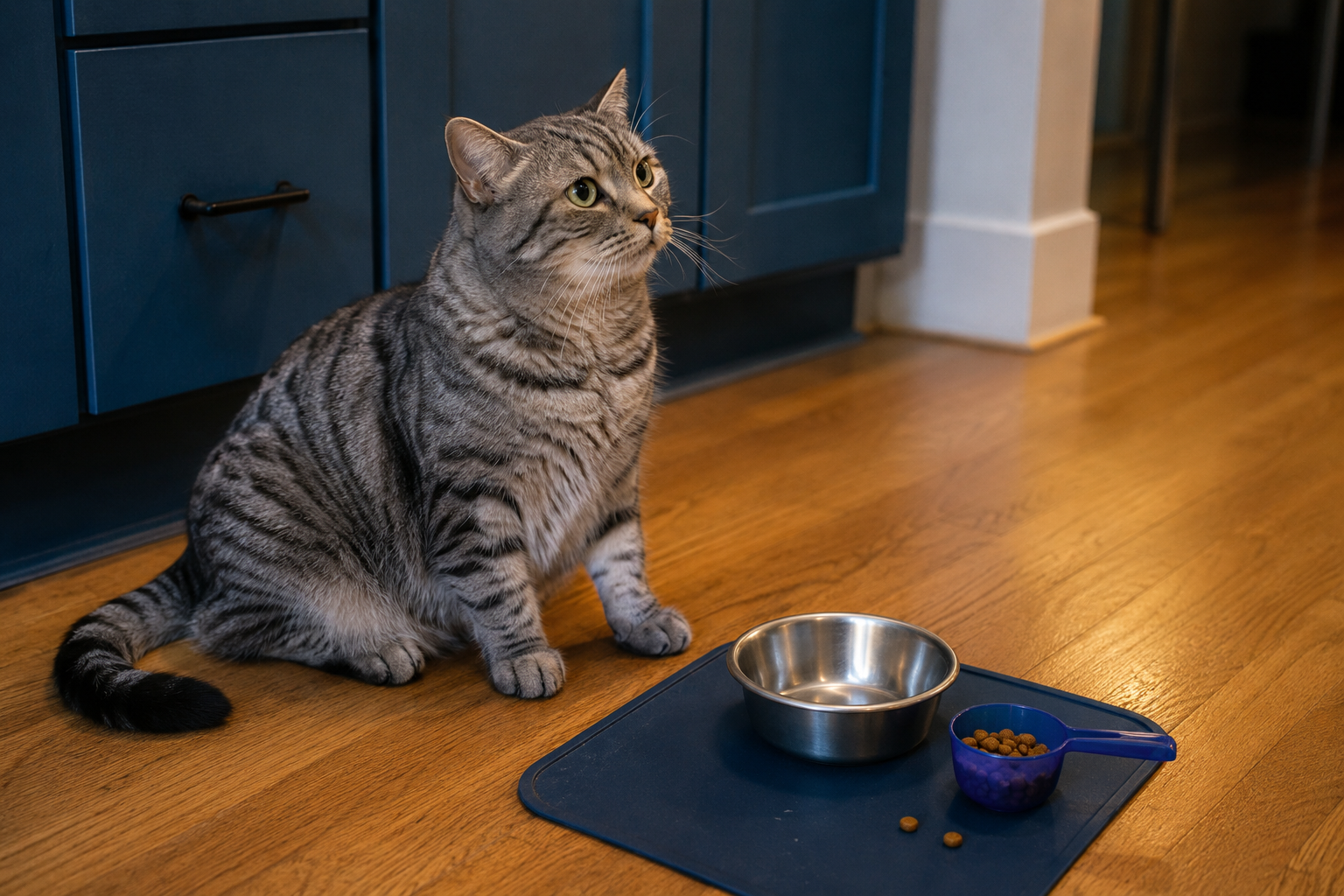
You were raised to clean your plate, so it is hard to fault your cat for emptying theirs. But the portioning is your job, not theirs, and here is the uncomfortable truth: most cats are eating more than they need, and the feeding guide on the bag is often part of the reason. If your cat has lost the tuck behind their ribs and gained a swinging pouch between their back legs, this one is for you.
Look at your cat, not the scale
Vets judge a cat’s condition mostly by eye and by hand, not by a number on a scale, because the healthy weight for a lean seven-pound cat and a big-framed thirteen-pound cat are completely different. What you are looking for is a subtle waist when you view your cat from above and ribs you can feel without pressing hard. A belly that hangs low and a body with no visible waist are the signs it is time to start counting calories. As a rule, if you are unsure whether your cat is carrying extra weight, they probably are, because overfeeding is far more common than the opposite.
Do the math the bag skips
“About 200 to 300 calories a day” is the ballpark for an average adult cat, and it is a fine sanity check. But averages hide a lot, so here is the actual calculation vets use.
Start with your cat’s resting energy requirement, the calories they burn just existing: 70 × (body weight in kilograms) to the ¾ power. A 4.5 kg (about 10 lb) cat, for example, works out to roughly 200 resting calories. Then multiply by an activity and life-stage factor, commonly around 1.2 for a neutered, indoor adult and lower (closer to 0.8 to 1.0) if you are aiming for gentle weight loss. Compare that number to what is actually on the label, and you will often find the bag is running high.
Several things move the target. A larger cat needs more than a small one. An indoor cat who naps in the sun needs fewer calories than one who roams and hunts outdoors. And crucially, spaying and neutering slows metabolism enough that fixed cats may need around 25 percent fewer calories than intact ones, a change most people never adjust for. Cats also have famously unhurried metabolisms to begin with, which leaves very little margin for over-serving.
Portion like you mean it
Once you have a number, protect it.
Measure, and ditch the free-for-all. If you fill the bowl to the brim and your cat inhales it, switch to measured portions, weighed or scooped, rather than a bottomless dish. Food that is available all day makes portion control essentially impossible; you simply won’t win that fight.
Mind the treats. This is where careful meals get undone. Hold treats, and the milky bottom of your cereal bowl, to a tenth of your cat’s daily calories at the very most. It adds up faster than you would think.
Separate cats at mealtime. In a multi-cat home, it can be hard to tell who is over- or under-eating. Microchip-activated feeders solve this neatly, giving a slim cat all-day access while serving the heavier one measured meals only.
Why the effort is worth it
Playing diet cop makes you feel like the bad guy, and your cat will absolutely lobby for more. Stay the course anyway. Preventing weight gain is dramatically easier than reversing it once it has happened, and it does not much matter what food you feed if it is freely available around the clock. A cat kept at a healthy weight is a cat far more likely to dodge diabetes, joint disease, and the other costs of extra pounds, and to live a longer, more comfortable life. They may protest now. They will be better off for it later.
The number on the bag is a starting point for a whole population of cats, not a plan for yours. I’d much rather a client weigh out portions and adjust down early than come to me two years later trying to get a stubborn cat to lose weight. Prevention is so much kinder than the diet.
References
- Calorie needs and body condition scoring in cats — World Small Animal Veterinary Association
- Feline Body Condition Score — American Animal Hospital Association
- Determining energy requirements in cats — VCA Animal Hospitals
This article covers feline nutrition and weight; check with your veterinarian before starting a weight-management plan for your cat.
Common questions
Why shouldn't I just follow the amount on the bag?
Feeding-guide amounts are broad averages built to cover a wide range of cats, so for many individuals they're simply too much. Treat the label as a ceiling to adjust down from, not a target. If your cat is gaining weight on the recommended amount, feed less. It's only a guideline.
How much of my cat's food can be treats?
No more than about 10 percent of their daily calories. Treats, table scraps, and the last of your ice cream add up fast and quietly undo careful portioning of the main meals.
Not a substitute for your vet. Our guidance is educational. For urgent symptoms, contact a vet or emergency clinic right away. Editorial standards
Dr. Kohl is a board-certified veterinary dentist with a particular interest in preventive oral care. She reviews all dental health content at The Pet Times and contributes practical guides on home dental routines, professional cleaning, and oral disease prevention.
Meet our experts ↗Keep reading
 FoodYour Kitten Isn't Starving. Weigh Them Every Week.Dr. Priya Nair · 7 min
 FoodA Kitten's Diet Changes Every Few Weeks. Here's the Whole Schedule on One Chart.Dr. Priya Nair · 7 min
 FoodYour Cat Isn't Hungry. Unless These Three Things Are Also True.Dr. Priya Nair · 10 min
 FoodWet vs. Dry Cat Food: The Moisture Question Settles Most of ItDr. Mara Chen · 6 min
 FoodForget the Clock: Build Your Cat's Feeding Schedule From Calories, Not Meal TimesDr. Mara Chen · 7 min
 Health & WellnessNeutering Won't Change Your Cat's Personality. It Will Change His Appetite.Dr. Amara Solis · 8 min