


Wet Food Rarely Gives a Cat Diarrhea. The Way You Switched It Usually Does
Most wet-food diarrhea isn't an ingredient problem, it's a transition problem. Here's how to switch the right way, how to tell food from a medical cause, and when to call the vet.

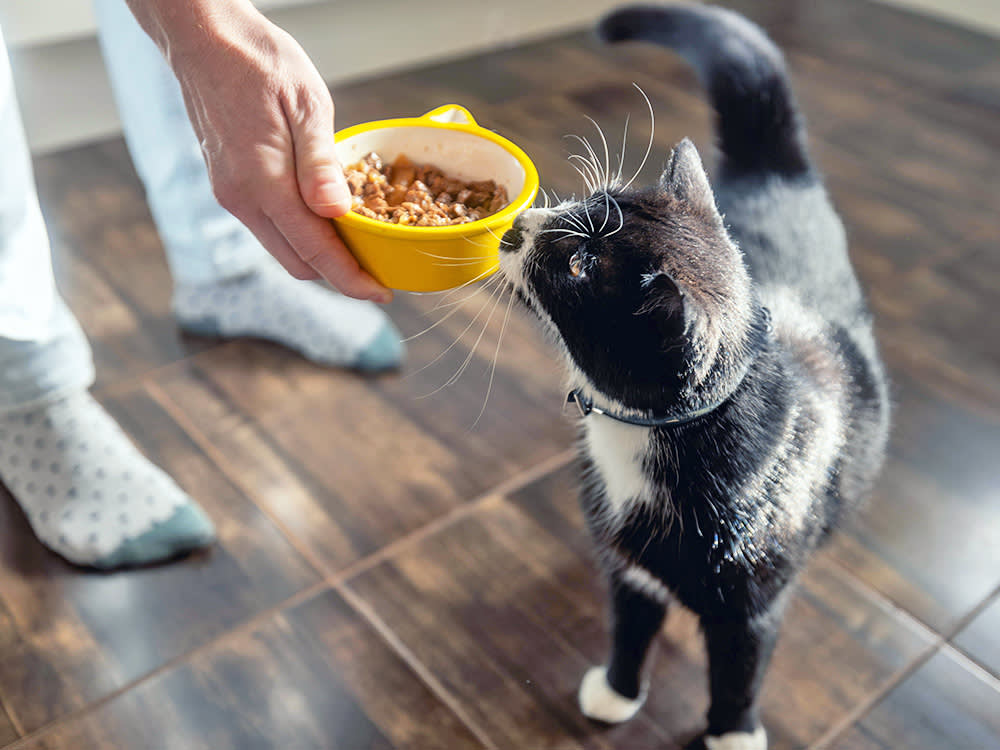
Here is the thing most articles bury: for a healthy cat, wet food itself is rarely what causes the diarrhea. Canned food is mostly water and animal protein, which is exactly what a cat’s gut is built to handle. When a cat gets loose stool right after a can appears in the bowl, the food usually isn’t the villain. The speed of the change is.
That distinction matters, because it points to a fix. A sudden diet flip throws off the gut’s bacterial balance for a few days no matter how good the new food is. Knowing that, you can prevent most wet-food diarrhea before it starts, and you can tell the difference between a harmless transition wobble and a sign that something is actually wrong.
Start here: transition slowly, every single time
The single most effective thing you can do is refuse to switch foods all at once. The community of “good” bacteria in a cat’s intestine is tuned to whatever they have been eating. Change the menu overnight and that population needs time to re-tune. While it catches up, you get loose stool. This is true even when you are upgrading from a mediocre food to an excellent one.
A workable schedule for a healthy adult cat looks like this:
- Days 1 to 3: about 75 percent old food, 25 percent new wet food, mixed in the same bowl.
- Days 4 to 6: roughly half and half.
- Days 7 to 9: about 75 percent new, 25 percent old.
- Day 10: all new food.
Only advance to the next step if the previous one produced normal, formed stool. If things get loose, drop back to the last ratio that worked and hold there an extra few days before trying again. For kittens, seniors, or any cat with a known sensitive stomach, stretch the whole process to two or three weeks. There is no prize for finishing fast.
The one exception is a medical reason to switch immediately, such as a vet putting your cat on a therapeutic diet. In that case your vet will tell you to skip the gradual ramp, and you follow their lead instead.
Is it the food, or is it something else? A quick way to tell
Owners almost always blame the most recent change, and the most recent change is almost always the food. Sometimes that is right. Often it is a coincidence. Before you swear off wet food forever, walk through these questions.
Did the diarrhea start within a day or two of a new food, and is it improving on its own? That pattern points squarely at a transition wobble. Slow down and it should resolve.
Does it happen every time that one specific food appears, even after a careful transition? That looks more like a true intolerance or allergy to an ingredient in that formula, often an animal protein like beef or fish. Switch to a different protein, not away from wet food entirely.
Is the diarrhea showing up with no diet change at all, or alongside vomiting, weight loss, or a drop in appetite? Now the food is probably a red herring, and you are looking at a medical cause that needs a vet.
Did your cat raid something they shouldn’t have? Cats are not as discerning as their reputation suggests. A houseplant, a bug, a counter-surfed scrap, or the dog’s dinner can all loosen things up and have nothing to do with the can you opened.
That last point is worth holding onto: a single change you happened to notice is not proof of cause. The food is the obvious suspect because it is the visible one.
What actually causes diarrhea in cats
When the cause is not a too-fast transition, the usual suspects fall into a handful of categories. Any of these can coexist with wet food without the food being to blame.
Intestinal parasites. Worms cause diarrhea, vomiting, a dull coat, and poor body condition. Deworming is a core part of kitten care and should carry into adulthood, because even indoor cats pick up parasites from fleas, other pets, raw meat, or whatever you track in on your shoes.
Inflammatory bowel disease. With IBD, the intestinal walls stay chronically inflamed, driving recurrent vomiting, diarrhea, weight loss, and a reduced appetite. It is usually managed with a mix of medication and diet, and many cats run through food trials to find a fit. Easily digestible diets are preferred, and they come in both wet and dry forms.
Food allergy. Here the immune system reacts to a specific ingredient, often an animal protein. The signs are usually skin-related, with redness and itch, but vomiting and diarrhea can come along too. An allergy repeats reliably whenever the trigger protein is eaten.
Food intolerance. Unlike an allergy, an intolerance does not involve the immune system. It is simply an unhappy reaction to a food. Lactose intolerance is the classic example, which is why those charming saucers of milk in old movies are really a recipe for a mess in real life.
Dysbiosis. This is an imbalance in the gut’s bacterial community that disrupts normal function. Medication, stress, illness, or, yes, an abrupt diet change can throw the “good” bacteria off and produce diarrhea. This is the mechanism behind transition wobble.
Infection. Bacterial and viral infections both cause diarrhea. Bacterial cases often trace to contaminated or spoiled food, and both wet and dry food can spoil. Raw diets carry a higher risk of contamination with Salmonella, Listeria, E. coli, and Clostridium, all of which can sicken cats and the people feeding them.
How to keep wet food from causing trouble in the first place
Beyond a slow transition, a few habits prevent most of the avoidable cases.
Don’t let it sit out. Opened wet food spoils faster than kibble. As a rule, toss anything left at room temperature for more than two to four hours, and refrigerate the rest of the can in a sealed container for no more than a couple of days. Spoiled food is a real and underrated cause of diarrhea.
Pick a food that fits the life stage. Kittens, adults, and seniors have different needs, and feeding the wrong stage can cause both nutritional imbalance and GI upset. Confirm the label carries an Association of American Feed Control Officials (AAFCO) statement saying the food is complete and balanced for your cat’s stage.
Watch portions. A cat that adores wet food and is allowed to gorge can get diarrhea purely from overdoing it. Measure meals rather than free-feeding cans.
Respect your cat’s verdict. If your cat physically can’t tolerate one formula no matter how slowly you introduce it, that is information. Try a different protein or texture rather than forcing the issue.
When wet food is the cure, not the cause
It is worth flipping the usual framing, because wet food is frequently the solution to feline diarrhea, not the trigger. Diarrhea dehydrates a cat, and canned food carries far more moisture than kibble, which makes it an easy way to put water back in. Vets also lean on wet food to tempt a sick cat with a poor appetite into eating at all. The same food owners fear can be the thing that helps a recovering cat rehydrate and get its calories.
If your cat has a genuinely sensitive stomach, your vet may suggest a specific sensitive-stomach formula, available by prescription or over the counter, typically low in fat, higher in fiber, and built around easily digestible protein and carbohydrate. Finding the right one often takes some trial and error, and some cats need bloodwork or imaging like X-rays or an abdominal ultrasound to rule out a deeper problem. Once the right diet lands, even a finicky-stomached cat can thrive on it.
When to call the vet
Most short bouts of diarrhea pass on their own, but some need treatment. Get your cat seen if you notice any of the following:
- Diarrhea lasting more than two to three days
- Large amounts of watery stool
- Blood in the stool
- Vomiting alongside the diarrhea
- A poor or absent appetite
- Lethargy
- Signs of pain
- Straining to defecate
Kittens, seniors, and cats with existing health conditions dehydrate fast, so call sooner rather than later for them. When in doubt, a phone call to your clinic is free and quick.
The bottom line
Wet food gets blamed for a lot of diarrhea it didn’t cause. For most healthy cats, the loose stool that follows a new can is a transition problem, fixable by switching foods over a week or more rather than overnight. A reaction that repeats every time one specific food appears points to an ingredient intolerance, which means changing the formula, not abandoning wet food. And diarrhea that shows up without a diet change, or with vomiting, weight loss, or lethargy, is a medical question for your vet. Introduce wet food the slow way, keep it fresh, and it is far more likely to be the thing that settles your cat’s gut than the thing that upsets it.
References
- “Diseases of the Stomach and Intestines in Small Animals.” MSD Veterinary Manual, 2025, www.msdvetmanual.com/digestive-system/diseases-of-the-stomach-and-intestines-in-small-animals.
- Creech, Renea. “Decoding Dysbiosis.” DVM360, 31 July 2024, www.dvm360.com/view/decoding-dysbiosis.
- “Selecting the Best Food for Your Pet.” WSAVA Global Nutrition Committee, 2024, wsava.org/global-guidelines/global-nutrition-guidelines/.
- “AAFCO Methods for Substantiating Nutritional Adequacy of Dog and Cat Foods.” Association of American Feed Control Officials, www.aafco.org.
Common questions
Should I stop the wet food if my cat has diarrhea?
Not necessarily. Vets often recommend wet food during a bout of diarrhea because the extra moisture helps replace what's being lost. If your cat was already eating that food fine, keep going. If the diarrhea started the day you introduced a new wet food, pause it and reintroduce more slowly.
How long should a wet-food transition take?
Plan on 7 to 10 days for a healthy cat, longer for a sensitive one. Start at roughly 10 to 25 percent new food mixed into the old, and nudge the ratio up every couple of days only if the stool stays formed.
Not a substitute for your vet. Our guidance is educational. For urgent symptoms, contact a vet or emergency clinic right away. Editorial standards
Dr. Chen is a small-animal veterinarian who leads health and safety coverage at The Pet Times. She writes and reviews the bulk of our illness, condition, and safety content, translating clinical guidance into clear, practical advice owners can act on at home.
Meet our experts ↗Keep reading
 FoodYour Vet Prescribed a $140 Bag of Food. Will Insurance Touch It?Sara Lim · 7 min
 FoodYour Cat Isn't a Picky Diva. It's a Supertaster Built for MeatDr. Mara Chen · 5 min
 Health & WellnessYour Cat Is Dehydrated by Design. Here's How to Fix It.Dr. Priya Nair · 8 min
 FoodYour Cat Wants Your Salad. Here's What Lettuce Actually Does.Dr. Amara Solis · 4 min
 FoodThe 'Natural' Raw Diet Is Failing Cats on Two FrontsDr. Amara Solis · 7 min
 FoodWet Cat Food and the 2-Hour Rule: The Clock Starts the Second You Open the CanDr. Amara Solis · 7 min