


Your Cat Isn't a Picky Diva. It's a Supertaster Built for Meat
The science of why cats snub food humans find delicious: they can't taste sweet at all, they read 'meaty' flavors in high definition, and a little-known taste called kokumi may be quietly running the show.

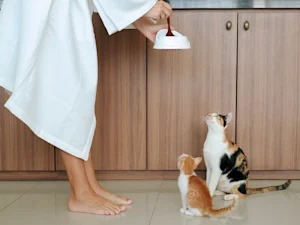
Every cat owner has stood at the counter, bowl in hand, being judged. You put down food a raccoon would fight you for, and your cat sniffs it, looks at you, and walks away. It is easy to take this personally and file your cat under “diva.”
Here is the reframe the science actually supports, and it flips the whole story: your cat is not being difficult, it is being a supertaster. A cat’s sense of taste is not a worse version of yours, it is a different instrument entirely, tuned by evolution to do one job extremely well, find meat that is worth eating. Once you understand how that instrument is built, the pickiness stops looking like an attitude problem and starts looking like a highly specialized quality-control system doing exactly what it was designed to do.
Cats and humans taste different worlds
Taste is not a fixed property of food. It is an interpretation your brain builds from signals sent by specialized receptor cells on the tongue, and different species build very different interpretations from the same bite. We know this because scientists can line up the DNA that codes for those receptors and compare species side by side.
Cats and humans took sharply different evolutionary roads, and their tongues show it. Humans are omnivores, built to eat a bit of everything, so we carry a broad, generalist set of taste receptors. Cats are obligate carnivores, meaning their natural diet is essentially all meat, and their taste hardware is specialized to match. That single difference, generalist versus specialist, explains most of what looks like fussiness at the food bowl.
The sweet blind spot
The clearest example is sugar. Cats cannot taste sweet at all. A 2005 study found that cats lack a functional sweet taste receptor, the gene that would build it is broken. It makes perfect sense once you think like a carnivore: meat is not sweet and carries almost no sugar, so a strict meat-eater had nothing to gain from detecting it, and evolution let the receptor go. When your cat ignores ice cream or fruit, it is not showing restraint. That flavor simply does not exist for them.
Where cats leave us in the dust: umami
Cats give up sweetness, but they more than make up for it on the savory side. Umami, the deep, meaty, brothy taste, is the fifth basic taste, the one behind the appeal of aged parmesan, mushrooms, and a good stock. For humans it is a pleasant accent. For cats it is the main event.
Umami is thought to be the primary driver of what a cat wants to eat, playing the role sweetness plays for us. And cats do not just prize umami, they perceive it in higher resolution. Their umami system detects a broader range of amino acids, the building blocks of protein that are abundant in meat, than the human version does. The practical upshot is striking: meat may carry a richer, more complex, more varied flavor for your cat than it ever does for you. What reads to us as one savory note may read to a cat as a whole chord.
The taste almost no one talks about: kokumi
Here is the piece that rarely makes it into “why is my cat picky” articles, and it may be the most important. Beyond the five familiar tastes sits a lesser-known one called kokumi. It is well established in Japanese cuisine and still barely known in Western kitchens. Kokumi is strange because on its own it does not taste like much. Its job is enhancement, adding what tasters describe as “mouthfulness,” “heartiness,” and body to other flavors, especially umami. It is what makes a long-simmered stew taste full and round rather than thin.
Kokumi is easy to overlook because it isn’t a flavor you can point to, it’s more like the depth and richness underneath the flavors you can name. For an obligate carnivore, being able to sense that quality is genuinely useful. It appears to help a cat detect when meat is dense with the nutrients it needs, so what looks like snobbery at the bowl may really be a cat checking whether the food is worth the calories.
Research into kokumi in cats identified the taste receptors for it on the papillae, the tiny bumps of a cat’s tongue. The receptor turns out to be the calcium-sensing receptor, or CaSR, the same one flagged as the kokumi receptor in people. When researchers offered cats potential kokumi compounds, alone in water and paired with umami compounds, and measured which bowls the cats preferred, a clear picture emerged: kokumi is a meaningful taste dimension for cats, and likely for carnivores in general. It appears to help them zero in on food that is genuinely nutrient-rich, which is exactly the instinct you would want a wild hunter to have.
What’s new since this was written
The understanding of feline taste has kept advancing, and the throughline is that “picky” keeps turning out to be “precise.” Follow-up work comparing the cat and human calcium-sensing receptor found the two are highly similar in which compounds they respond to, yet the cats differ in sensitivity, hinting that other factors we do not fully understand yet are shaping how strongly a cat experiences kokumi. Researchers are also digging into how molecules like glutathione, a compound found in meat, interact with umami and sweet receptors to modulate taste, part of a broader effort to map exactly what makes a food taste “complete” to a carnivore.
For an owner, the takeaway is refreshingly freeing. The next time your cat rejects a bowl, resist the urge to read it as drama. You are dealing with an animal whose tongue is a finely tuned meat detector, blind to sweetness, gifted at savory, and quietly scanning for the deep, nutrient-dense signature of real prey. Warm the food to lift its aroma, respect that smell and texture matter as much as taste, and remember that the fussiness is not a character flaw. It is a carnivore doing quality control.
References
- Li, X., et al. “Pseudogenizationof a sweet-receptor gene accounts for cats’ indifference toward sugar.” PLoS Genetics, vol. 1, no. 1, 2005. https://journals.plos.org/plosgenetics/article?id=10.1371/journal.pgen.0010003
- McGrane, S. J., et al. “Kokumi taste perception is functional in a model carnivore, the domestic cat (Felis catus).” Scientific Reports, vol. 11, 2021. https://www.nature.com/articles/s41598-021-89558-w
- Maruyama, Y., et al. “Kokumi substances, enhancers of basic tastes, induce responses in calcium-sensing receptor expressing taste cells.” PLoS One, vol. 7, no. 4, 2012. https://journals.plos.org/plosone/article?id=10.1371/journal.pone.0034489
Common questions
Why is my cat such a picky eater?
Much of it is biology, not attitude. Cats are wired to prize savory, meaty flavors and read them in far more detail than humans do, so foods that miss that mark get rejected. Smell, temperature, and texture matter enormously too, which is why gently warming food or switching texture often wins over a 'fussy' cat.
What flavors do cats actually like?
Umami, the savory, meaty taste, is the main driver of a cat's food preferences, the way sweetness drives ours. Cats detect a wider range of the amino acids behind umami than we do, and a related taste dimension called kokumi appears to help them home in on nutrient-rich meat.
Not a substitute for your vet. Our guidance is educational. For urgent symptoms, contact a vet or emergency clinic right away. Editorial standards
Dr. Chen is a small-animal veterinarian who leads health and safety coverage at The Pet Times. She writes and reviews the bulk of our illness, condition, and safety content, translating clinical guidance into clear, practical advice owners can act on at home.
Meet our experts ↗Keep reading
 Health & WellnessYour Cat Is Dehydrated by Design. Here's How to Fix It.Dr. Priya Nair · 8 min
 FoodYour Senior Cat Isn't Picky. The Food Is the Wrong Temperature.Dr. Mara Chen · 7 min
 FoodWet vs. Dry Cat Food: The Moisture Question Settles Most of ItDr. Mara Chen · 6 min
 FoodWet Cat Food and the 2-Hour Rule: The Clock Starts the Second You Open the CanDr. Amara Solis · 7 min
 FoodForget the Clock: Build Your Cat's Feeding Schedule From Calories, Not Meal TimesDr. Mara Chen · 7 min
 FoodRaw Chicken for Cats Got Measurably More DangerousDr. Mara Chen · 6 min