


Your Senior Cat Isn't Picky. The Food Is the Wrong Temperature.
A Waltham study fed older cats the same wet food at three temperatures and got three different appetites. The winning number is 98°F, and the reason it works says something slightly unsettling about what your cat thinks food is.

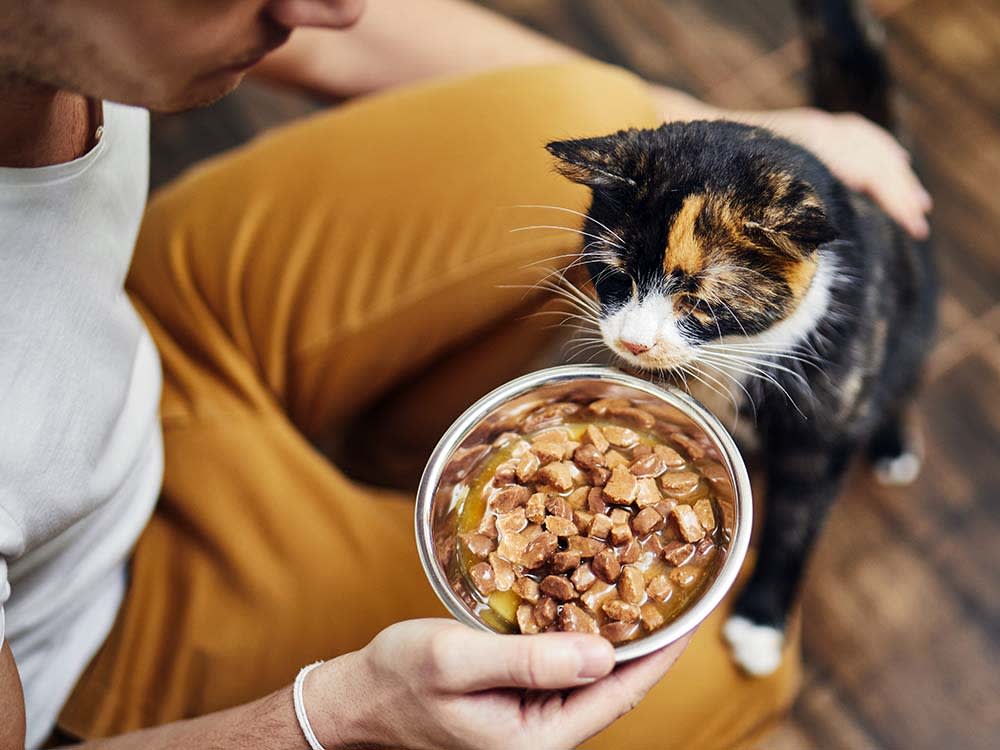
The Waltham Petcare Science Institute ran an experiment that is almost insultingly simple. They took cats, all over seven years old, and offered them the same wet food. Not different recipes. Not different flavors. The identical product, at three different temperatures:
- 6°C (43°F) — straight from the fridge
- 21°C (70°F) — room temperature, from a cupboard-stored pouch
- 37°C (98°F) — body temperature
The cats’ clear favorite was 37°C. Room temperature came second. The cold food came last, and they ate the least of it.
Same food. Same bowl. Same cat. The only variable was heat, and it changed how much they ate.
Which means that if you have an older cat who has started turning away from meals you know they used to like, there is a decent chance you have not been dealing with a picky cat at all. You have been serving the right food at the wrong temperature.
Why body temperature, of all numbers
Here is the part that reframes it.
That 37°C figure is not arbitrary, and it is not about coziness. It is the body temperature of prey.
Your cat’s ancestors did not eat food that had been sitting in a cupboard. They ate animals, shortly after those animals stopped being alive. Warmth, in a cat’s sensory world, is one of the signals that says this was recently caught and it is safe. Cold food is, in some sense, food with a question mark over it.
There is a chemistry layer sitting on top of the evolutionary one, and the team went looking for it. Part of the work was tracking how the food itself, and the aroma coming off it, are altered by heat. The finding that mattered: warming drove off more sulphur-containing compounds, a class of molecules that food chemistry has long identified as central to the flavor of meat. So heating the bowl is not merely making it pleasant to touch. It is volatilizing the very molecules that announce meat to a nose.
Meanwhile, the things you might expect to matter did not change at all. The appearance and composition of the food were identical, because it was the same product. The team even measured the consistency of the gravy across temperatures and found no difference. It really does come down to aroma.
Which explains why senior cats specifically
This is where the study stops being a curiosity and starts being useful.
Taste and smell are two of the biggest drivers of appetite, and both are thought to decline in sensitivity as a cat ages. That decline is exactly why encouraging an older cat to eat enough to hold their weight is such a persistent problem.
So run the logic. If your cat’s nose is doing less work than it used to, then a bowl of cold food, which is releasing a fraction of its aromatic compounds, may be arriving at that diminished nose as something close to nothing. Not disgusting. Just faint. Uninteresting.
Warming the food turns the volume back up on the one channel that still gets through.
The cat has not become fussy. The signal got quieter, and you have been serving it at a whisper.
But first: rule out the thing that actually matters
Now the part the study does not tell you, and the part that matters more than anything above.
A senior cat who stops eating is a medical event until proven otherwise.
This is the single most important sentence on this page, and it is worth being blunt about why. A cat over seven whose appetite falls off is describing a symptom, and the list of things that produce that symptom is long and serious: chronic kidney disease, hyperthyroidism, dental and gum pain, gastrointestinal disease, pancreatitis, and cancer among them. Dental pain alone will make a cat abandon food they love while looking otherwise completely normal.
There is also a hard clinical fact specific to cats: a cat who genuinely stops eating for a couple of days can develop hepatic lipidosis, a serious liver condition, particularly if they are overweight. Cats do not tolerate fasting the way dogs and people do. The clock on this is short.
The warming trick is real and I use it, but it is a tool for a cat whose appetite is soft, not a cat whose appetite has fallen off a cliff. If your senior cat has genuinely stopped eating, that is a vet visit, not a kitchen experiment. The saddest version of this is the owner who spent two weeks trying different temperatures and flavors while a treatable disease got a two-week head start.
So the order of operations is:
- Has the appetite changed? If yes, and especially if it changed recently, call your vet. Get the exam, get the bloodwork, look in the mouth.
- Once disease is ruled out or is being treated, then the temperature question becomes the right question, and it becomes a genuinely powerful one.
A cat with well-managed kidney disease still has to eat. Warming their food is often exactly how you get them to.
How to actually do it
Stop serving food straight from the fridge. Cans are the best value, but a cat eats a portion of a can and the rest goes in the fridge, which is how so many cats end up being offered a chilled meal. Portion it into a bowl and leave it out until it comes up to room temperature before serving.
Then go warmer than that. Room temperature beat cold, but body temperature beat room temperature. Two ways to get there: set the dish into a shallow pan of warm water and let it come up slowly, or warm it gently in something microwave-safe.
Warm to the touch, never hot. Hot food can genuinely hurt a cat’s mouth. And be careful with microwaves specifically: they heat unevenly, so a dish that feels perfectly fine can be hiding a scalding hot spot in the middle. Stir it thoroughly and check the food, not the bowl.
Do not leave it sitting warm. Warm wet food is also warm bacterial food. Serve it and, if your cat walks away, take it up rather than leaving it out all afternoon.
What newer research adds
The temperature finding has held up, and the broader picture around it has filled in usefully.
Aroma keeps proving to be the dominant lever in feline appetite, more than flavor as we would think of it and far more than appearance. Cats have relatively few taste receptors compared with us, cannot taste sweetness at all, and lean heavily on smell to decide whether something is food. That is the mechanism this study is quietly demonstrating, and it explains why so many of the tricks that work on cats are aroma tricks: warming, a splash of tuna water, a strongly scented topper.
It also explains why the same trick works on cats who are unwell rather than merely old. A cat whose nose is blocked by an upper respiratory infection has the same problem as a senior cat with a fading sense of smell, arriving faster. Warming the food is one of the standard things to try when a congested cat goes off their dinner, and it works for exactly the reason the Waltham team identified.
None of which changes the order of operations. Rule out the disease. Then warm the bowl.
References
- Eyre, R., Trehiou, M., Marshall, E., Carvell-Miller, L., Goyon, A., & McGrane, S. “Aging cats prefer warm food.” Journal of Veterinary Behavior, 2022. https://www.sciencedirect.com/science/article/pii/S1558787822000582
- Cornell Feline Health Center. “Feeding Your Cat” and “Chronic Kidney Disease.” https://www.vet.cornell.edu/departments-centers-and-institutes/cornell-feline-health-center
- American Association of Feline Practitioners. “Senior Care Guidelines.” https://catvets.com/guidelines/practice-guidelines/senior-care-guidelines
- Center, S. A. “Feline hepatic lipidosis.” Veterinary Clinics of North America: Small Animal Practice. https://pubmed.ncbi.nlm.nih.gov/15833559/
- Li, X. et al. “Pseudogenization of a sweet-receptor gene accounts for cats’ indifference toward sugar.” PLOS Genetics, 2005. https://journals.plos.org/plosgenetics/article?id=10.1371/journal.pgen.0010003
Common questions
Is it safe to microwave cat food?
Yes, in a microwave-safe container, but with real care. Microwaves heat unevenly and create hot spots that can burn a cat's mouth even when the dish feels fine. Stir thoroughly and test the food itself, not the bowl. A safer method is standing the container in a pan of warm water.
My cat has always been fussy, not just recently. Is this still the fix?
It may help, but a lifelong fussy eater is a different situation from a cat whose appetite has changed. The temperature trick addresses a decline in the senses that drive appetite. A sudden change in a cat who used to eat well is a medical question first and a menu question second.
Not a substitute for your vet. Our guidance is educational. For urgent symptoms, contact a vet or emergency clinic right away. Editorial standards
Dr. Chen is a small-animal veterinarian who leads health and safety coverage at The Pet Times. She writes and reviews the bulk of our illness, condition, and safety content, translating clinical guidance into clear, practical advice owners can act on at home.
Meet our experts ↗Keep reading
 FoodYour Cat Isn't Hungry. Unless These Three Things Are Also True.Dr. Priya Nair · 10 min
 Health & WellnessInsulin Isn't the Only Answer for a Diabetic Cat AnymoreDr. Lena Park · 7 min
 Health & WellnessTheir Pets Lived to 18. None of the Secrets Were Secret.Dr. Amara Solis · 8 min
 FoodYour Vet Prescribed a $140 Bag of Food. Will Insurance Touch It?Sara Lim · 7 min
 FoodThe Oldest Cat Ever Drank Wine and Coffee. Please Don't Copy Him.Dr. Ravi Mehta · 7 min
 FoodWet Cat Food and the 2-Hour Rule: The Clock Starts the Second You Open the CanDr. Amara Solis · 7 min