


Pet-Safe Cleaning Is About How You Clean, Not Just What You Buy
Most 'pet-safe' cleaners are only safe once they're dry. Here are the ingredients to avoid, the habits that keep pets out of harm's way, and eight greener products for the job.

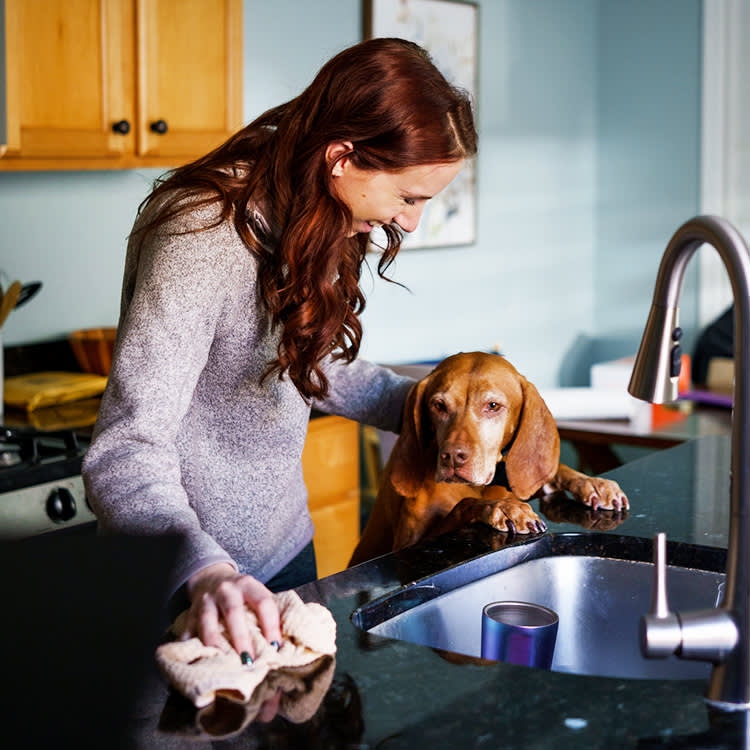
Spring cleaning advice for pet owners almost always stops at the shopping list: buy these gentler products and you are covered. That is only half true, and the missing half is the part that actually protects your animal. Even a genuinely pet-safe cleaner is rarely safe to lick wet. The label means low risk once the surface has dried and the fumes have cleared, not that your dog can mop up the puddle behind you. The thing that keeps pets out of the vet’s office is less about which bottle you grab and more about how you use it.
So before the product picks, here is the part most lists skip.
Read the back of the bottle, not the front
“Pet-safe” and “natural” are marketing words with no enforced definition. The ingredient list is where the truth lives. A few things to steer away from, especially around cats, whose livers process toxins differently than ours:
Phenols (often listed as “phenol” or in older pine-oil cleaners) are particularly dangerous to cats. Quaternary ammonium compounds, or “quats” (look for ingredients ending in “-onium chloride”), are common disinfectants that can burn a cat’s mouth and skin. Bleach and ammonia are obvious culprits, and should never be mixed. Concentrated essential oils, the hidden trap in many “natural” cleaners, can be toxic to cats and dogs, with tea tree, pine, citrus, and wintergreen among the worst offenders. Strong added fragrances irritate a dog’s far more sensitive nose even when the base is benign.
Three habits that matter more than the brand
Let it dry, then let them in. The simplest rule. Close the door, clean, ventilate, and keep pets out until floors and surfaces are fully dry. Most “pet-safe” failures are really wet-surface failures.
Rinse where they eat and drink. Food bowls, the floor around them, and anywhere your pet routinely licks deserve a plain-water rinse after cleaning, no matter how gentle the product.
Mind the toilet and the bucket. If your cat or dog drinks from the bowl, flush thoroughly before letting them back in, and never leave a bucket of cleaning solution unattended on the floor.
With that foundation, here are eight greener products worth your money this spring, each chosen for a specific job.
The everyday workhorses
1. An all-surface multipurpose spray
If you live by a single bottle, a planet- and pet-friendly multipurpose cleaner is the one to standardize on. Ecos makes a 100% vegan formula that works on every surface and is safe in the spots pets touch once dry. The sustainability bona fides are real, too: it is carbon- and water-neutral, made by a zero-waste manufacturer running on renewable energy.
2. Plain baking soda and vinegar
The cheapest, most effective pet-safe cleaner in your kitchen is already in your kitchen. Baking soda deodorizes carpets and upholstery on its own, and a splash of white vinegar plus water makes a streak-free glass and counter spray with nothing to worry about once it dries. Baking soda is even gentle enough to dust into a litter box to cut odor at the source. Skip the vinegar on natural stone like marble, which it can etch.
3. A gentle floor cleaner
Floors are where pets spend their whole lives and where scavengers lick up residue, so this is the swap that matters most. Bean & Lily, a small eco-friendly company, makes a floor cleaner explicitly formulated for “people, pets, and the planet,” without the harsh fragrances that bother sensitive noses.
The mess-and-odor specialists
4. An enzymatic stain and odor eliminator
For actual pet accidents, you need enzymes, not perfume. Rocco & Roxie’s bio-enzymatic formula breaks down the proteins in urine and feces so the smell is destroyed rather than masked, and it discourages repeat offenses at the same spot, which is a genuine help if you are potty training. Masking sprays just teach a pet to re-mark; enzymes are the only category that truly works.
5. Compostable cleaning wipes
A cleaning staple that usually generates a lot of landfill. Method’s compostable wipes handle quick spot-cleans and bigger jobs with light, pet-safe fragrances that will not overwhelm your dog’s nose.
The greener upgrades
6. A plant-fiber sponge
Most sponges are technically pet-safe but rough on the planet. This one pairs a scrubber side made from walnut shells and recycled PET fibers with a 100% plant-based cellulose sponge. Use it alongside whatever cleaner you have chosen.
7. A reusable lint roller
Disposable rollers are harmless to pets but wasteful by design. A durable metal reusable roller glides over clothes yet is tough enough to dig pet hair out of carpets and couches, and you will never buy a sticky refill again.
8. A non-toxic soy candle
To reset the room after a deep clean without gassing your pet, choose a 100% soy candle like Pet House’s, which comes in a spring scent line and skips the paraffin waxes that can be toxic to pets when burned in quantity. Burn it in a ventilated room and keep the flame out of tail-and-paw range.
The throughline is simple. Greener products are worth buying, but the habit of cleaning around your pet rather than on top of them is what keeps the whole spring-cleaning project from backfiring.
References
- ASPCA Animal Poison Control Center. “Household Hazards.” aspca.org, https://www.aspca.org/pet-care/animal-poison-control/household-hazards.
- Pet Poison Helpline. “Cleaning Products and Household Toxins.” petpoisonhelpline.com, https://www.petpoisonhelpline.com/poison/cleaning-products/.
- American Veterinary Medical Association. “Household Hazards.” avma.org, https://www.avma.org/resources-tools/pet-owners/petcare/household-hazards.
- U.S. Environmental Protection Agency. “Safer Choice Standard.” epa.gov, https://www.epa.gov/saferchoice.
Nina Vasquez writes about life at home with pets and the relationships at the heart of it. Her work covers day-to-day living, people-and-pet stories, and the products that fit into a real household, with a warm, grounded take on everyday pet ownership.
Meet our experts ↗Keep reading
 LivingPet Composting: Turning Your Pet's Remains Into New LifeClaire Sutton · 9 min
 LivingPet-Safe Flooring, Ranked by How Your Dog Actually Uses the FloorLeila Torres · 8 min
 LivingBury the Bin, Not the Truth: A DIY Dog-Waste Digester, Done SafelyMarcus Webb · 5 min
 LivingYour Dog's Trash Is Mostly Two Things. Everything Else Is a Rounding Error.Nina Vasquez · 8 min
 Living"Eco-Friendly" Cat Gear Is Mostly a Sticker. 6 Swaps That Aren't.Nina Vasquez · 8 min
 LivingMost Catio Plans Overbuild. How to Match One to Your Cat and Your WeekendMarcus Webb · 6 min