


Most Catio Plans Overbuild. How to Match One to Your Cat and Your Weekend
You do not need the Instagram catio. A window box, a tower, or a full playpen each fits a different cat and budget. A decision framework, a real cost breakdown, and the build details that keep predators out.

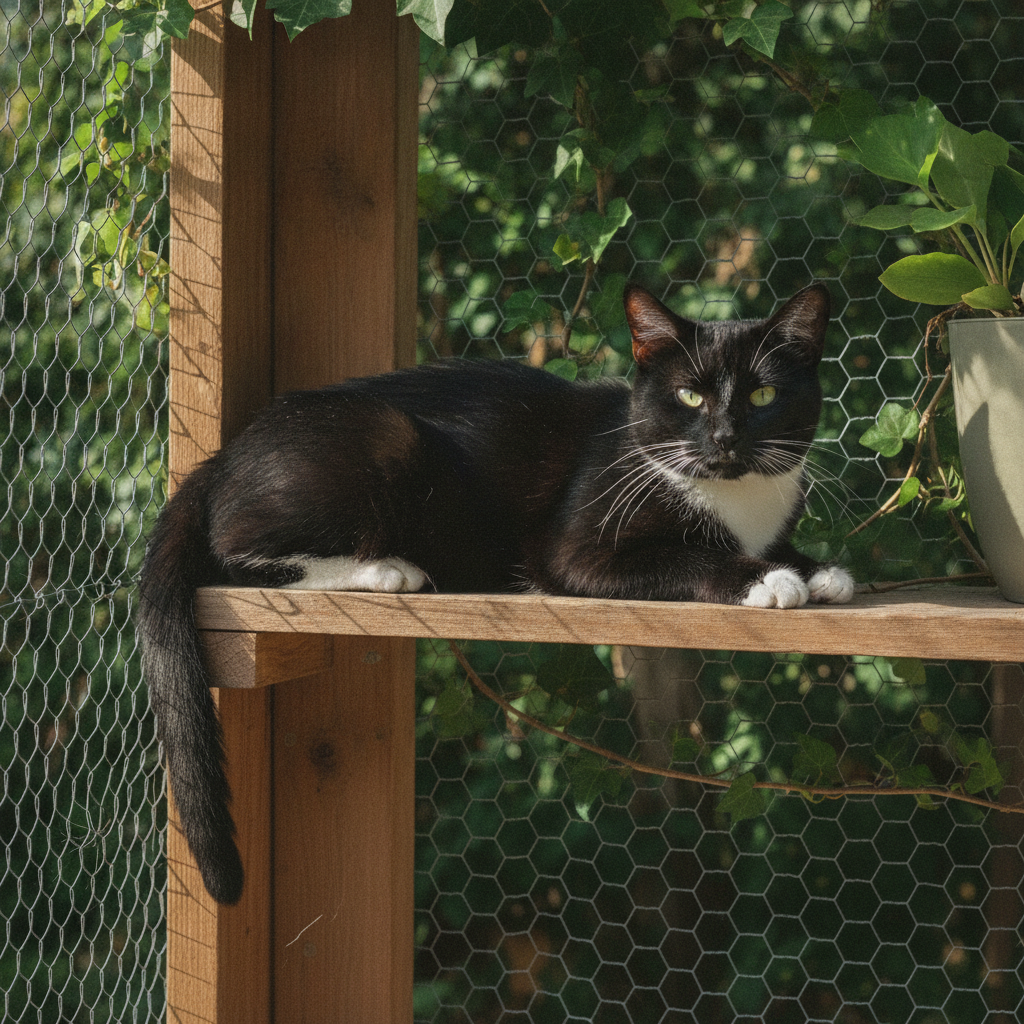
Search “catio” and you will drown in gorgeous, sprawling builds that cost a fortune and take a week. Most cats do not need that. The right catio is not the biggest one; it is the one that matches your cat’s temperament, your yard, and how much of a weekend you actually want to spend building. So before any lumber gets bought, the useful question is not “how do I build a catio,” it is “which catio.”
A catio (cat plus patio) is a screened-in outdoor room for your cat, typically reached through a window or a pet door, delivering fresh air, sunshine, and yard smells with none of the cars, coyotes, or other hazards. The payoff is more than fresh air. A cat with somewhere new to look, sniff, and climb is a more stimulated cat, and a more stimulated cat is usually a better-behaved one.
“A bored cat is the one redecorating your couch and yowling at 5 a.m.,” says Leila Torres, a behavior consultant on the Pet Times roster. “Give that same cat a safe outdoor perch with birds to watch, and the change in their mood can be night and day. But the perch does not have to be elaborate to work. A well-placed window box does the job for a lot of cats.”
Step one: which catio is yours?
Match the build to your situation rather than defaulting to the showpiece.
The window box. A box bolted to a window frame, giving one cat a single sunny perch. Best for one cat, a small space, renters, and a half-day build. Cheapest and least invasive.
The vertical tower. A tall, narrow enclosure that goes up instead of out. Best for climbers, small or paved yards, and homes short on ground space. Cats love height, so a tower packs a lot of enrichment into a small footprint.
The full playpen. A larger ground enclosure, sometimes linked to the house by a tunnel. Best for multiple cats, who need room so nobody has to fight over the best bird-watching seat, and for households with the yard and the weekend to spare.
A single cat can be perfectly content with a window box. Scale up to a tower or playpen only when the cat count or the cats’ energy actually calls for it.
Step two: the honest cost picture
Money is where the overbuild instinct hurts most. Rough ranges to set expectations:
- DIY window box, from scratch: often under $100 in lumber, wire, and hardware if you already own basic tools.
- DIY tower or small playpen: typically $150 to $400 depending on size and materials.
- Pre-made kit: convenient but rarely cheap. Even a basic window enclosure tends to start north of $300, and larger kits run well past that.
A clever budget hack exists at the low end, too: some people turn a pair of inexpensive shelves into a simple catio. If you go that route, seal the wood first so it survives the weather. The point is that building it yourself usually costs a fraction of a kit, and the satisfaction of handing your cat a slice of the outdoors you built by hand is hard to beat.
Step three: location
Pick a spot with fresh air, morning sun, afternoon shade, and as much greenery as you can manage. If your yard is bare, move a few cat-safe potted plants nearby to make the view worth watching. A catio with nothing to look at is just a cage with good ventilation.
Step four: the plans
Once you know the type, hunt down free plans from a reputable home-improvement outlet, buy detailed plans from a catio design service, or skip building with a ready-made kit. If you design your own, the bones are simple: a wooden frame wrapped in wire fencing. Two details are worth sorting in advance. Every catio, even a tiny one, needs a human-sized entry point so you can clean it or reach your cat in an emergency. And plan for weatherproofing, because even if your cat will not sit out in the rain, you want the structure to stay dry. If you want to keep it truly simple, a frame of PVC pipe and zip ties works as well as wood and staples.
Step five: make it predator-proof (the part people skip)
A catio has to be enclosed on every side, and that includes the bottom. Otherwise your cat digs out or something digs in.
For the base, a concrete pad or paving stones give long-term stability; if you would rather skip a hard floor, run fencing across the entire base. An artificial floor is easier to clean and tracks in less dirt, and cats do not spend much time on the ground anyway.
Then decide how your cat gets in and out. A frame flush against a window is simplest, but your cat will depend on you to open it, which guarantees early-morning complaining. If you cannot cut a permanent cat flap into the wall, an in-window flap that slots into your existing window frame lets your cat come and go on their own schedule.
Step six: build it to last
For framing, use a wood that shrugs off sun and weather. Cedar is the classic; redwood is lovely if you can get it. Seal unfinished wood with a pet-safe finish. For the enclosure, use 1x1-inch or 2x2-inch wire, tough enough to hold an excited cat and keep determined critters out. Chicken wire often will not stop a motivated raccoon, let alone anything bigger. If flies or mosquitoes are a problem where you live, add a patio screen layer, but always back screen with real fencing, since screen alone is no match for claws.
As you build, staple the wire tight with no gaps a cat could shove through. After cutting fencing with tin snips, file the sharp edges so nothing snags your cat’s coat. When you attach the catio to the house, watch for external pipes and wiring, and seal any gap where the window or cat flap meets your structure.
Step seven: the finishing touches
A built catio is only half the job. Now make it somewhere your cat wants to be. Horizontal platforms for lounging are non-negotiable, and a scratcher makes it more inviting. Add a few favorite toys and a comfy bed, then let your cat explore at their own pace.
One health note: if your cat has only ever lived indoors, this is a good moment to start a vet-recommended flea preventive, because no mesh is fine enough to keep every flea out. And treat the catio like any other part of your cat’s living space by keeping it clean.
Match the build to the cat, and you end up with something that lasts for years, costs far less than a kit, and actually gets used, which is more than a lot of those showpiece catios can say.
References
- “How to Build a Catio.” This Old House. https://www.thisoldhouse.com/pets/how-to-build-catio
- “The Indoor Cat Initiative.” Ohio State University College of Veterinary Medicine, Indoor Pet Initiative. https://indoorpet.osu.edu/cats
Marcus Webb writes about the gear, gadgets, and everyday choices that make life with a pet easier. His coverage runs from product picks to training and the causes worth paying attention to, always with an eye on what actually earns a place in your home.
Meet our experts ↗Keep reading
 LivingPet Composting: Turning Your Pet's Remains Into New LifeClaire Sutton · 9 min
 LivingYour Pet's Toy Pile Is Working Against YouNina Vasquez · 6 min
 Living'Pet-Safe' Is a Marketing Word. Read the Label Instead.Dr. Nina Kohl · 7 min
 LivingPet-Safe Cleaning Is About How You Clean, Not Just What You BuyNina Vasquez · 6 min
 LivingPet-Safe Flooring, Ranked by How Your Dog Actually Uses the FloorLeila Torres · 8 min
 LivingYour Cat's Dinner Is Quietly Helping Rebuild Coral ReefsJames Okafor · 5 min