


The Rescue That Saved His Life Nearly Went Under Without Him
Zach Skow built Marley's Mutts out of a liver-disease death sentence, took a county from a 78 percent kill rate to no-kill, and put shelter dogs inside California prisons. Then he left. What happened next is the part nobody puts on a donation page.
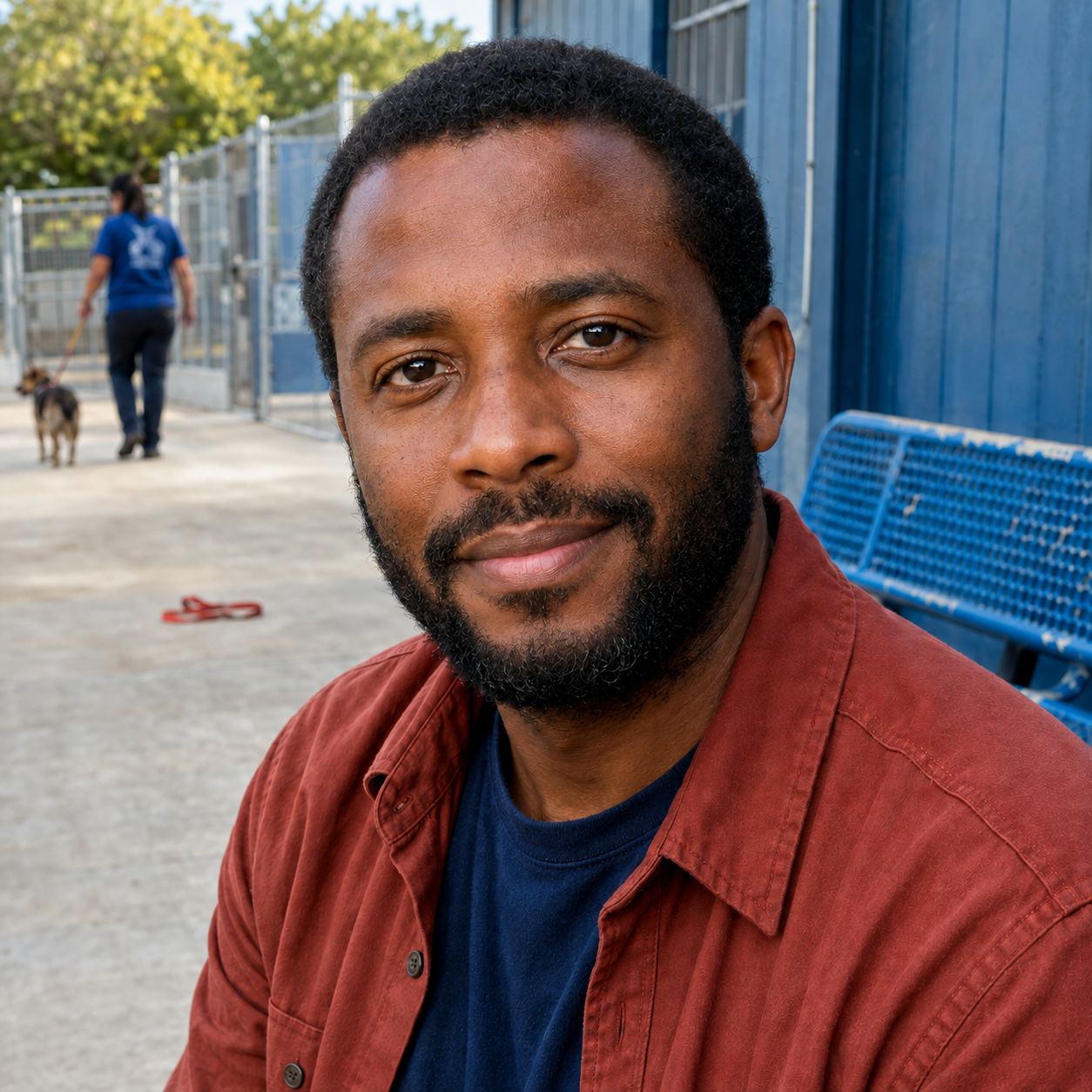
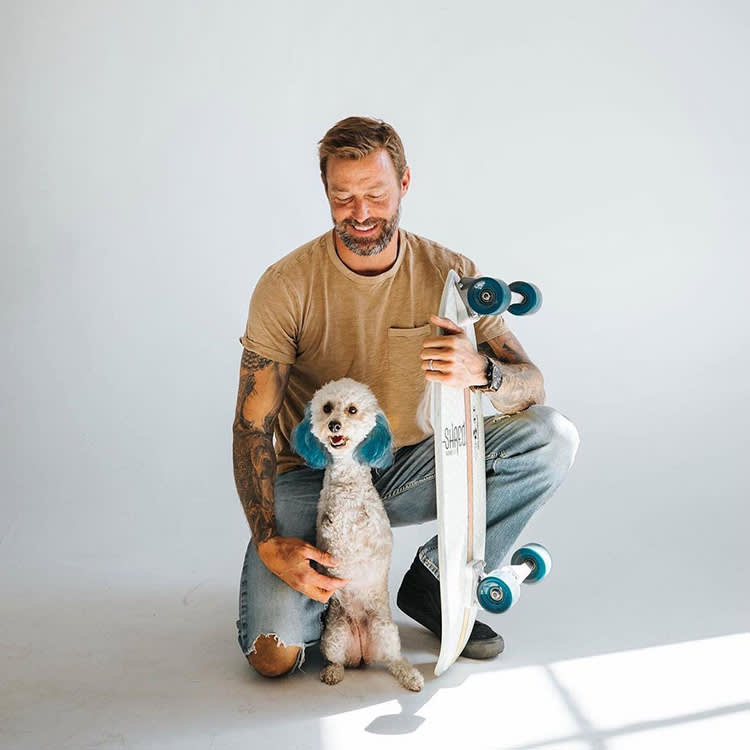
The slogan on the wall at Marley’s Mutts is that rescue dogs rescue people. It is the kind of line that gets embroidered on a tote bag and stops meaning anything.
Zach Skow is the test case that keeps it honest. He is also, as of this summer, the test case for something less comfortable: what happens to a rescue built on one person’s story when that person walks away, and what it costs to put it back together.
A death sentence, and three dogs who did not know that
In 2009, Skow was 28 and had been told his liver was finished. End-stage disease, which is called end-stage because the two available outcomes are a transplant or a funeral. He had drunk and used his way there and he says so plainly. Five weeks later, a bed opened for him in the transplant program at Cedars-Sinai, and he credits the people there with saving his life.
What he had at home were three dogs he had adopted years earlier: Marley, Tag, and Buddy. They needed walking. That is the entire mechanism, and it is not a metaphor. He walked them several times a day because they had to be walked, and in doing so he moved his failing body around outdoors, repeatedly, on a schedule, with a reason. He added dogs to the pack. He started fostering. When he went back for testing, his numbers had improved so sharply that his doctor told him to keep doing whatever he was doing.
Skow had been circling this work since 2003, volunteering with local shelters and rescues, and had found something there he did not find elsewhere: he was good at it, and being good at it made him feel worth something. He had also assumed it was not a life. It became one anyway. He photographed the dogs coming through his house, wrote up their biographies, and got them adopted, and his corner of Kern County started paying attention. The community that grew around it eventually named itself the Mutt Militia.
The numbers are the part that should silence a skeptic. When Marley’s Mutts started, Kern County was euthanizing roughly 78 percent of the animals that entered its shelters. By 2019, the county had reached no-kill. Millions of dollars went into spay and neuter. Today the organization runs an adoption office in Bakersfield and a 20-acre ranch in Tehachapi that houses around 75 animals.
The dogs nobody else wanted, on purpose
The house style at Marley’s Mutts has always been to take the dog the spreadsheet says is unadoptable.
Hooch is the reference case. He lost his tongue and his ears in a dogfighting operation, an animal whose injuries are a résumé of human cruelty, and he turned out to be gentle to the point of absurdity. He spent his career visiting schools, rehab facilities, and prisons as an ambassador for a breed that gets legislated against on sight.
Cora Rose is the current one. She came in as a feral street dog and she is a double front-leg amputee, which is to say she is a dog who by any reasonable engineering standard should not be able to do most of what she does. Skow calls her his right-hand woman, brings her into prisons and schools, and reports that she keeps solving physical problems that ought to be unsolvable, including, at one point, the couch. Nobody in the house has figured out how she gets up there.
The lesson he takes from her is not a poster. It is closer to a load-bearing belief: an obstacle only breaks you if you let it do the breaking, and she has never once agreed to be broken.
Fourteen weeks, thirteen and a half hours a day
The program that made the organization nationally known took four years to get off the ground. Every prison said no. Then California City Correctional Facility said yes, and Pawsitive Change opened its doors in January 2016.
The design is more demanding than most people assume. Each dog is assigned to three incarcerated students, two primaries and an alternate, who rotate the work between them. The dog is in training roughly 13.5 hours a day and is with a person for all of it except eating and sleeping. The target is the American Kennel Club’s Canine Good Citizen certification, a ten-point test with items that would humble a lot of pet dogs, including a down-stay held for two full minutes while the handler leaves the room entirely.
Fourteen weeks in, there is a graduation. The dogs collect their CGC. The men collect a Pawsitive Change certification. Nothing caps how often a student may sign up again, and some have stayed with the program for years.
The outcome data is the argument. Of the students released from prison after going through the program, roughly half have gone into the pet services industry, most as dog trainers or kennel technicians. One man who had served 28 years was granted parole with his Pawsitive Change work cited in the decision, walked out to a training job that was already waiting, and went home to two of the dogs he had trained, adopted by his family. The organization reports a zero percent recidivism rate among students who completed the program. In October 2024, the Kern County Grand Jury looked at Wasco State Prison and formally recommended bringing Pawsitive Change back there, on the strength of its results.
The Kabul airlift
And then, because the timeline of this man’s life does not obey normal rules, there is Afghanistan.
The plan was to move roughly 160 dogs out in August 2021. In July, the CDC suspended dog imports from 113 countries over rabies risk, which took the straightforward route off the table entirely. Skow’s team worked the problem for months anyway, partnering with SPCA International and with Kabul Animal Rescue: gathering up animals who had been turned loose at the airport in Kabul, negotiating an approved plan, chartering a plane. On February 1, 2022, 293 animals landed in Vancouver, bound for their families or for adoption.
The part the tote bag leaves off
In May 2025, Skow left Marley’s Mutts. He posted about taking his last walk around the rescue ranch. The organization said it would carry on under its executive director, and for a year it did.
He came back in the spring of 2026, and what he found when he opened the books is the most useful thing in this entire story for anyone who cares about animal welfare.
The dogs, he says, had never stopped receiving excellent care. The organization around them had not been managed with the same attention. During a payment processing change, Marley’s Mutts had quietly lost roughly 75 percent of its recurring donors, which is to say the predictable monthly money that pays for food, vet care, and the ranch simply evaporated without anyone noticing in time.
“In reviewing how the organization has been operating, I discovered that while our dogs have always received exceptional care, the organization itself was not being managed with the same level of attention,” Skow wrote to supporters in June 2026.
That is not a scandal. It is something more common and more dangerous: an unglamorous back-office failure at a nonprofit whose entire public identity is built on heroic front-line rescue. Recurring donors are the least exciting line item in animal welfare and the one that keeps the lights on. A processing glitch can take out three quarters of them without a single dog going hungry that week, and by the time it shows up, the hole is enormous.
The recovery, as he tells it, is underway. Volunteer numbers are climbing, adoptions are up, engagement is up, and the organization is preparing to launch two additional Pawsitive Change sites, with Wasco among the targets. He is fundraising hard to rebuild the monthly base he lost.
What to actually take from this
Kern County and Los Angeles County shelters are still overwhelmed, and the dogs at the back of the line are the ones they have always been: big dogs, bully breeds, seniors, and dogs with medical needs. Those are the animals with the fewest options and the shortest clocks.
If Skow’s story has a practical moral, it is not the inspirational one. It is that the rescue you love is probably one administrative failure away from a very bad year, and that the single most valuable thing you can do for it is the least dramatic. A recurring monthly gift, even a small one, is what lets an organization plan. A one-time donation after a viral post is what lets it react.
The other moral is the one he has been living for 17 years, and it is the reason the program in the prisons works at all. The dog does not know your record. It knows that you showed up, that you were consistent, and that you kept your word. It turns out a lot of people, in and out of prison, can rebuild themselves around exactly that, and Skow is the proof, walking three dogs around a block in 2009 because they needed to go out.
References
- Marley’s Mutts Dog Rescue. Zach Is Back! (June 2026).
- KGET 17 News. Zach Skow, founder of Marley’s Mutts Dog Rescue, announces departure from organization (May 2025).
- 23ABC Bakersfield. Marley’s Mutts hopes to revive the Pawsitive Change prison program in Wasco.
- Marley’s Mutts Dog Rescue. Pawsitive Change Prison Program.
- American Kennel Club. Canine Good Citizen (CGC) test items.
- Centers for Disease Control and Prevention. Temporary suspension of dogs entering the United States from high-risk rabies countries.
James Okafor covers rescue, adoption, and the causes shaping animal welfare. His work follows the people and organisations working to give more pets a home, and the issues owners and advocates care about most.
Meet our experts ↗Keep reading
 LivingA Layoff, a Pregnant Street Dog, and 4,500 Rescues LaterLeila Torres · 5 min
 LivingA Comedian Built a Movement Around the Dogs Nobody WantedLeila Torres · 5 min
 LivingSome States Once Banned Black Families From Owning Dogs. A Yale Scholar on Why That Still Echoes.Leila Torres · 6 min
 LivingMissouri Tops the 'Horrible Hundred' for a 14th Year. The 2026 Report Is Grim.Nina Vasquez · 6 min
 LivingThe ADA Has No Breed List. Your Landlord's Insurance Does.Dr. Priya Nair · 6 min
 LivingThey Came to Shoot a TV Show. They Left Having Saved 14 Dogs.Sara Lim · 6 min