


Missouri Tops the 'Horrible Hundred' for a 14th Year. The 2026 Report Is Grim.
The annual puppy-mill exposé is out, now under the group's new name, Humane World for Animals. It names 100 problem breeders, a husky mix killed instead of treated, and more than 20 sellers still supplying the last national pet-store chain selling puppies. Here's what it found and what you can do.

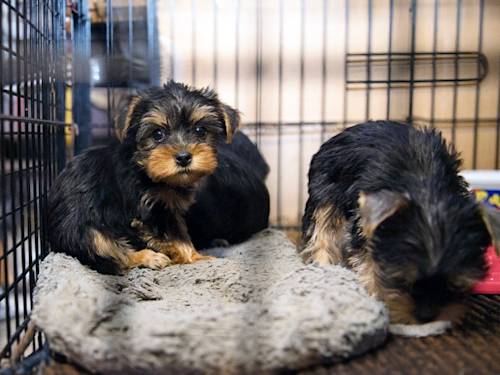
Every spring, one report forces the pet world to look at the part of the industry it would rather not see. The “Horrible Hundred” is out again for 2026, and its central finding is depressingly familiar: for the fourteenth year running, Missouri is home to more problem dog breeders than any other state.
The report now carries a new name on its cover. The organization behind it, long known as the Humane Society of the United States, has rebranded as Humane World for Animals, and its 2026 edition, released on April 27, once again pulls back the curtain on 100 dog-breeding operations across the country whose records show a pattern of neglect, cruelty, or repeat violations.
What the “Horrible Hundred” is, and isn’t
It helps to be precise about what this list claims to be. It is not a ranking of every puppy mill in the country, and it is not even a ranking of the very worst. It is a curated set of 100 breeders and sellers the group’s investigators believe the public should avoid, assembled to show the common, recurring problems that run through the commercial dog-breeding trade.
The team builds it by combing through state, federal, and court records, so the dogs at the center of these cases can be seen rather than disappearing into paperwork. The result reads less like a database and more like a series of case files, each one a fragment of a dog’s story.
The 2026 findings
The topline numbers tell a story of persistence. Missouri leads for the fourteenth consecutive year, followed by Wisconsin, New York, Pennsylvania, Kansas, and Ohio. High counts, the group notes, do not always mean a state is the worst actor; sometimes they reflect a stronger enforcement program that simply generates more public documentation than states that inspect little and report less.
The specifics are hard to read, which is the point. This year’s report opens with a husky mix named Masterpiece at a USDA-licensed Missouri operation, who fell ill with diarrhea and appeared weak in August 2025. Rather than treat him, the facility’s owner killed him. The federal response was a 21-day license suspension handed down in January, after which the license became active again.
Other cases in the report include:
- At Hidden Valley Farms, a licensed Missouri breeder that sold puppies to Petland, a dog named May May was found staggering, others were thin, and a French bulldog named Pebbles was found alive but unresponsive.
- At Chester View Kennel in Pennsylvania, authorities flagged suspected cruelty after the breeder used tight rubber ligatures to try to dock puppies’ tails; the operation still appeared to be running as of April 2026.
- At Sandhills Dachshunds in Nebraska, a dog was found dead of apparent hypothermia in December 2025.
- At Happy Canine Kennel in Wisconsin, a dog’s eye was so badly injured it had to be surgically removed.
- At Bow Wow Mound Kennels in Kansas, an inspector was so overwhelmed by the odor that their eyes, nose, and throat burned and they had to leave the building to use an inhaler; that kennel, too, had sold puppies to Petland.
More than 20 breeders in this year’s report have sold puppies to Petland, described as the only national pet-store chain in the country still selling puppies, a company repeatedly tied to cruelty findings. Many other breeders in the report skip stores entirely and sell directly to families over social media and sites such as Puppies.com, GreenfieldPuppies.com, and LancasterPuppies.com, often to buyers who never meet the puppy in person before paying.
Why the report exists, in the group’s words
The organization is careful to frame the exercise as exposure, not a public shaming of individual breeders.
The point of the report was never to name and shame one bad kennel here or there. It is to show that this suffering is systemic and mostly legal, happening inside licensed facilities that are allowed to sell to pet stores and to families online. A report cannot speak for a dog like Masterpiece, but it can make sure he is not simply forgotten.
The report argues that a license from the USDA or an affiliation with a registry should not be read by buyers as a seal of humane approval, since many of the featured operations hold exactly those credentials.
The report is working, slowly
There is a genuinely hopeful thread here. In past years, some of the largest operations named in “Horrible Hundred” reports have closed, been significantly fined, or faced criminal charges after publication. Those closures and enforcement actions have brought the total number of animals rescued from featured breeders over the report’s history to more than 3,330.
Policy is moving too. Eight states and more than 520 local jurisdictions now ban the sale of puppy-mill puppies in pet shops, and the group says it is working with additional states and cities on similar measures. But local retail bans, the report stresses, do not replace the need to crack down on the mills themselves, which is why it is pushing for federal fixes.
What you can do
The single most effective step, the group says, is to be careful about where a puppy comes from and who gets your money. Adopting from a shelter or rescue is the recommended first option; breed-specific rescues exist for nearly every breed. If you do buy from a breeder, insist on a small, responsible one who welcomes you to see where the puppies are born and raised, and use a responsible-breeder checklist to guide the visit.
Beyond your own choices, two federal bills would raise the floor for dogs in commercial breeding. The Puppy Protection Act would set stronger care standards for USDA-licensed facilities, including larger enclosures, solid flooring, exercise, twice-daily feeding, socialization, more veterinary care, temperature protection, breeding limits, and a requirement that breeders make real efforts to rehome retired dogs rather than discard them. The Better CARE for Animals Act would strengthen enforcement of the Animal Welfare Act by boosting the Department of Justice’s authority and its coordination with the USDA, making it easier to shut down repeat offenders for good. Contacting your representatives about both is a concrete way to help. And if you suspect a puppy mill or any animal cruelty near you, report it to a local humane organization or animal-control agency.
References
- The Horrible Hundred 2026. Humane World for Animals. Accessed July 2026.
- Exposed: 100 Horrible Puppy Mills Across the US. Humane World Action Fund, April 2026.
- Stopping Puppy Mills. Humane World for Animals. Accessed July 2026.
- The Puppy Protection Act. Humane World Action Fund. Accessed July 2026.
Nina Vasquez writes about life at home with pets and the relationships at the heart of it. Her work covers day-to-day living, people-and-pet stories, and the products that fit into a real household, with a warm, grounded take on everyday pet ownership.
Meet our experts ↗Keep reading
 LivingThe ADA Has No Breed List. Your Landlord's Insurance Does.Dr. Priya Nair · 6 min
 LivingA Layoff, a Pregnant Street Dog, and 4,500 Rescues LaterLeila Torres · 5 min
 LivingSome States Once Banned Black Families From Owning Dogs. A Yale Scholar on Why That Still Echoes.Leila Torres · 6 min
 LivingHe's Fostered Almost 40 Pit Bulls. The Stigma Is the Only Thing He Can't Rehome.Leila Torres · 8 min
 LivingA Comedian Built a Movement Around the Dogs Nobody WantedLeila Torres · 5 min
 LivingA Comment on Instagram Got a Two-Legged Street Dog a Mercedes WheelchairJames Okafor · 5 min