


A Layoff, a Pregnant Street Dog, and 4,500 Rescues Later
Eve Bañuelos never meant to start a rescue. Then a pandemic layoff and a pregnant dog named Storm turned a flute teacher into the founder of one of LA's busiest cross-border dog rescues.

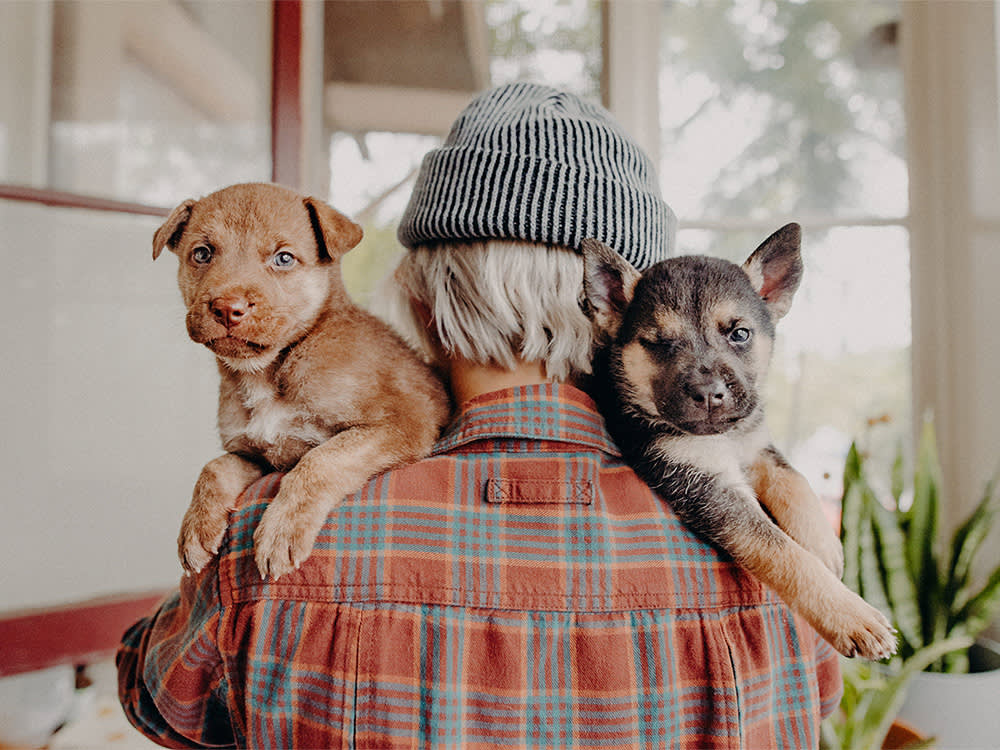
Some rescues are founded on a five-year plan. Pups Without Borders was founded on one pregnant dog and a very bad year.
Eve Bañuelos was a professional musician and flute teacher when the pandemic erased her work. With time on her hands and a lifelong soft spot for dogs, she agreed to foster a pregnant pup, a dog named Storm who had been thrown out of a home in Tijuana, the Mexican border city just a few hours south of Los Angeles. It was meant to be a one-off, a cool experience. It became the origin story of an organization that has since helped thousands of dogs.
Storm changed everything
Storm’s pregnancy was complicated. She had a transmissible venereal tumor, a cancer that raised worrying questions about her litter’s health. The research offered no clear answers, so Bañuelos planned a C-section, until Storm settled the matter herself and went into labor. Her puppies were fostered out so that Storm could undergo chemotherapy before the tumor grew, and mother and litter both came through.
That experience, supporting a mother through pregnancy and birth and then watching her puppies grow, hooked Bañuelos. And it didn’t stop with Storm. People started reaching out whenever they found a pregnant dog or a litter of abandoned puppies, and a hobby quietly turned into a mission. Word from LA groups and from people on the ground in Tijuana pushed her to formalize it all into Pups Without Borders.
Pregnant dogs became the organization’s signature, but they’re only part of the work. The majority of the dogs it takes in are ordinary dogs in hard situations: seniors, middle-aged pups, and animals red-listed by overcrowded city shelters, the ones running out of time.
The border is the hard part
Rescuing dogs across an international line is a logistical marathon. Many parts of Mexico have far less rescue infrastructure and fewer American partners, and distance alone makes everything harder. Border regulations add another layer. A dog has to be properly vaccinated, health-checked, and quarantined for a set period before it can travel, which means tracking every dog’s shots and arranging safe places for them to stay and recover in Mexico first, often with paid fosters who keep a dedicated, sanitized space and know what health red flags to watch for.
When a dog is finally cleared, a driver collects it, waits in the notoriously long border line, presents the paperwork, and makes the run to Los Angeles, where a whole second round of health checks begins. The ratio of Mexican to Californian dogs has shifted over time. Early on, during the height of the pandemic, roughly 95 percent came from Mexico, because US shelters had emptied out as Americans adopted in droves while Mexico faced the opposite crisis, with people losing jobs, falling ill, and abandoned dogs filling the streets. As things settled, the picture flipped at home: adoptions slowed, surrenders climbed, and US shelters began overflowing again. Today the intake runs closer to an even split, while the need in Mexico never really lets up.
From a virtual rescue to a real front door
For years, Pups Without Borders operated entirely without a building. That changed when the group secured its first physical facility, a former small school and sober-living center whose many rooms turned out to be ideal for housing dogs, with smaller rooms set aside as nurseries for pregnant moms and nursing litters and a large common area for supervised group time. The community carried the fit-out. Furniture, couches, dressers, even the mop were donated, and the only real early expenses were a couple of Home Depot runs, because nearly every dollar had to go toward the rent that came with a real address.
To cover that rent, the group leaned into events, including puppy-filled movie nights, and offered low-cost boarding to other rescues, having learned firsthand how brutal a foster emergency can be when there simply aren’t enough foster homes to go around. The pitch was simple: as long as the doors stay open, there’s a safe place for dogs who have nowhere else.
What’s new since Storm
The organization has kept growing. Pups Without Borders now says it has helped more than 4,500 dogs, and it has begun expanding beyond Southern California into Northern California to reach more animals. In early 2026 it received a $45,000 grant from a private foundation, a meaningful cushion for a group whose biggest ongoing challenge has always been keeping the lights on.
One outside change is worth knowing if you follow cross-border rescue. In August 2024, the CDC rolled out new rules for dogs entering the United States. Dogs must now be at least six months old at entry, carry a scannable microchip, and travel with a completed CDC Dog Import Form, and dogs coming from Mexico also need a recent screwworm-freedom certificate. For a rescue built partly around saving abandoned puppies, the six-month age minimum reshapes the timeline, meaning more young dogs have to be raised and cared for south of the border before they can legally make the trip north. It’s the kind of behind-the-scenes hurdle that makes the paid-foster network and careful record-keeping more essential than ever.
How to help
The steadiest way to support a rescue like this is the least glamorous: foster a dog, donate toward rent and vet care, or adopt when you’re ready. Fosters, in particular, are the scarce resource that makes everything else possible, since a rescue can only pull as many dogs as it has safe places to put them. You can learn more about adopting, fostering, and donating through Pups Without Borders directly at pupswithoutborders.org.
References
- Pups Without Borders — official site
- CDC Updates Dog Importation Regulation; New Rules Start August 1, 2024 — Centers for Disease Control and Prevention
- Bringing a Dog into the U.S. — Centers for Disease Control and Prevention
Leila Torres leads our Living coverage, from home life and travel to the products and rescue stories that come with sharing a life with animals. She edits and writes across the section, with a soft spot for pieces about the bond between people and their pets.
Meet our experts ↗Keep reading
 LivingThey Came to Shoot a TV Show. They Left Having Saved 14 Dogs.Sara Lim · 6 min
 LivingA Comedian Built a Movement Around the Dogs Nobody WantedLeila Torres · 5 min
 LivingA Comment on Instagram Got a Two-Legged Street Dog a Mercedes WheelchairJames Okafor · 5 min
 LivingThe Rescue That Saved His Life Nearly Went Under Without HimJames Okafor · 9 min
 LivingHe's Fostered Almost 40 Pit Bulls. The Stigma Is the Only Thing He Can't Rehome.Leila Torres · 8 min
 LivingThe ADA Has No Breed List. Your Landlord's Insurance Does.Dr. Priya Nair · 6 min