


The Cat-Lover Paradox: Why Loving Cats Makes You Worse at Meeting Them
The famous study is not really about cats liking people who dislike them. It is about how self-assured cat fans greet cats like a primate, not a cat. Here is the map and the 30-second protocol that fixes it.

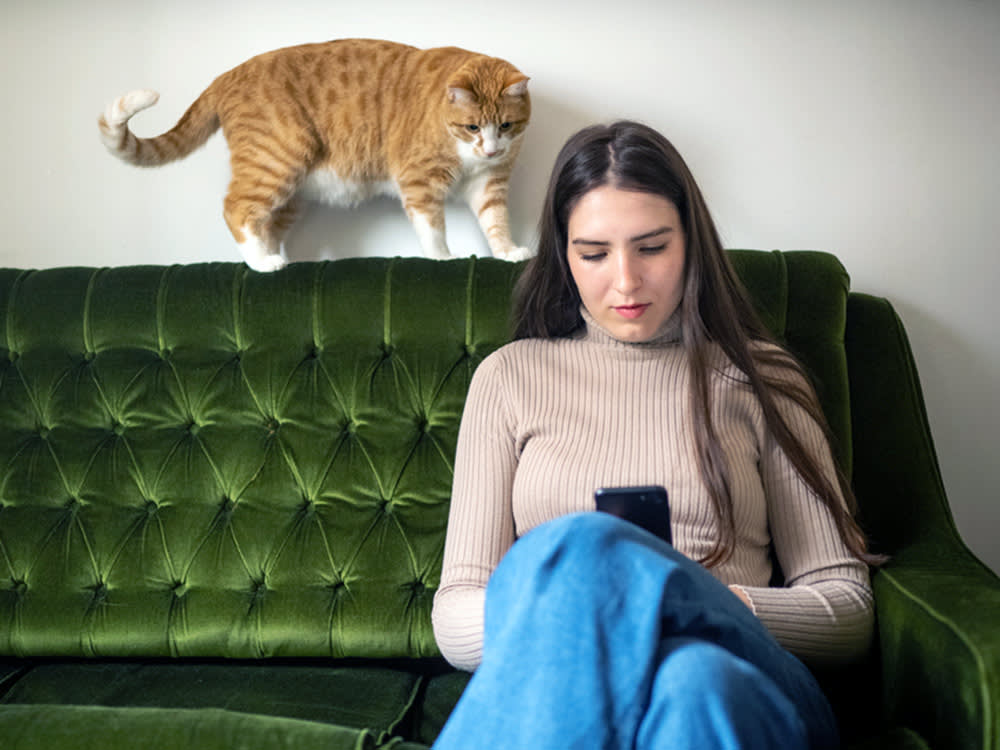
The study that went viral got flattened into a punchline: cats prefer people who don’t like cats. It makes for a great tweet and it is not what the research actually found. The real finding is more useful and a little humbling. People who love cats, and rate their own cat knowledge highly, tend to greet a strange cat using a set of behaviors that a cat reads as pushy or even threatening. The people who “win” the cat are not winning because they are aloof. They are winning because, by accident, they do all the right things a cat wants from a new human. The good news is that every one of those right things is learnable in about thirty seconds.
So this is not a piece about playing hard to get. It is about swapping your instinctive primate greeting for the greeting a cat is actually asking for.
What the study did, and the pattern it exposed
Researchers ran 119 volunteers through a controlled introduction. Each cat sat in an enclosure with everything it needed, food, water, litter, a hiding spot, plus a chair near the entrance, away from the cat’s supplies. Volunteers were told to come in, sit, and interact however they normally would, but never to pick the cat up. The cat was free to approach, ignore, or flee. Every five-minute session was filmed, and each person repeated it with two more cats.
The cats responded best to people who were passive but responsive, who let the cat set the pace, and who touched minimally and only in the spots cats like. And the humans who behaved that way were disproportionately the ones with less cat experience and lower self-rated cat expertise. The confident experts, more often, crowded the cat.
It sounds backwards until you picture the confident cat person walking into a room. They make a beeline, they crouch down and make eye contact, they reach a hand right at the cat’s face. Every one of those is a primate friendliness signal, and to a cat it reads as a large creature bearing down on them. The person who hangs back and lets the cat come is speaking cat. They just don’t know that’s what they’re doing.
The three moves that read as “too much”
Here is exactly what the eager greeting gets wrong, and why:
The direct stare. A hard, face-on gaze is the opening move of the predatory sequence. To a cat, being stared at can register as “this thing may be about to hunt me.” A relaxed cat person often locks eyes to signal warmth. The cat receives the opposite message.
The head-on approach. Facing a cat squarely and leaning in makes you look bigger and more looming. Cats prefer to size up a newcomer from an angle and at a distance they choose. That is why, in a room full of strangers, a cat so often drifts toward the one person ignoring it: that person is the least threatening silhouette in the room.
The reach. Extending a hand toward the body, especially the belly, back, or tail, skips the negotiation a cat wants to have first. Which brings us to the map.
The touch map: green, yellow, red
Not all petting is equal, and the study is blunt about where cats want to be touched. The pattern is not arbitrary. The “green” spots are exactly where cats carry scent glands, so being rubbed there helps them deposit their own scent and feels intrinsically good:
- Green (go here first): the base of the ears, the cheeks, and under the chin. Scent-gland central.
- Yellow (proceed with caution): the back, the sides, the legs. Some cats tolerate it, many merely put up with it.
- Red (skip it with a new cat): the belly and the base of the tail. Most cats hate it, and a belly on display is usually a trap, not an invitation.
Stick to green with a cat you have just met, and you have removed most of the ways a first meeting goes wrong.
The 30-second protocol for meeting a strange cat
Put the map and the study together and you get a repeatable greeting that works far better than charm. Behaviorists lean on a simple “C-A-T” idea: give the cat Choice and control, pay Attention to its body language, and think about where you Touch. In practice:
- Sit down and get small. Take a chair or the floor. Do not tower.
- Look away and talk to the humans. Give the cat a few minutes of watching you be calm and non-threatening. It reassures them to see you talking gently with their people.
- Put an object down. A bag on the floor works almost every time. Cats are relentlessly curious, and a bag to investigate is a lower-stakes first contact than your hand. Curiosity beats pressure.
- Let the cat close the distance. When it comes over, offer a single finger or a flat hand at its level and let it sniff. Do not reach past its face.
- Start green, watch, and stop. If cleared, a slow rub at the cheek or chin. Then pause. A cat that leans in wants more. A cat that goes still, flicks its tail, or flattens its ears is done. Honor that, and you have made a friend for the next visit.
The cats in the study had no bags or toys and did not need them, because they had already been judged social by their shelter caregivers and were curious about whoever walked in. They just needed the humans to relax and let the introduction unfold on cat time.
So the next time a cat snubs you and then pours itself across the lap of the one guest who “isn’t even a cat person,” don’t take it personally. You probably care too much, and it shows. Care a little more quietly, greet on the cat’s terms, and the snub turns into a lap cat.
References
- Haywood, Claire, et al. “Investigation of Humans’ Individual Differences as Predictors of Their Animal Interaction Styles, Focused on the Domestic Cat.” Scientific Reports, 2022. https://www.nature.com/articles/s41598-022-15194-7
- Nottingham Trent University. “Let cats decide when to be petted, study suggests.” https://www.ntu.ac.uk/about-us/news/news-articles/2021/07/let-cats-decide-when-to-be-petted-to-avoid-them-becoming-hostile-and-increase-their-affection,-study-suggests
Leila Torres leads our Living coverage, from home life and travel to the products and rescue stories that come with sharing a life with animals. She edits and writes across the section, with a soft spot for pieces about the bond between people and their pets.
Meet our experts ↗Keep reading
 TrainingScience Gave Your 'Unknowable' Cat Five Personality Traits. Here's How to Read Yours.Dr. Mara Chen · 6 min
 TrainingYour Cat Isn't Smart or Dumb. They're Wired for Different ThingsNina Vasquez · 6 min
 TrainingYour Cat Knows Your Smell From a Stranger's, Science ConfirmsDr. Priya Nair · 4 min
 TrainingYour Cat Isn't Running Hot and Cold. They're Running a Consent System.Dr. Amara Solis · 7 min
 TrainingThe Cat Your Kitten Becomes Is Mostly Decided by Week SevenDr. Nina Kohl · 7 min
 TrainingYou Can't Discipline a Cat. Trying Is Making the Behavior WorseDr. Nina Kohl · 8 min