


Your Cat Knows Your Smell From a Stranger's, Science Confirms
A new study found cats sniff a stranger's scent longer than their own person's, and they even use different nostrils to do it. Here is what it means.

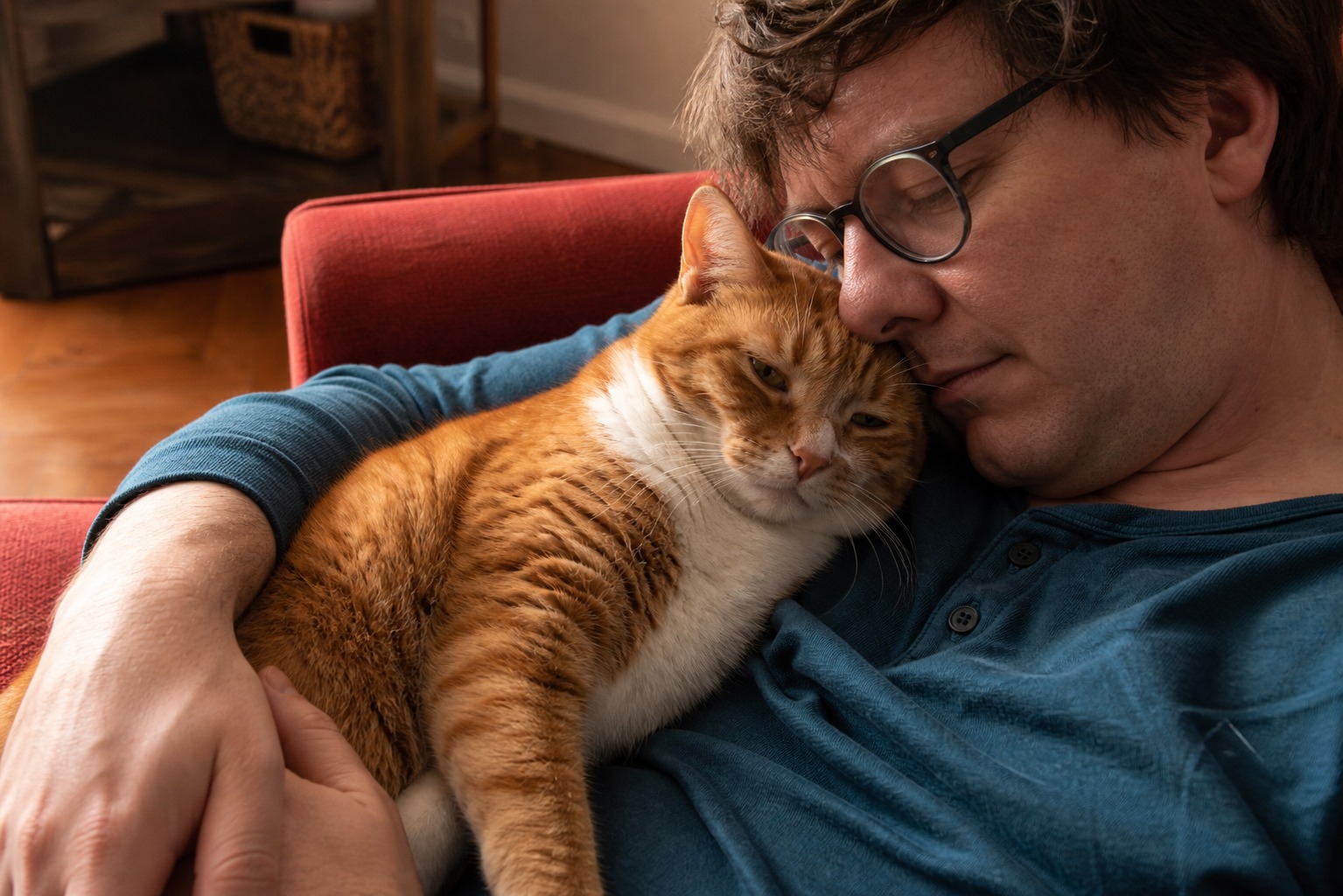
Cats have remarkably powerful noses, and you are, by your own confident estimation, your cat’s favorite person on the planet. So surely your cat knows your scent from anyone else’s, right? You are not just some random human to them. Right?
Good news for the anxious: science has your back. A study published in PLOS One found that cats really do recognize their human’s scent, and the way they reveal it is more interesting than a simple yes.
The three-tube test
Researchers presented 30 cats with three tubes to sniff. One held their owner’s scent, collected from swabs taken behind the ear, under the armpit, and between the toes. One held a stranger’s scent. The third was odorless. Owners also filled out a survey about their cat’s personality.
When the cats met all three tubes at once, they spent the most time sniffing the stranger’s scent, more than they spent on their own person’s tube or the blank one. That might sound like a snub, but it is the opposite. The same pattern shows up across feline behavior. Kittens sniff unfamiliar female cats longer than they sniff their own mother. Adult cats spend more time investigating the feces of unknown cats than those of cats in their social circle. In cat logic, the familiar gets a quick check while the unknown gets serious study. Lingering longer on the stranger means your scent is already filed under “known and safe.”
Spending less time on a familiar scent is not indifference, it is recognition. A cat does not need to interrogate a smell it has already learned. The novelty is what demands investigation.
There is a useful real-world lesson buried in that finding, and it is the practical takeaway the study itself hints at. If unfamiliar scents are what a cat fixates on, then the everyday scent disruptions in your home, a new partner moving in, a returning cat that now smells like the vet clinic, fresh laundry detergent on your clothes, are not trivial to your cat. They register as novel and demand investigation, which is exactly why a cat back from the vet can be hissed at by a housemate who normally adores them. Recognizing that scent, not sight, is a cat’s primary filing system for “safe versus strange” explains a lot of otherwise baffling feline behavior.
The nostril detail
Here is the part that genuinely surprised researchers: which nostril a cat uses seems to matter. Cats leaned on their right nostril more when sniffing a stranger’s scent, then shifted to the left. With their own person’s scent, they tended to go straight to the left nostril.
That sounds arbitrary, but scientists read it as more evidence of recognition. As the study’s lead author Yutaro Miyairi explained, research suggests that many vertebrates, including dogs, fish, and birds, process novel information using the right brain hemisphere first, then hand it off to the left once it has been classified and turned into routine. In plain terms, a cat may take an unfamiliar scent in through the right nostril to learn it, then switch to the left once it has been recognized as something already known.
Personality leaks out too
The study turned up a quirky bonus. Which tube a cat sniffed first hinted at its temperament. Cats that went for the blank tube first scored higher on neuroticism. Cats that went for the familiar scent first scored higher on extraversion. And cats that started with either of the human-scent tubes scored higher on agreeableness than the ones that opened with the blank.
The honest caveat
One thing is not yet proven: whether cats can pin a scent to a specific person. They clearly recognize your smell as a scent they already know. Science has not yet confirmed that they file it specifically as yours, the way you would recognize a friend’s face. Still, this is a meaningful first step toward proving something you probably already felt in your gut. You are not a stranger to your cat. You are filed under family, and the lingering nose goes to the new guy.
References
- Miyairi, Yutaro, et al. “Domestic Cats (Felis catus) Discriminate Their Owners from Strangers Based on Olfactory Cues.” PLOS ONE, vol. 20, 2025. https://journals.plos.org/plosone/article?id=10.1371/journal.pone.0324016
- Suchak, Malini, and Emily Lamica. “A Comparison of Cats’ (Felis catus) Preferences for Human Scent.” Animal Cognition, 2021. https://link.springer.com/article/10.1007/s10071-021-01537-w
Dr. Nair is a veterinarian focused on diet and feeding. She covers everyday nutrition, treats, and the many "can they eat this?" questions owners ask, grounding each answer in what is actually safe and sensible for dogs and cats.
Meet our experts ↗Keep reading
 TrainingCan a Cat Heal Itself by Purring? The Science Is Stranger Than You ThinkDr. Nina Kohl · 7 min
 Health & WellnessYour Male Cat Isn't Being Spiteful. He's Leaving You a Note.Dr. Mara Chen · 7 min
 LivingYour Kid Isn't Scaring the Cat on Purpose. Here's the Fix.Dr. Nina Kohl · 6 min
 TrainingYou Can't Train a Cat Off the Counter. You Can Outbid Her.Dr. Mara Chen · 8 min
 LivingYour Cat Isn't Jealous of Your Sex Life. It's Mad About the Door.Dr. Priya Nair · 5 min
 TrainingYour Cat Doesn't Read Emotions. Your Cat Reads YouDr. Mara Chen · 6 min