


Your Kid Isn't Scaring the Cat on Purpose. Here's the Fix.
Kids and cats can be great friends. The trick is teaching a child to move slow, stay quiet, and let the cat make the first move.

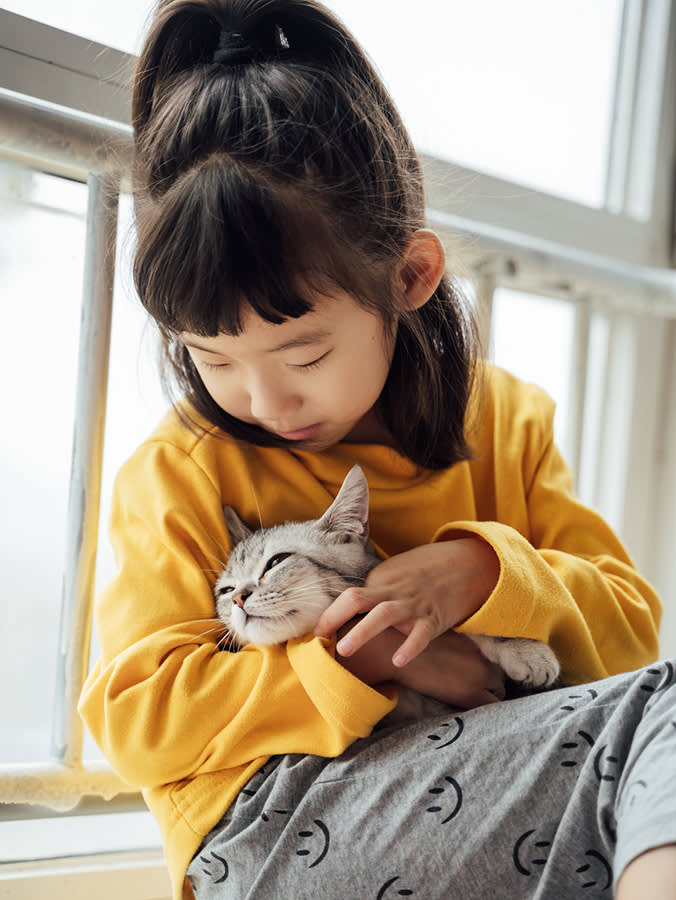
Here is a myth worth retiring: cats hate kids. They don’t. What cats dislike is the package a lot of kids arrive in, which is fast, loud, and unpredictable, at roughly cat-eye height. A child who learns to shrink that package down becomes someone a cat actually wants to hang around.
That reframe matters, because it turns a personality clash into a teachable skill. You are not trying to change your cat, and you are not trying to change your kid’s whole temperament. You are teaching one small set of manners: move slowly, keep the volume down, and let the cat decide. Do that, and a wary cat and an excited child can end up genuinely fond of each other.
I talked through the how of it with the through-line that every rule below serves the same goal. The cat is always the one who says yes or no.
Start with consent, because the cat already speaks it fluently
Cats are surprisingly good teachers of consent, which makes them a gift for a kid who is still learning that other bodies have boundaries. A cat tells you plainly when it is done, and it expects you to listen.
A cat is one of the best boundary teachers a child will ever meet. It won’t pretend to enjoy something it hates. If you show a kid that the cat gets to choose, you’re teaching two lessons at once, one about the cat and one about people.
The first rule you give a child is counterintuitive to them: do not go to the cat. Sit down, stay quiet, and wait. Let the cat close the distance on its own clock. When it does wander over and settle nearby, that is the green light to slowly offer a hand for a sniff. Approaching a cat that hasn’t invited you almost always backfires.
Teach the body-language “traffic light”
Kids think learning cat signals sounds like homework until you tell them the truth: it is basically a secret code for talking to animals. Framed that way, most children are thrilled to learn it. Give them a simple three-color version they can actually remember.
Green means the cat is relaxed and curious: tail up, ears forward, body loose, maybe a slow walk in your direction. That is a cat saying hello. Yellow means wait: the cat has gone still, its tail is twitching, or it has stopped what it was doing to watch you. Time to freeze and give it space. Red means back off completely: flattened ears, a puffed-up tail or body, a low growl, or a hard stare. A red cat needs everyone to leave it alone.
Then hand your kid one magic trick to use on a green cat: the slow blink. Looking straight at a cat can feel like a challenge, but a soft, slow blink from a comfortable distance is basically the feline version of a warm smile. Kids love that they can “say something nice” to a cat without a word, and they start watching to see if the cat blinks back, which quietly turns them into careful observers of the cat’s mood.
Dial down the two things that spook cats most
Almost everything that goes wrong between kids and cats traces back to two behaviors that are completely normal for a child and completely alarming for a cat.
The first is loud noise. Little kids often get louder when they are happy, and a joyful shriek at the sight of the cat can send it bolting. It helps to explain that a cat’s hearing is one of its superpowers, up there with jumping and retractable claws, and that superpowers come with a downside: loud sounds genuinely hurt. Turning “be quiet” into “protect the cat’s super-ears” gets far better results than shushing.
The second is fast, jerky movement. Sudden lunges and quick grabs look playful to a kid and predatory to a cat. Ask your child to move around the cat in slow motion, like they are a sleepy sloth. Making it a game beats making it a rule.
Show them how and where to pet
When a green cat is nearby and has sniffed an offered hand, a child can try a gentle stroke. Two things matter here: where and how hard.
Where: head, cheeks, and back are usually welcome. The tail and the belly are off-limits for most cats, particularly with a person they are still sizing up. Teaching a kid to simply never touch those two zones prevents most defensive swats.
How hard: gentle, always, and especially at first. Have your child practice the right pressure on your own arm so their hands learn what “soft” feels like before they touch the cat. And make the non-negotiable rule explicit: never pinch, never pull, never squeeze. If the cat likes the contact, it will usually tell you by leaning in, rubbing against the hand, or pushing back for more. That is the cat asking for the next round.
A useful habit for the whole family is the three-second check. Pet the cat gently for about three seconds, then stop and take your hand away. If the cat nudges back in, it wants more. If it stays put or wanders off, the visit is over. This one small ritual keeps a kid from steamrolling a cat who has quietly had enough.
Save toys for later, and always leave an exit
Do not hand a child a wand toy at the first meeting. Play should wait until the cat and kid already seem comfortable together, which might be a few sessions in. Excited play too early can read as aggression to a nervous cat.
When you do introduce toys, coach the child on how cats actually play. A cat is a hunter, so it wants to stalk and pounce on something that skitters low and away, not something whipped past its whiskers. A wand flicked along the floor at a little distance invites the cat to chase. Tucking a few of the cat’s favorite treats into playtime helps the cat file the child under “good things happen when this small human is around.”
Above all, never trap a cat in the interaction. A cat should always have a clear escape route and a safe retreat of its own, ideally a room of its own stocked with a litter box, meals, and water, one the kids understand is strictly off-limits. Cats are excellent at self-regulating and will simply leave when they have had enough, as long as leaving is an option. Take that option away by cornering or holding the cat, and a good situation turns bad fast.
“The moment a cat feels trapped, you’ve lost the whole game,” says Dr. Kohl. “Every good kid-and-cat relationship I’ve seen is built on the cat knowing it can walk away any time it wants. That freedom is what lets it choose to stay.”
Some cats warm up slowly, and that is normal. Keep the sessions short, keep them positive, and resist the urge to rush. The goal is not a cat who tolerates a child. It is a cat who, on its own terms, decides the kid is worth hanging out with.
What’s new since this was written
Behavior researchers increasingly frame safe animal handling around a “consent test,” the same stop-and-check habit described above, and it is now a standard part of many humane-education programs for children. The idea is simple and evidence-friendly: pet briefly, pause, and let the animal vote with its body on whether to continue.
There is also growing recognition that supervised, gentle time with a calm family cat can help children build empathy and read social cues, as long as the interactions stay on the animal’s terms. The caveat experts stress is real: benefits show up when an adult is present and the cat always has a way out. Left unsupervised, a mismatch between an excited kid and an overwhelmed cat is still the most common way these relationships go sideways.
References
- International Cat Care. “Understanding your cat’s behaviour and body language.” icatcare.org
- ASPCA. “Cat Behavior: Aggression and Body Language.” aspca.org
- American Veterinary Medical Association. “Pet ownership and children.” avma.org
Common questions
Why does my cat run away from my child?
To a cat, a small human who moves fast, talks loudly, and stays low to the ground can read like a predator. The behavior usually isn't about disliking kids. It's a reaction to speed, volume, and unpredictability, all of which a child can learn to dial down.
Where can my child safely pet a cat?
Most cats enjoy slow strokes on the head, cheeks, and back. The tail and belly are off-limits for most cats, especially with someone they don't fully trust. Teaching a child those two no-go zones prevents a lot of swats.
When can my kid start playing with the cat?
Wait until the cat and child are relaxed around each other, which can take several calm meetings. Then start with a wand toy flicked low and away from the cat, never waved in its face.
Dr. Kohl is a board-certified veterinary dentist with a particular interest in preventive oral care. She reviews all dental health content at The Pet Times and contributes practical guides on home dental routines, professional cleaning, and oral disease prevention.
Meet our experts ↗Keep reading
 TrainingThe Cat on Your Lap Isn't the One Who Loves You MostDr. Amara Solis · 9 min
 TrainingYour Cat's 'Favorite Person' Is a Job, Not a Feeling. You Can Take It.Dr. Nina Kohl · 8 min
 TrainingYour Kitten Isn't Kissing You. It's Filing You Under 'Family.'Dr. Amara Solis · 7 min
 TrainingYour Cat Isn't Running Hot and Cold. They're Running a Consent System.Dr. Amara Solis · 7 min
 LivingHating Cats Doesn't Make You a Narcissist. The Rush to Diagnose Says More.Claire Sutton · 6 min
 TrainingCat Behavior Has a Photo Problem. Someone Finally Drew Their Way Out of It.Dr. Mara Chen · 7 min