


Why Your Cat Is Throwing Up White Foam, and When to Worry
Foamy white vomit usually means an empty stomach, but not always. A vet walks through the causes, the precautions to take, and the signs that mean call the clinic.

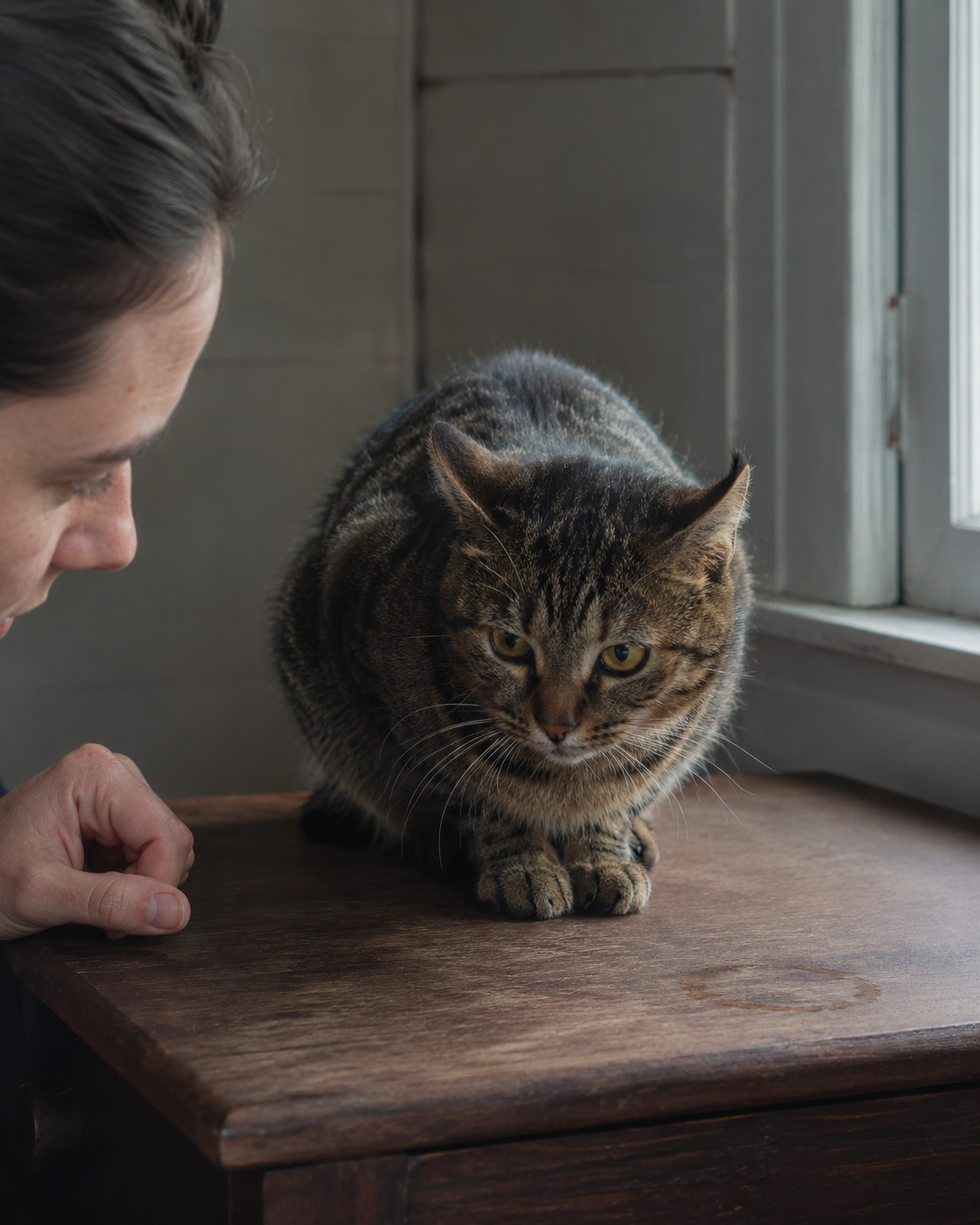
Every cat parent knows the routine, and dreads the part where you find the evidence with a bare foot in the dark. The occasional bout of vomiting is normal, and the first time it happens it may be nothing, maybe your cat skipped a meal or gulped water too fast. But frequent or persistent vomiting of white foam can be a sign that something underneath needs attention. Knowing the possible causes, and how to respond, keeps your cat comfortable and helps you catch trouble early.
Why foam, specifically?
There are countless reasons cats vomit, and just as many kinds of cat vomit. When all that comes up is foam, it usually means there is simply nothing else in the stomach to bring up. A one-off foamy episode may be harmless, but it is worth understanding what could be behind it.
An empty stomach or plain hunger
Your cat starts demanding food well before mealtime. They meow. They knock things off the nightstand. Then they puke on the book you were reading. Are they just being a jerk? A little, but not entirely. Cats can get hungry enough to feel nauseous and vomit, a pattern called bilious vomiting.
Bilious vomiting happens after a long stretch without food, classically early in the morning following an empty overnight stomach. The theory is that bile from the small intestine backs up into the stomach, irritates the lining, and triggers vomiting. It is far more common in dogs than cats, but it does occur in cats.
Hairballs
Cats groom constantly, and all that fastidious licking means swallowing hair. A wad of fur in the stomach can cause irritation or get in the way of digestion until the body decides to evict it. When a cat brings up a hairball, a little white foam often tags along.
A simple upset stomach
Curious nibblers and enthusiastic hunters are prone to occasional stomach upset. Cats can get queasy from eating things they find around the house, like people food, trash, houseplants, or insects. Mild gastritis usually passes on its own, but keep an eye out to confirm the symptoms are actually clearing up.
Underlying health conditions
Some illnesses cause nausea, poor appetite, and vomiting. Organ problems like kidney or liver disease can leave a cat feeling unwell enough to vomit, often clear foam if they are also off their food. Hormonal diseases such as hyperthyroidism and diabetes can drive vomiting too.
Intestinal parasites
Parasites are a common cause of appetite changes, diarrhea, and vomiting. In a cat with a heavy worm burden, you may even see adult worms in the foamy vomit. Common offenders include roundworms, hookworms, tapeworms, Coccidia, and Giardia. Kittens, outdoor cats, cats in multi-pet homes, and cats on raw diets all face higher risk.
Intestinal disease
Repeated foamy vomiting can signal disease deeper in the gut. Inflammatory bowel disease causes chronic inflammation that can produce loose stool, vomiting, and weight loss. Food intolerance and, less commonly, cancer can also be behind ongoing foamy vomit.
A foreign body
Swallowing something that is not food is one of the most common causes of GI obstruction in cats. Some cats would never, but others taste-test everything in reach. When an object blocks the GI tract, it disrupts digestion and stops food from passing through. Stomach fluid that cannot move on gets vomited back up, sometimes after eating, and the vomit can look yellow, green, clear, or foamy.
The color of the vomit tells me less than the pattern around it. One foamy puke from a hungry cat at dawn is very different from a cat who keeps retching and has gone quiet and off their food. That second cat needs to be seen, and the difference is in the whole picture, not just the puddle.
Precautions to take right away
If your cat throws up white foam, a few quick steps can keep things from getting worse.
Watch their behavior
Foamy vomit can be a minor blip or an early warning. Keep a close eye out for signs your cat feels unwell, including:
- Lethargy
- Poor appetite
- Signs of pain
- Diarrhea
- Changes in litter box habits
Check for dehydration
Vomiting, even just foam, means losing fluid. Repeated episodes can lead to dehydration, which makes everything worse. Watch for lethargy, poor appetite, dry gums, and a delayed skin tent. To check the skin tent, gently lift the skin between the shoulder blades. In a hydrated cat it snaps back almost instantly. A lag suggests dehydration, and skin that stays tented is a sign of severe dehydration and a reason to get to the vet.
Remove possible irritants
Scan your home for things your cat might get into. Toxic plants are the obvious culprit, but even safe plants can cause gastritis if nibbled. Keep trash cans covered. And, oddly specific but important, keep hair ties out of reach. Plenty of cats have needed hair ties surgically removed from their stomachs.
How to care for a foam-vomiting cat at home
If your cat is vomiting repeatedly or showing other symptoms, skip the home remedies and call the vet. But if it was a single foamy episode and you are in watch-and-wait mode, a few gentle measures help.
Offer fresh water
Make sure your cat has easy access to plenty of fresh water so they can stay hydrated.
Keep the diet consistent
It is tempting to switch foods to soothe an upset stomach, but a sudden change can cause even more digestive chaos. If you suspect their current food is the problem, talk to your vet about it rather than swapping on your own.
Cut down on hairballs
If your cat is constantly bringing up hairballs wrapped in foam, focus on the hair. First, rule out over-grooming from skin issues, infection, parasites, or allergies with your vet. If skin disease is not the cause, regular brushing reduces how much fur your cat swallows, and your vet can recommend supplements to help fur pass through more easily.
When to call the vet
A single episode is rarely an emergency, but persistent or severe symptoms warrant a visit. Get your cat seen if you notice:
- Persistent vomiting or gagging
- Vomiting bile, green fluid, or blood
- Lethargy or weakness
- Abdominal pain
- Diarrhea
- Changes in appetite or litter box habits
- Dehydration
The bottom line
Cats throw up white foam for reasons that range from a harmless empty stomach to serious problems like IBD, kidney disease, or a foreign body. The key is to identify the root cause early and loop in your vet if symptoms stick around. Most causes are manageable, and catching them quickly is the best thing you can do for your cat.
References
- Batchelor, D. J., et al. “Mechanisms, Causes, Investigation and Management of Vomiting Disorders in Cats: A Literature Review.” Journal of Feline Medicine and Surgery, vol. 15, no. 4, 2013, pp. 237-265. doi.org/10.1177/1098612X12473466
- Ferguson, L., et al. “Bilious Vomiting Syndrome in Dogs: Retrospective Study of 20 Cases (2002-2012).” Journal of the American Animal Hospital Association, vol. 52, no. 3, 2016, pp. 157-161.
- Iturbe Cossio, T. L., et al. “Risk factors associated with cat parasites in a feline medical center.” JFMS Open Reports, vol. 7, no. 2, 2021.
- Zoran, D. L. “Managing Vomiting in Cats.” DVM360, Oct. 2011.
Common questions
When should I take my cat to the vet for vomiting?
A single episode usually is not cause for alarm, but call your vet if you see persistent vomiting or gagging, vomiting of blood or green bile, lethargy, weakness, abdominal pain, diarrhea, appetite changes, changes in litter box habits, or signs of dehydration.
How can I tell if my vomiting cat is dehydrated?
Gently lift the skin between your cat's shoulder blades. In a hydrated cat it snaps right back. A delay suggests dehydration, and skin that stays tented signals severe dehydration and a need to see the vet. Other signs include lethargy, poor appetite, and dry gums.
Not a substitute for your vet. Our guidance is educational. For urgent symptoms, contact a vet or emergency clinic right away. Editorial standards
Dr. Chen is a small-animal veterinarian who leads health and safety coverage at The Pet Times. She writes and reviews the bulk of our illness, condition, and safety content, translating clinical guidance into clear, practical advice owners can act on at home.
Meet our experts ↗Keep reading
 TrainingYour Cat Is Trying to Bury Something. The Question Is What.Dr. Lena Park · 8 min
 Health & WellnessYour Cat Doesn't Have to Eat the Lily. The Vase Water Will Do.Dr. Amara Solis · 9 min
 Health & WellnessYes, Female Cats Spray. Spaying Doesn't Always Stop It.Dr. Lena Park · 7 min
 TrainingYour Cat Isn't Attacking You. You Live on a Hunting Route.Dr. Amara Solis · 9 min
 Health & WellnessYour Cat Probably Doesn't Have a UTI. What Litter-Box Trouble Usually MeansDr. Priya Nair · 5 min
 Health & WellnessYour Cat's Diabetes Can Go Into Remission. The Window Is Smaller Than You ThinkDr. Mara Chen · 11 min