


The Turkey Is Fine. It's the Rest of the Table That Sends Dogs to the ER
Plain turkey meat is one of the safest things at Thanksgiving. The danger is everything it arrives with, bones, skin, drippings, alliums, and fat, which is why holiday pancreatitis spikes every year. Here's how to share safely.

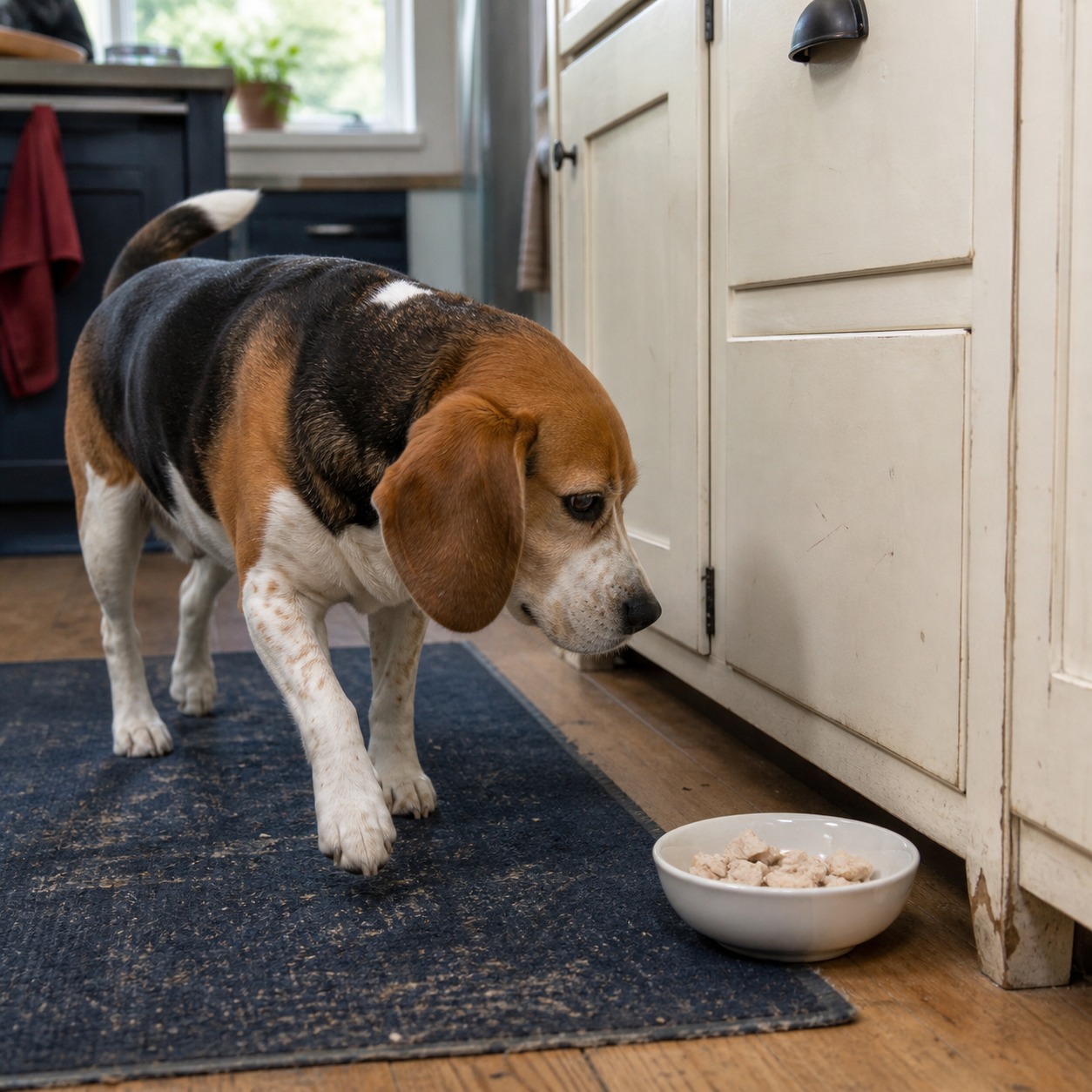
It is easy to spend Thanksgiving worrying about the wrong thing. Owners fixate on whether turkey is “allowed,” carefully rationing bites of the bird, while the actual hazards sit all around it, untouched by the worry. Plain turkey meat is one of the safest things on the whole table. What sends dogs to the emergency vet every fourth Thursday in November is not the turkey. It is the system the turkey lives in: the crispy skin, the drippings, the gravy, the stuffing full of onion, and the carcass in the trash.
Reframe the question and you get the useful version. Not “can my dog have turkey,” but “how do I let my dog share the meal without getting caught by the parts around the turkey.” That is a solvable problem, and it starts with knowing where the real risk lives.
The holiday ER spike is real, and it isn’t about the meat
Veterinary emergency clinics see the same pattern every year: a reliable jump in pancreatitis and “dietary indiscretion” cases in the days around Thanksgiving, plus a run of obstruction cases from cooked bones. The through-line is fat and richness, not turkey specifically. A dog that normally eats measured kibble suddenly gets buttery skin, gravy-soaked scraps, and a plate of leftovers, and its pancreas, unaccustomed to that fat load, can flare into a painful, sometimes serious inflammation.
That is why the smart mental model is a table full of traps with one safe island in the middle. The island is plain white meat. Everything with fat, seasoning, or bone is a trap.
Most of the holiday emergencies we see trace back to dogs overindulging in food they are not used to. In the worst cases that is pancreatitis, usually after a dog gets into something fatty or heavily spiced, the skin, the drippings, a plate of leftovers left within reach. The turkey breast is almost never the villain. It is everything we put on and around it.
The safe island: plain white meat
Turkey itself is genuinely good protein, rich in riboflavin and phosphorus, which is exactly why it shows up in so much dog food. The catch is that dinner-table turkey is not kibble turkey. Your holiday bird arrives brined, buttered, herbed, and often stuffed, none of which belongs in a dog.
The safe version is narrow and specific: plain, cooked, white meat, no skin, no bones, no sauce or seasoning, in a few small pieces. The single most effective habit is to pull your dog’s portion off the bird before you dress it, set aside a little unseasoned breast meat during carving, and your dog gets to share the meal without any of the risk.
The traps, ranked by how much they scare a vet
Bones (call-the-vet urgent). This is the hard no. Cooked turkey bones are hollow and splinter, and dogs should never have access to them. Splinters can injure the mouth and throat going down and cause intestinal blockages or perforations further along. Save the wishbone for the humans, and put the carcass somewhere a determined dog cannot reach, a secured trash can, not the open bin.
Fat: skin, dark meat, drippings (pancreatitis risk). The skin and dark meat are high in fat, and drippings and gravy are essentially liquid fat. This is the main pancreatitis pathway. Even “non-toxic” foods have to be served plain, without butter, heavy salt, or seasoning, to stay safe.
Alliums: onion and garlic (toxic). These are almost certainly in your stuffing, gravy, and sides, and they are toxic to dogs, capable of damaging red blood cells with a delayed onset. Anything cooked or seasoned with them is off limits.
Grapes and raisins (toxic). Sometimes hidden in stuffing and relishes. Even small traces can cause kidney failure, and a dish stays dangerous even if the visible fruit is picked out.
Pecans and walnuts (toxic). Common pie fillings. Both contain juglone and can cause vomiting and GI distress, get veterinary help if your dog gets into a bag or a whole pie.
The safe sides, if you want to share more than turkey
Several Thanksgiving foods are dog-friendly as long as you reserve a plain portion before seasoning:
- Carrots: healthy and nutritious. Set aside a plain one during prep before the rest get salted and glazed.
- Cooked sweet potato: a genuine superfood for dogs, served plain and in moderation. Reserve an unseasoned piece before you dress the casserole.
- Apple: sweet and safe once the seeds and core are removed. Skip the pie, though, the sugar and fat will upset a dog’s stomach.
- Green beans: plain, steamed or raw, a low-calorie favorite, as long as they skip the casserole treatment.
If something goes wrong
Even with care, dogs counter-surf. If your dog gets into the fatty food or a bone, watch over the next 24 to 48 hours for vomiting, diarrhea, a hunched or painful belly, lethargy, or loss of appetite, the early signs of pancreatitis, and call your vet if any show up. For a swallowed bone, do not wait, call right away. And keep human food to under 10 percent of your dog’s calories even on a holiday, starting small with anything new.
The bottom line
The turkey is not the problem. Plain, skinless, boneless white meat in a few small bites is one of the safest ways to let your dog join Thanksgiving. The danger is the system around the bird, the fatty skin and drippings that drive the annual pancreatitis spike, the cooked bones that cause obstructions, and the onion, garlic, grapes, and nuts hidden in the sides and pies. Carve off a plain portion before you season, keep the bones and rich scraps out of reach, and your dog can share the meal without sharing a trip to the emergency vet.
References
- American Veterinary Medical Association. “Pet Holiday Safety.” https://www.avma.org/resources-tools/pet-owners/petcare/holiday-pet-care
- Merck Veterinary Manual. “Pancreatitis in Dogs and Cats.” https://www.merckvetmanual.com/digestive-system/the-exocrine-pancreas/pancreatitis-in-dogs-and-cats
- ASPCA Animal Poison Control. “People Foods to Avoid Feeding Your Pets.” https://www.aspca.org/pet-care/animal-poison-control/people-foods-avoid-feeding-your-pets
Common questions
Why do so many dogs end up at the vet around Thanksgiving?
Emergency clinics see a reliable holiday spike in pancreatitis and dietary-indiscretion cases, driven by dogs getting into fatty, rich table food, plus obstruction cases from cooked bones. The bird is rarely the culprit. The gravy, skin, and trimmings are.
Can dogs have turkey skin or dark meat?
Best avoided. Both are high in fat, and a sudden hit of fatty food is a classic pancreatitis trigger. Stick to plain white meat in small, bite-sized pieces.
What if my dog gets a turkey bone?
Call your vet. Cooked turkey bones are hollow and splinter easily, and they can injure the mouth and throat or cause an intestinal blockage or perforation. Do not wait to see if it passes, get guidance right away.
Not a substitute for your vet. Our guidance is educational. For urgent symptoms, contact a vet or emergency clinic right away. Editorial standards
Dr. Park is a board-certified emergency and critical care specialist. She reviews our health and safety content for clinical accuracy and contributes guides on recognising urgent conditions. Her focus is helping owners act quickly and correctly when it matters most.
Meet our experts ↗Keep reading
 FoodA Cashew Won't Poison Your Dog. That's Not the Same as 'Go Ahead'Dr. Ravi Mehta · 7 min
 FoodPapaya for Dogs: The Enzyme Is the Point, and Also the CatchDr. Priya Nair · 6 min
 FoodKale Is a 'Superfood.' For Dogs, It Comes With a Catch.Dr. Priya Nair · 5 min
 FoodMango Is Safe for Your Dog. The Skin Might Not Be Safe for YouDr. Priya Nair · 6 min
 FoodCoconut Water Won't Hydrate Your Dog. It's a Treat With a Potassium Catch.Dr. Priya Nair · 6 min
 FoodLettuce Does Almost Nothing for Your Dog. Here's When It's Still Worth Feeding.Dr. Amara Solis · 5 min