


Coconut Water Won't Hydrate Your Dog. It's a Treat With a Potassium Catch.
Coconut water is safe for dogs in tiny amounts, but marketed as hydration it fails, and its potassium load carries a real risk. Here's the honest serving guide.

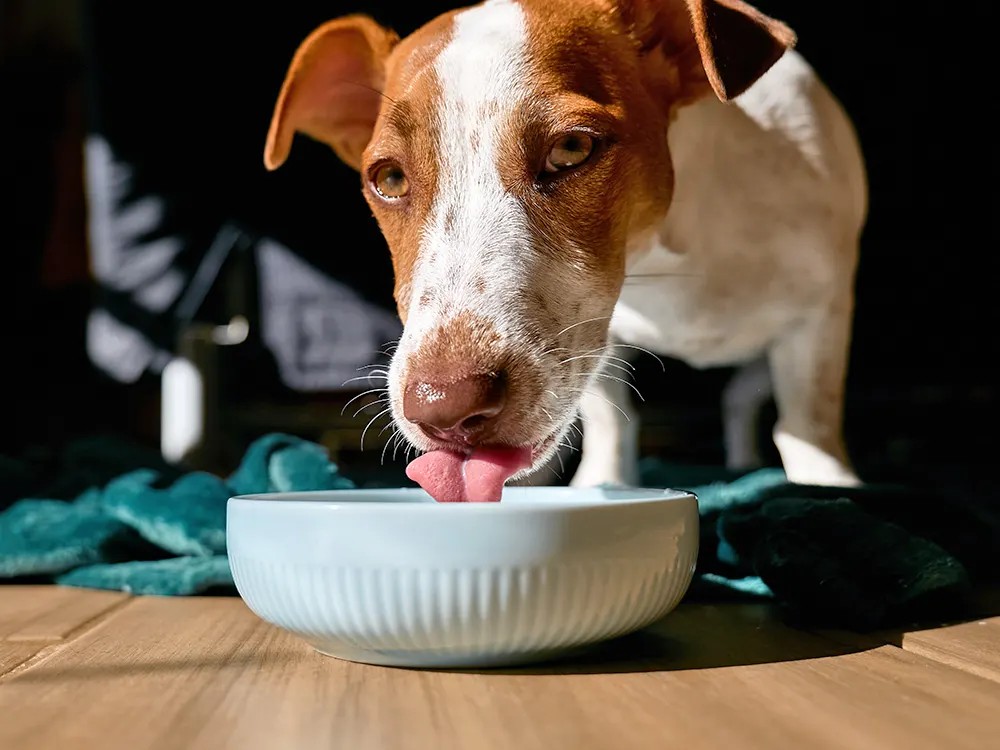
Coconut water rode the wellness wave to the top of the cooler, sold as nature’s sports drink, and that halo has drifted onto our dogs. So people ask, reasonably, “can I give my dog coconut water?” expecting either a clean yes or a scary no. The honest answer is neither, and the marketing is the thing worth arguing with. Coconut water is safe for a dog in tiny amounts, and it is also almost useless as the thing it’s sold as, hydration, while carrying a real, if uncommon, risk from the very nutrient that makes it trendy: potassium.
That’s the frame for this piece. Not “toxic or not,” but “does the wellness pitch survive contact with a dog’s actual physiology?” It mostly doesn’t. Coconut water is a fine occasional novelty and a poor health strategy, and the reason why is more useful than a simple thumbs-up or thumbs-down.
Safe in small amounts, with one label to check
Let’s clear the safety question first, because it’s straightforward. Plain coconut water is not toxic to dogs. If your dog laps a little from your glass, don’t worry. You can let a curious dog have a taste without incident.
The one thing to actually check is the label. Most plain coconut water has no additives, but flavored versions and coconut-water blends can contain xylitol, an artificial sweetener that is dangerously toxic to dogs. On ingredient lists it sometimes hides under the name “birch sugar.” Before sharing anything sweetened with your dog, scan for xylitol or birch sugar and skip it if it’s there. This is the single genuine danger in an otherwise low-stakes food.
Why “hydration” is the wrong reason to give it
Here’s where the marketing falls apart. Coconut water is pitched as a rehydration beverage, mimicking carbohydrate-electrolyte sports drinks. But for a dog, the premise doesn’t hold, and for a couple of concrete reasons.
First, it shouldn’t be a hydration source at all, because of what’s in it. Coconut water has calories (about 45 per cup), meaningful potassium, and sugar, none of which you want your dog drinking in volume to stay hydrated. Using it as a water replacement works against a balanced diet. The rule of thumb is to keep calories from treats and extras under 10 percent of a dog’s daily intake, and a bowl of coconut water blows past “treat.”
Second, it doesn’t even outperform plain water. A study comparing plain water, coconut water, and sports drinks for rehydration and recovery after exercise found no significant difference between them. Dogs have been hydrating on plain water for their entire existence, and it does the job beautifully. The best alternative to coconut water is, anticlimactically, water.
The potassium catch
The nutrient coconut water is famous for is also where its risk lives. Coconut water contains roughly three times the sodium and fifteen times the potassium of most sports drinks, plus a fair amount of magnesium and calcium. In excess, that potassium load can push a dog into hyperkalemia, an elevation of blood potassium, which can cause muscle weakness, stomach upset, and abnormal heart rhythms. It can be life-threatening in both people and dogs, and the danger climbs sharply in dogs with preexisting kidney problems, whose bodies can’t clear the extra potassium efficiently.
Beyond potassium, the electrolyte content can act as a mild diuretic, increasing urine output, and can cause diarrhea if a dog drinks too much, which is its own route to fluid loss, the opposite of the intended effect. Coconut water can also cause bloating and stomach upset, likely from its potassium and sodium content or its natural fiber; this has been documented even in human athletes using it to rehydrate.
Coconut water isn’t dangerous the way chocolate or grapes are, so I don’t want people to panic over a few licks. But I do push back on giving it as a health drink. If your dog has any kidney issue, that potassium is a genuine concern, and for a healthy dog it’s just sugary novelty water. Save it for the occasional taste and let plain water do the real work.
If you want to let your dog try it
There’s no need for coconut water in any dog’s diet, but if you want to see whether your dog enjoys it as a treat, introduce it gradually. Start with a very small amount to make sure it doesn’t cause stomach upset, then increase slowly only if your dog tolerates it well, keeping the total tiny. Some dogs dislike the smell or taste and will turn it down, and that’s fine, there are plenty of treats they’ll like better, no need to push it.
Allergic reactions to coconut water are rare, but a dog can be allergic to almost anything. Acute reactions range from mild (facial swelling, hives) to severe (sudden vomiting, diarrhea, collapse), and dietary allergies more often show up as skin problems, itchiness, redness, ear and skin infections, or chronic GI issues like loose stool and appetite changes. If your dog has a medical condition that affects electrolytes, check with your vet before offering any.
A quick word on the coconut family, since people conflate them: coconut milk is calorie-dense and high in fat, and isn’t recommended due to pancreatitis risk; fresh coconut isn’t toxic but is high in fat and calories, and the fibrous shell can cause an intestinal obstruction; and coconut oil, while not toxic, has no proven benefits for dogs and shouldn’t be a primary fat source. Coconut water is the least caloric of the bunch, which is exactly why the “just a little” rule works for it and not the others.
What newer research adds
The nutrition science here hasn’t produced a coconut-water breakthrough for dogs, and that absence is itself the update: there is still no evidence of a real health benefit, which keeps it firmly in “occasional treat” territory rather than “functional supplement.” The comparative hydration research in humans continues to show coconut water performing on par with, not better than, plain water, so the sports-drink framing remains marketing rather than physiology.
The development actually worth flagging is on the safety side, and it’s about labels. Xylitol awareness has grown, and in recent years manufacturers have increasingly listed it as “birch sugar,” a name many pet owners don’t recognize as the same dangerous ingredient. Veterinary and poison-control groups have pushed to make owners aware of that synonym, because a flavored or sweetened coconut water is exactly the kind of product where it can turn up. The practical takeaway is unchanged but more pointed than before: plain coconut water in tiny amounts is harmless, the real risk is a sweetener hiding under an unfamiliar name, and none of it beats the water bowl your dog already has.
References
- Comparison of coconut water and a carbohydrate-electrolyte sport drink on hydration and physical performance — Journal of the International Society of Sports Nutrition (PubMed)
- Coconut water-induced hyperkalaemia — British Journal of Hospital Medicine (PubMed)
- Xylitol and Your Dog: Danger, Symptoms and Treatment — U.S. Food & Drug Administration
- Hyperkalemia in Dogs — Merck Veterinary Manual
Common questions
How much coconut water can a dog have?
Less than you'd think. There's no established safe amount, but treat it as an occasional novelty, a few licks, not a bowlful. Keep all treats and extras under 10 percent of your dog's daily calories.
Is coconut water good for dogs?
There are no proven health benefits. Any complete, AAFCO-compliant dog food already supplies the nutrients coconut water contains. It's a treat at best, not a supplement.
Can coconut water hurt my dog?
In excess, yes. Too much can cause elevated potassium (hyperkalemia), which can lead to muscle weakness, stomach upset, and dangerous heart-rhythm problems, especially in dogs with kidney disease. It can also cause diarrhea and bloating.
Not a substitute for your vet. Our guidance is educational. For urgent symptoms, contact a vet or emergency clinic right away. Editorial standards
Dr. Nair is a veterinarian focused on diet and feeding. She covers everyday nutrition, treats, and the many "can they eat this?" questions owners ask, grounding each answer in what is actually safe and sensible for dogs and cats.
Meet our experts ↗Keep reading
 FoodKale Is a 'Superfood.' For Dogs, It Comes With a Catch.Dr. Priya Nair · 5 min
 FoodWatermelon Is a Great Dog Treat. Two Parts Are NotDr. Priya Nair · 5 min
 FoodYour Dog Can Have the Potato. It's the Fry That's the ProblemDr. Amara Solis · 5 min
 FoodCantaloupe Is Great for Dogs. The Rind Is the Part That Isn'tDr. Nina Kohl · 5 min
 FoodTwo Goldfish Crackers Are Fine. Here's the Number That Isn't.Dr. Mara Chen · 5 min
 FoodA Marshmallow Is Harmless for Dogs, Until One Word Is on the BagDr. Mara Chen · 5 min