


Texas Banned Dog Chains. The Real Fix Was a Deleted Sentence
The Safe Outdoor Dogs Act got headlines for outlawing heavy chains. The provision that actually changed anything was quieter: it erased the 24-hour waiting period that had forced officers to walk away from suffering dogs.

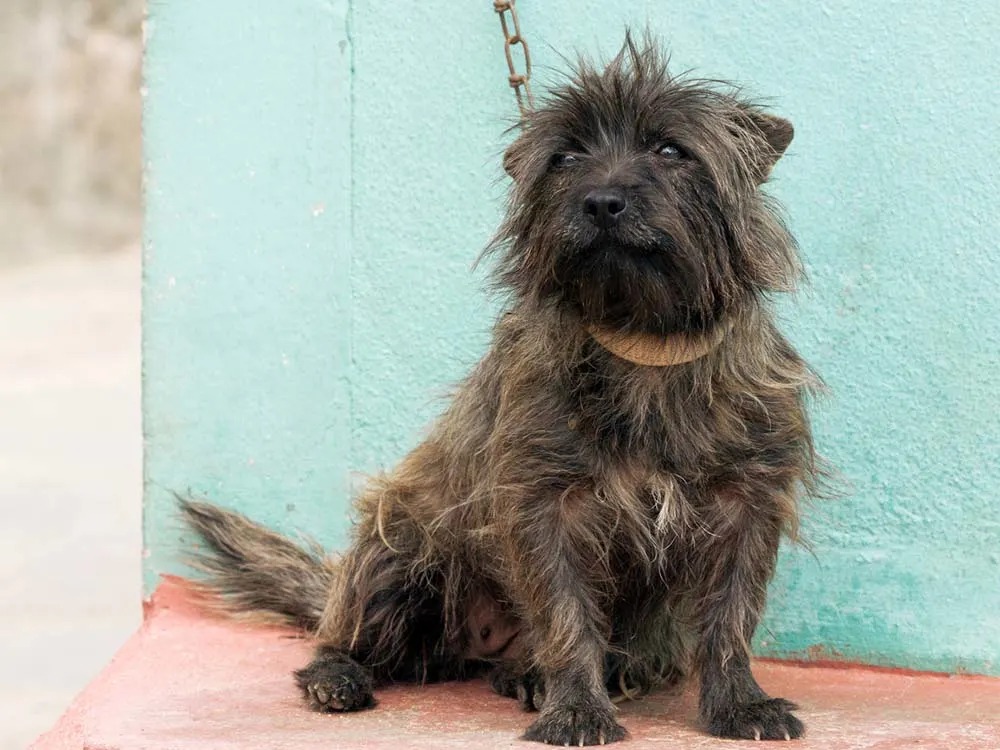
Picture an animal control officer standing in a Texas yard. There is a dog on a logging chain, no shade, no water, a collar sunk into the skin of his neck. The officer knows this is wrong. Under the law as it stood until this week, the officer could not do much of anything about it, not right away. He had to issue a warning, then leave, then wait a full day, then come back and see whether the owner had fixed it.
That 24-hour clock was the whole problem. It is also the part of the Safe Outdoor Dogs Act nobody put in a headline.
The law took effect on January 18, 2022, and most of the coverage led with chains: no more heavy tethers, no more dogs staked out in an ice storm. True, and good. But the sentence that gives the rest of it teeth is the one the legislature took out. Officers no longer have to wait a day to act on a dog in a dangerous situation. They can respond when they see it.
What the old law actually did
Texas had an anti-tethering statute before this. On paper it looked fine. In practice it contained a mandatory waiting period, and that waiting period functioned as a permission slip. A dog freezing on a chain at noon was, legally, a dog you came back for at noon tomorrow. Owners who were inclined to comply could simply move the dog for an afternoon. Owners who were not could ride out the visit.
Ask anyone who has worked in enforcement and they will tell you the same thing: a cruelty law you cannot enforce in the moment is a suggestion.
What Senate Bill 5 changed
The new statute is specific in a way the old one was not. Under the Safe Outdoor Dogs Act, if a dog is left outside and unattended on a restraint, the restraint has to meet real standards:
- No chains. The tether cannot weigh 10 percent or more of the dog’s body weight. That single rule ends the practice of anchoring a 40-pound dog to a chain built for towing.
- Room to move. The restraint must be at least five times the length of the dog, or 10 feet, whichever is greater.
- A collar that does not injure. Choke, pinch, and prong-style collars cannot be used to tether a dog.
- Real shelter. The dog must have shelter that lets him stand up and lie down in a normal position, plus shade and access to drinkable water.
- No waiting period. Officers can address a critical situation immediately.
The penalties escalate. A first violation is a Class C misdemeanor, a fine of up to $500. Keep doing it and it becomes a Class B misdemeanor, which carries a fine of up to $2,000 and as much as 180 days in jail.
The bill Texas had to pass twice
None of this arrived quietly. A version of the bill cleared the legislature in the 2021 regular session with bipartisan support, and Governor Greg Abbott vetoed it on June 18, 2021, arguing that Texas already outlawed animal cruelty and did not need what he called micro-managing and over-criminalization.
The response was loud, fast, and extremely online. #AbbottHatesDogs trended. The bill came back in the third special session that fall as Senate Bill 5, passed again, and this time it was signed.
“The dogs I worry about are not the ones somebody is actively beating. They are the ones nobody is doing anything to, day after day, at the end of a chain,” says Dr. Nina Kohl. “Neglect is slow, and until now the law moved slower.”
Why a chain does so much damage
Tethering looks passive. It is not. A dog kept on a restraint for long stretches pays for it in two currencies at once.
Physically, the neck takes the damage first. Skin goes raw, and a collar left on a growing or neglected dog can embed itself in the tissue. Tethered dogs are sitting targets for insects and parasites. They tangle, and tangling can strangle. They cannot escape another animal or a person who means them harm. Their water gets knocked over and nobody rights it. Their food comes when it comes. In a snowstorm they have nowhere to go, and in a Texas August they may have no shade at all. Because the tether area rarely gets cleaned, many of these dogs eat and sleep in their own waste.
Psychologically, isolation does the rest. Dogs are social to their bones, and a friendly, easygoing dog kept continuously chained does not stay friendly and easygoing. He becomes anxious, frantic, and often aggressive. This is not a character flaw in the dog. It is what confinement does.
The part that makes this a human safety law
There is a version of this argument that persuades people who do not particularly care about dogs, and it is worth making plainly: chained dogs bite.
A dog on a tether cannot leave. When something crosses into what he has decided is his territory, and every chained dog eventually decides the radius of his chain is his territory, the fight-or-flight calculation has only one available answer. He cannot take flight. So he fights, and the person who wanders in is frequently a child who did not know the rules of a yard he was cutting across.
What about a pulley run?
Clipping a dog to a long line, a clothesline, or a manufactured pulley run gives him more ground to cover than a stake does, and that is genuinely better than a stationary anchor. It is not a solution. The same failure modes are still there: hanging, tangling, attacks by or on other animals, and a dog who is still fundamentally alone in a yard.
If you know a chained dog
The instinct is to get the dog out. Rescue groups will tell you, with some pain, that this is usually the wrong first move.
Most people who tether their dogs are not monsters. Some have a fence that fell down. Some have a landlord who will not allow a dog indoors. Some have an escape artist and have run out of ideas. Some grew up watching every dog on the street live on a chain and have never been told there is another way. Take the dog and the fence is still broken, the landlord still says no, and there is a decent chance another dog appears in that yard within the month, on the same chain.
What actually works, in order:
- Find out what your local rules are. Cities, counties, and townships often have tethering ordinances stricter than the state’s, and knowing which one applies tells you what can be enforced.
- Call animal services rather than confronting the owner. An officer can knock, look, and offer help in a way a neighbor cannot.
- Support the groups that fix the root cause. A significant share of chaining ends the day somebody builds the family a fence, pays for a run, or hands them a doghouse. That is unglamorous work, and it is the work that empties chains.
- Push for the ordinance. If your community has no tethering rule, the state floor is now a solid place to start from.
The Safe Outdoor Dogs Act does not free a single dog by itself. What it does is take away the sentence that used to end the conversation, and hand the officer standing in that yard a reason to still be standing there.
References
- Texas Senate Bill 5, 87th Legislature, 3rd Called Session (2021), the Safe Outdoor Dogs Act. Bill text
- Texas Legislature, House Research Organization bill analysis, SB 5
- Texas Humane Legislation Network, SB 5: The Safe Outdoor Dogs Act
- KWTX, “Central Texas shelter offers helping hand as Safe Outdoor Dogs Act takes effect” (January 17, 2022)
- Humane World for Animals, Is it okay to chain or tether dogs?
Marcus Webb writes about the gear, gadgets, and everyday choices that make life with a pet easier. His coverage runs from product picks to training and the causes worth paying attention to, always with an eye on what actually earns a place in your home.
Meet our experts ↗Keep reading
 LivingShe Called the Sheriff to Approve Her Dog 'Rescue.' Over 100 Dogs Were Already Dead.James Okafor · 4 min
 LivingThe CDC's Dog-Import Rules Punish the Rescues Doing Rabies Prevention RightMarcus Webb · 11 min
 LivingYour Empty Kibble Bag Is a Recycling Dead End. Here's the Ladder OutLeila Torres · 5 min
 LivingOne of the Longest Partnerships in the Service-Dog World Just Got BiggerJames Okafor · 4 min
 Living'You Don't Look Blind': How One Waiter's Words Broke the LawJames Okafor · 5 min
 LivingThe Dogs of the NYC Dyke March Were Making a Statement TooLeila Torres · 6 min