


The CDC's Dog-Import Rules Punish the Rescues Doing Rabies Prevention Right
New CDC rules aimed at keeping rabies out fall hardest on the international rescues that vaccinate most carefully, while pushing real risk toward black-market routes. Here is how the rules work, what they cost, and why critics say they may backfire.


Here is the contradiction at the heart of the CDC’s dog-import rules: they were built to keep rabies out of the United States, but they land hardest on the very rescues that vaccinate their dogs most carefully, while doing little to stop the informal routes where rabies risk actually lives. A rule designed around a disease that domestic dogs essentially no longer spread in America may end up making the country marginally less safe, not more, by making the compliant path so expensive that some dogs get moved a different way. That is the argument the people who run international canine rescue have been making, and it is worth taking seriously.
The scale, and the rule
About 1.2 million dogs enter the United States each year, and roughly 113,000 of them come from countries the CDC considers high-risk for dog rabies. The rules, which took effect on August 1, 2024, set a baseline for every dog: it must be at least six months old, have a scannable microchip, appear healthy on arrival, and have a valid rabies vaccine. For a dog arriving from a rabies-free or low-risk country, the paperwork is now light: a single online CDC Dog Import Form generates a receipt, free of charge, good for six months of entries. An American tourist bringing home a vaccinated pet barely notices.
The weight all falls on dogs coming from the roughly 113 high-risk countries, where the U.S. government does not trust that foreign vaccine certificates are valid. A dog from one of those nations, even one a legitimate rescue vaccinated abroad, must now pass a blood test confirming rabies antibodies before arrival (or face a 28-day quarantine), get a physical exam on entry, and receive another rabies vaccine on U.S. soil. Crucially, dogs imported for rescue, adoption, or transfer of ownership are not eligible for the shortened processing that some other travelers get. The system is built around the assumption that imported rescues are the risk. The rescues say that gets it backward.
Why the rabies logic is shakier than it looks
A quick history explains the suspicion. Much of America’s rabies anxiety is rooted in the past: before 1960, dogs were the primary spreaders, contributing to several hundred human deaths a year. By 2007, canine vaccination had all but eradicated dog-transmitted rabies in the country. Today, the CDC notes, around 4,000 animal rabies cases are reported annually, with more than 90 percent in wildlife like bats, raccoons, skunks, and foxes, and fewer than 10 human deaths a year. Abroad the picture is genuinely grim: roughly 70,000 people die of rabies globally each year, with dogs responsible for 99 percent of those deaths.
So some of the new requirements are reasonable on their face. A microchip and a minimum age of six months are sensible, and the age floor even helps thwart puppy mills. The problem is not the existence of standards; it is who absorbs the cost of meeting them, and whether the design pushes risk toward the routes no rule touches.
To understand the on-the-ground effect, The Pet Times spoke with two leading figures in global canine rescue: Helen Summerfield-Brown, president and founder of Stray Dog Support, which works from India to Egypt to Mexico, and Jeffrey Beri, founder of No Dogs Left Behind, which focuses on dogs in the East Asian meat trade.
The cost shock falls on nonprofits
The first effect is financial, and it is steep. Because dogs must now route through a shrunken set of CDC-sanctioned ports of entry, and because the kennels at those points are privately owned (though CDC-bonded), there is no price ceiling.
“There is no standardized pricing. We have no idea what we’re going to be charged. We’re beholden to the individual prices of these individual, private kennels,” Summerfield-Brown says.
Beri puts it more bluntly: “It’s almost like extortion, forcing rescues to take their dogs into these mandatory quarantine facilities.” He estimates the changes will cost No Dogs Left Behind about $350 more per dog, adding up to roughly $500,000 a year. For the leaner operation, the math is existential. “I’m an independent, one-person rescue, and my expenses currently are about $80,000 a month,” Summerfield-Brown says. “For one dog to get here, it normally costs me, say, $3,000 already,” a figure that covers everything from rescue to U.S. entry. The new uncertainty terrifies her, especially around how long a dog might sit at an intake center if those centers get flooded, which everyone expects.
The capacity limits also cap how many dogs a rescue can move at once. “If I want to bring in 55 dogs because that’s how my economics work, we may not be able to bring those dogs because they don’t have space,” Beri says. “The facilities will force us to pay these high tariffs to have our dogs kenneled and to pay these exorbitant vet and revaccination fees, and it’s at their beck and call when we can bring in dogs and how many.”
The logistics get harder, the routes get longer
Cutting the number of approved airports does more than raise kennel bills; it lengthens every journey. Based in Wisconsin, Summerfield-Brown used to fly dogs into nearby Chicago. Now that is off the table. “I’ve got to figure out a way to transport dogs from JFK, which is the closest airport to me now,” she says, and volunteer ground transport is unreliable and stressful, so she pays for it. “I just sent a dog from JFK down to Florida, which cost me $2,600.” Longer distances mean domestic flights, which add fees and crate-size restrictions for big dogs. “Cutting down the airports we can fly into is causing me to panic,” she says.
Even the larger, more networked groups are conceding ground. “We have been focusing solely on JFK and have abandoned LAX, even though we have a lot of adopters on the West Coast,” Beri says, citing cost and overcrowding in Los Angeles. No Dogs Left Behind survives on dialed-in protocols and a long relationship with The ARK at JFK, the CDC-sanctioned reception center in Cargo Area D. “They have been extremely helpful,” he says.
The dogs pay in stress, and in repeated vaccines
The animals carry the least visible cost. Many arrive having already survived a gauntlet: learning to trust rescuers, being socialized and medically treated in overseas quarantine, then flying thousands of miles. Under the new system, the handoff at the airport is impersonal. “I wouldn’t even be able to see that dog,” Summerfield-Brown says. “They get picked up and taken directly to a facility.”
Then there is the question of stacking vaccines on an already-stressed animal. “I’ve had dogs come in from China, land in Canada, had to be revaccinated in Canada, then they came to the USA and were vaccinated again. That’s three times,” Beri says, counting the shot his sanctuaries give first. The research on the health impact of successive rabies vaccines in a short window is genuinely split, which is maddening precisely because everyone, rescue and CDC alike, wants the dog to end up healthy.
The part critics say makes it counterproductive
This is where the thesis comes back around. By making the legitimate, fully documented path slow and ruinously expensive, the rules create an incentive to route around them. “They’re just creating the Wild West, forcing people to black-market transport their dogs,” Beri warns. “Rescues will start moving their dogs from country to country, and then transporting dogs into the United States in dangerous ways.” A dog laundered through a third country and walked across a border is exactly the dog a rabies rule should worry about, and it is the dog these requirements do the least to catch. The rules tighten the front door while leaving the windows open.
He also argues the CDC is ignoring expertise it could use. “They should be working with people like No Dogs Left Behind, going over processes and protocols, because we know so much about the zoonotic diseases impacting our country, like brucellosis and leishmaniasis.” Summerfield-Brown is part of a coalition, including Jennifer Skiff of Animal Wellness Action, lobbying for changes. “But it is a long process,” she says.
She is not alone in calling for a rethink. The New York City Bar Association has formally recommended that the CDC reevaluate the 2024 rules, arguing they impose disproportionate burdens on legitimate rescue and adoption without a matching gain in public-health protection. That is a notable signal: the critique is no longer only coming from the rescues with skin in the game.
What this means if you want to adopt internationally
If you are hoping to adopt a dog from overseas, the rules have not closed the door, but they have raised the price and the patience required. A few things to keep in mind:
- Work only with established rescues that already have CDC-compliant transport protocols and a relationship with an approved reception center. This is not the moment for an improvised import.
- Expect higher costs and longer timelines, especially for dogs from high-risk countries, which now require pre-arrival serology, a U.S. exam, and revaccination.
- Confirm the airport and the paperwork before committing, since the dog can only land at a sanctioned port of entry, and the documentation requirements differ sharply between low-risk and high-risk countries.
- Support the advocacy if you care about this. Coalitions are pressing the CDC to align the rules with the actual distribution of rabies risk, and the policy is still being contested.
The goal everyone shares, keeping rabies out, is the right one. The dispute is over a design that taxes the careful and overlooks the careless. Until that is reconciled, the dogs caught in the middle, and the people working to save them, are the ones paying for it.
References
- Centers for Disease Control and Prevention. “Bringing a Dog into the U.S.” and “Dog Import Form and Instructions.”
- American Veterinary Medical Association. “CDC Dog Importation Requirements: FAQs for Veterinarians.”
- New York City Bar Association. “CDC 2024 Dog Import Rules Should Be Reevaluated.”
- NPR. “The CDC Issues New Rules for Bringing Dogs Into the U.S., Aimed at Keeping Out Rabies.” 8 May 2024.
Marcus Webb writes about the gear, gadgets, and everyday choices that make life with a pet easier. His coverage runs from product picks to training and the causes worth paying attention to, always with an eye on what actually earns a place in your home.
Meet our experts ↗Keep reading
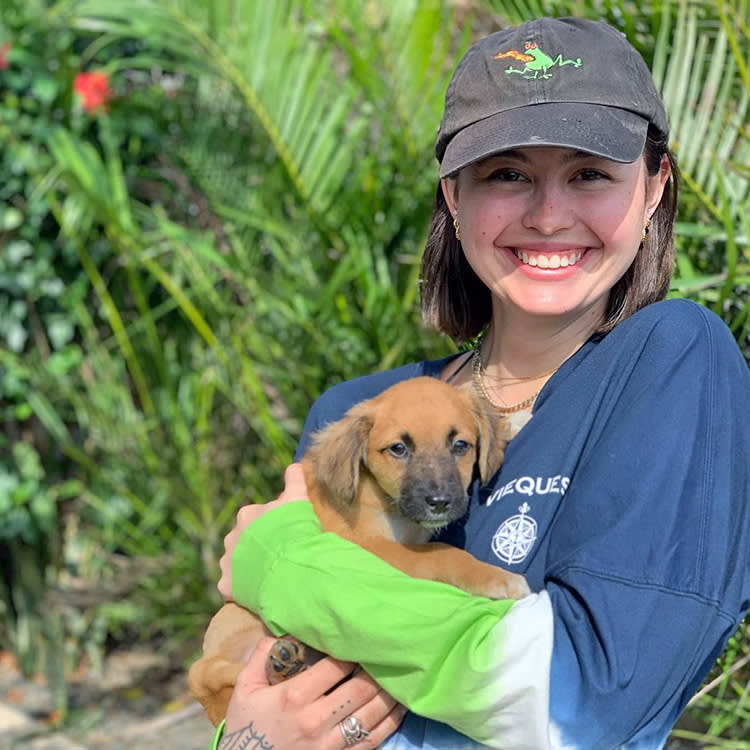 LivingThe Most Meaningful Hour of Your Vacation Might Be Spent Walking Shelter DogsLeila Torres · 5 min
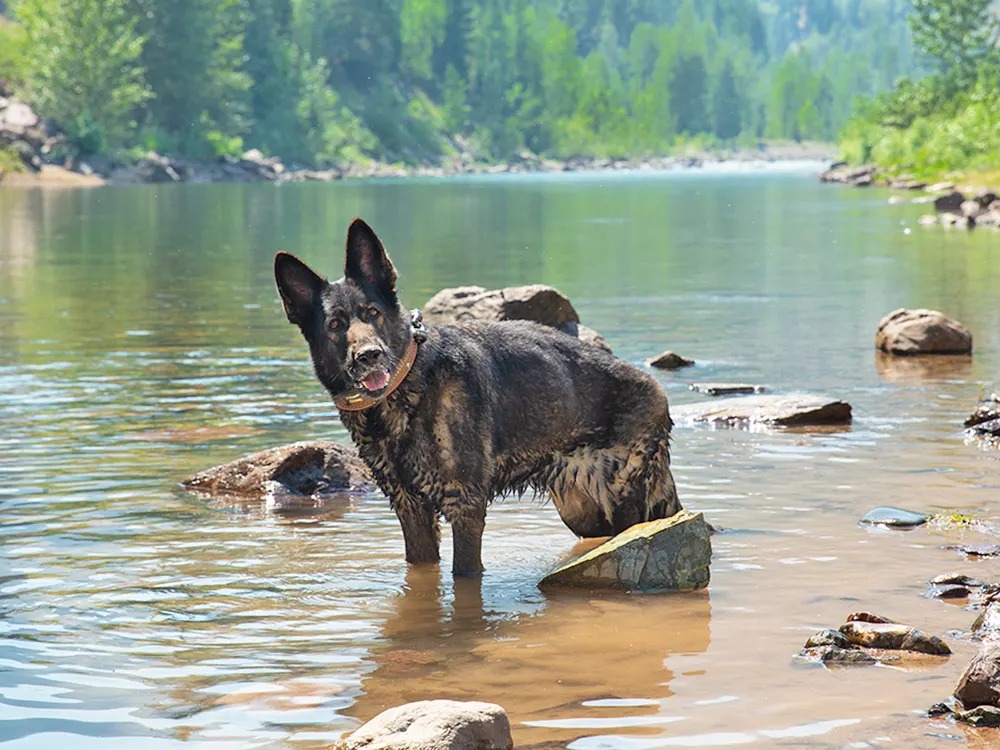 LivingBig Sky Is 2026's Hottest Trip. Here's How to Bring the Dog.Leila Torres · 8 min
 LivingBring the Dog: 11 NYC Date Spots Where Your Pup Is the Best WingmanSasha Ford · 5 min
 LivingDenver Is a Dog's Town. Here's How to Do It Right.Leila Torres · 9 min
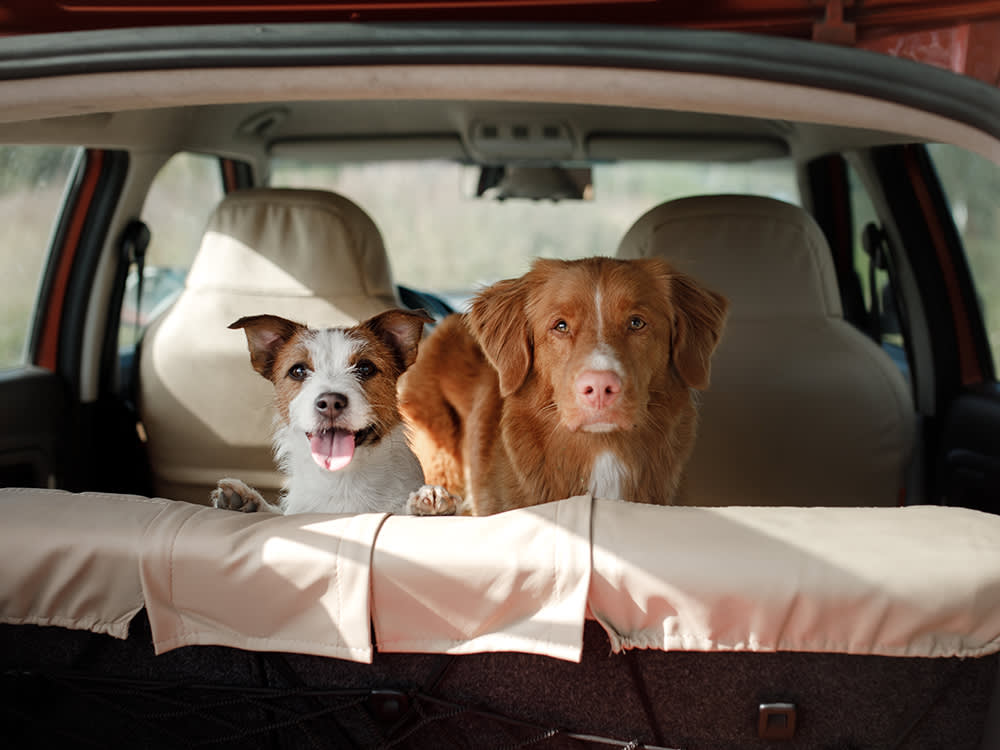 LivingThe Dog-Friendly Car Guide That Starts With Safety, Then Picks the RideMarcus Webb · 5 min
 LivingForget the 'Places She Won't Go' Lists. 12 Cheap Dates Your Dog Is Thrilled to TakeSasha Ford · 5 min