


Spinach for Dogs: One Compound Decides Whether It's a Superfood or a Skip
Spinach is packed with fiber, iron, and antioxidants, but it also carries oxalates, and that single fact splits dogs into two camps. Here's how to tell which camp your dog is in, and the cooking trick that changes the math.

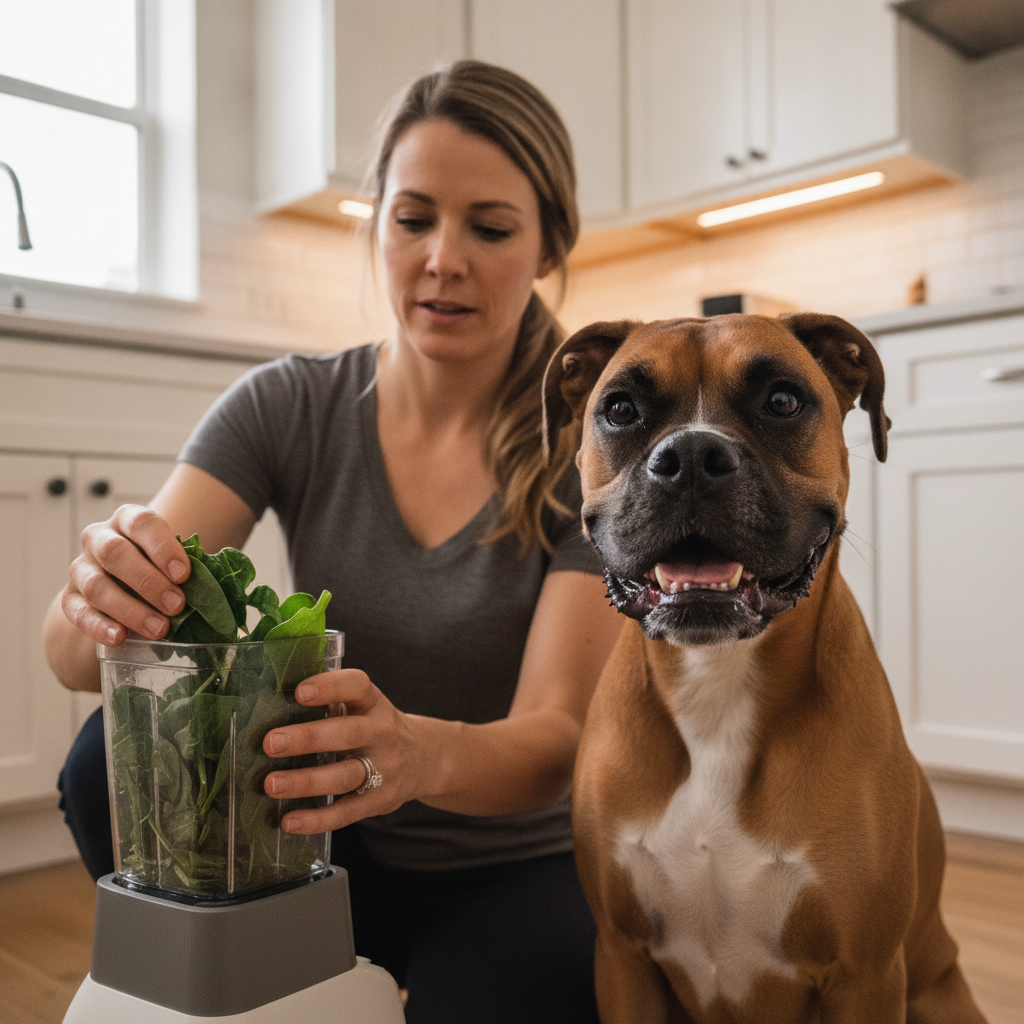
Almost every food gets a flat verdict: safe, or not. Spinach refuses to cooperate. For most dogs it is a nutrient-dense little bonus, fiber, iron, antioxidants, the works. For a specific group of dogs it is one of the worst leafy greens you could pick. The whole question turns on a single class of compounds called oxalates, and once you understand what they do, spinach stops being confusing. You will know whether your dog can have it, how much, and, the part almost no one mentions, how the way you cook it changes the answer.
The one compound that decides everything
Spinach contains oxalates, naturally occurring compounds that bind with calcium in the body and can crystallize into calcium oxalate, the material that forms one of the most common types of bladder and kidney stones in dogs. Spinach is not a little high in oxalates, it is one of the highest-oxalate foods on the plate, with published values ranging from several hundred to well over a thousand milligrams per 100 grams depending on the variety.
For a healthy dog with no stone history, this is a non-event. The body handles the small oxalate load from an occasional spinach snack without trouble. But for a dog that has already formed calcium oxalate crystals, bladder stones, or kidney stones, spinach feeds the precise process their whole diet is meant to shut down. For those dogs, spinach is not a “small snack in moderation” food, it is an avoid-entirely food, and it belongs on the same mental list as any other high-oxalate ingredient your vet has flagged.
The first thing I ask when a client wants to add spinach is whether the dog has ever had a urinary stone or crystal. If the answer is no, spinach is a lovely little nutrient boost and I am all for it. If the answer is yes, or even ‘we’re not sure,’ I steer them to a lower-oxalate green instead. It is one of the few foods where a dog’s history genuinely flips my advice.
The cooking trick that changes the math
Here is the piece that gets left out of nearly every “can dogs eat spinach” article: how you prepare spinach changes its oxalate content, sometimes dramatically.
Oxalates are water-soluble, which means they leach out of the leaves and into the cooking water. Boiling spinach and then discarding the water removes a large share of its oxalates, and steaming cuts them by roughly 40 percent. Raw spinach keeps them all. So the raw baby spinach a lot of people toss into a dog’s bowl for convenience is actually the highest-oxalate form there is.
This does not turn spinach into a safe food for a stone-forming dog, that dog should still skip it. But for a healthy dog, it means boiled-and-drained spinach is the gentler choice, and it means you should never lean on raw spinach as a routine add-in. Wash it, boil or steam it, drain it, chop it, and serve a small amount plain. That single habit meaningfully lowers the one real downside spinach carries.
What spinach actually gives a dog that can have it
For the majority of dogs in the clear, spinach earns its superfood billing:
- Fiber: Spinach is rich in insoluble fiber, which adds bulk to stool, supports regularity and a healthy gut microbiome, and creates fullness without adding meaningful calories, useful for a dog watching its weight.
- Iron, calcium, magnesium, and potassium: minerals that support red blood cell function and oxygen transport, bone and tooth health, muscle contraction, heart function, and nerve conduction.
- Vitamins A, K, E, B6, and folate: contributors to vision, blood clotting, cell protection, and metabolism.
- Antioxidants: plant compounds that help defend cells against oxidative damage, which may support healthy aging and help temper inflammation.
Keep the framing honest, though. A complete and balanced dog food already delivers a full daily dose of these nutrients. Spinach is a bonus on top, not a fix for anything missing, so there is no reason to overdo it chasing benefits your dog is already getting.
Serving it without the downside
For a healthy dog, a few rules keep spinach in the win column:
- Introduce it slowly. Spinach is very high in fiber, and a sudden load brings gas, bloating, or diarrhea. Start with a tiny portion and build up only if your dog tolerates it well.
- Cook and drain it to cut the oxalates and soften the leaves, boiling then discarding the water is best, steaming is a solid second.
- Serve it plain. Skip the garlic, onion, butter, and cream that spinach is usually cooked with, all of which range from unhelpful to outright toxic for dogs. Never share creamed or sautéed spinach off your own plate.
- Keep it occasional and small, under the 10-percent-of-daily-calories treat ceiling, with a complete dog food doing the real work.
If your dog grazes in the garden, note that while the spinach plant itself is non-toxic, the mulch, plastic markers, and any pesticides around it are not, so supervise accordingly.
Lower-oxalate greens for the dogs who should skip spinach
If your dog has a stone history, or you would simply rather not fuss with boiling, several greens and veggies give the fiber-and-nutrient upside with far less oxalate concern:
- Green beans: low-calorie, crunchy, and a training-treat favorite.
- Cucumber: mostly water, nearly calorie-free, and refreshing.
- Broccoli (in small amounts): fiber and vitamin C, kept to a few florets to avoid gas.
- Cabbage (cooked): another fiber source that is far lower in oxalates.
And the firm no-list stands regardless of oxalates: garlic, onions, and all alliums (toxic), chocolate (toxic), and corn cobs (a serious obstruction risk even though the kernels are not toxic).
The bottom line
Spinach is a genuine superfood for most dogs, fiber, minerals, vitamins, and antioxidants in a low-calorie package, and a small, plain, occasional serving is a nice bonus on a balanced diet. The catch is oxalates. Boiling or steaming and draining spinach strips out much of that oxalate load, so cook it rather than serving it raw, and introduce it slowly to spare your dog’s gut. The one hard line: if your dog has ever had calcium oxalate crystals or stones, skip spinach entirely and reach for a lower-oxalate green instead.
References
- Mitchell, Tanecia, et al. “Dietary Oxalate and Kidney Stone Formation.” American Journal of Physiology-Renal Physiology, vol. 316, no. 3, 2019, pp. F409-F413. https://www.ncbi.nlm.nih.gov/pmc/articles/PMC6459305/
- Lyu, Zhaojun, et al. “Effect of cooking methods on the oxalate content of vegetables.” Reviewed in food-science literature on oxalate reduction by boiling and steaming. https://pubmed.ncbi.nlm.nih.gov/
- Merck Veterinary Manual. “Urolithiasis in Small Animals.” https://www.merckvetmanual.com/urinary-system/noninfectious-diseases-of-the-urinary-system-in-small-animals/urolithiasis-in-small-animals
- University of Minnesota Urolith Center. “Calcium Oxalate Urolith Treatment and Prevention.” https://vetmed.umn.edu/urolith-center
Common questions
How much spinach can a dog eat?
A small snack, think a tablespoon or two of chopped leaves for a medium dog, mixed into food. Spinach is very high in fiber, so too much at once causes gas, bloating, or loose stool. Introduce it gradually.
Does cooking spinach make it safer for dogs?
It lowers the oxalate load. Boiling leaches out a large share of the oxalates into the cooking water (which you discard), and steaming reduces them by roughly 40 percent. Cooking will not make spinach safe for a dog with a stone history, but for a healthy dog, boiled-and-drained spinach is the gentler option.
Which dogs should never eat spinach?
Dogs that have had calcium oxalate crystals, bladder stones, or kidney stones. For them, high-oxalate foods like spinach can feed the exact problem their diet is trying to prevent, so it is best avoided entirely unless your vet says otherwise.
Not a substitute for your vet. Our guidance is educational. For urgent symptoms, contact a vet or emergency clinic right away. Editorial standards
Dr. Mehta is a board-certified veterinary nutritionist who evaluates pet food formulations, ingredient quality, and the science behind dietary trends. He writes and reviews all nutrition content at The Pet Times, including our food rankings and feeding guides.
Meet our experts ↗Keep reading
 FoodPeas Are a Fine Snack for Dogs. As a Diet Staple, It's Complicated.Dr. Ravi Mehta · 7 min
 FoodCan Dogs Eat Black Pepper? Why It's Safe to Skip the ShakerDr. Ravi Mehta · 5 min
 FoodBroccoli for Dogs: Great Snack, Until You Hit the 10% LineDr. Lena Park · 5 min
 Food9 Human Superfoods Worth Adding to Your New Dog's BowlLeila Torres · 6 min
 FoodProduce Is a Treat, Not a Topping: 11 Fruits and Veggies, Served RightDr. Mara Chen · 9 min
 FoodBaby Food Is a Sick-Day Tool for Dogs, Not a Treat. Read the Jar Like OneDr. Mara Chen · 6 min