


So You Want to Work With Animals. It's Harder Than the Dream
The animal-welfare field is more professional and better-paid than its reputation suggests, and tougher on the people in it. An honest guide to getting in with your eyes open.

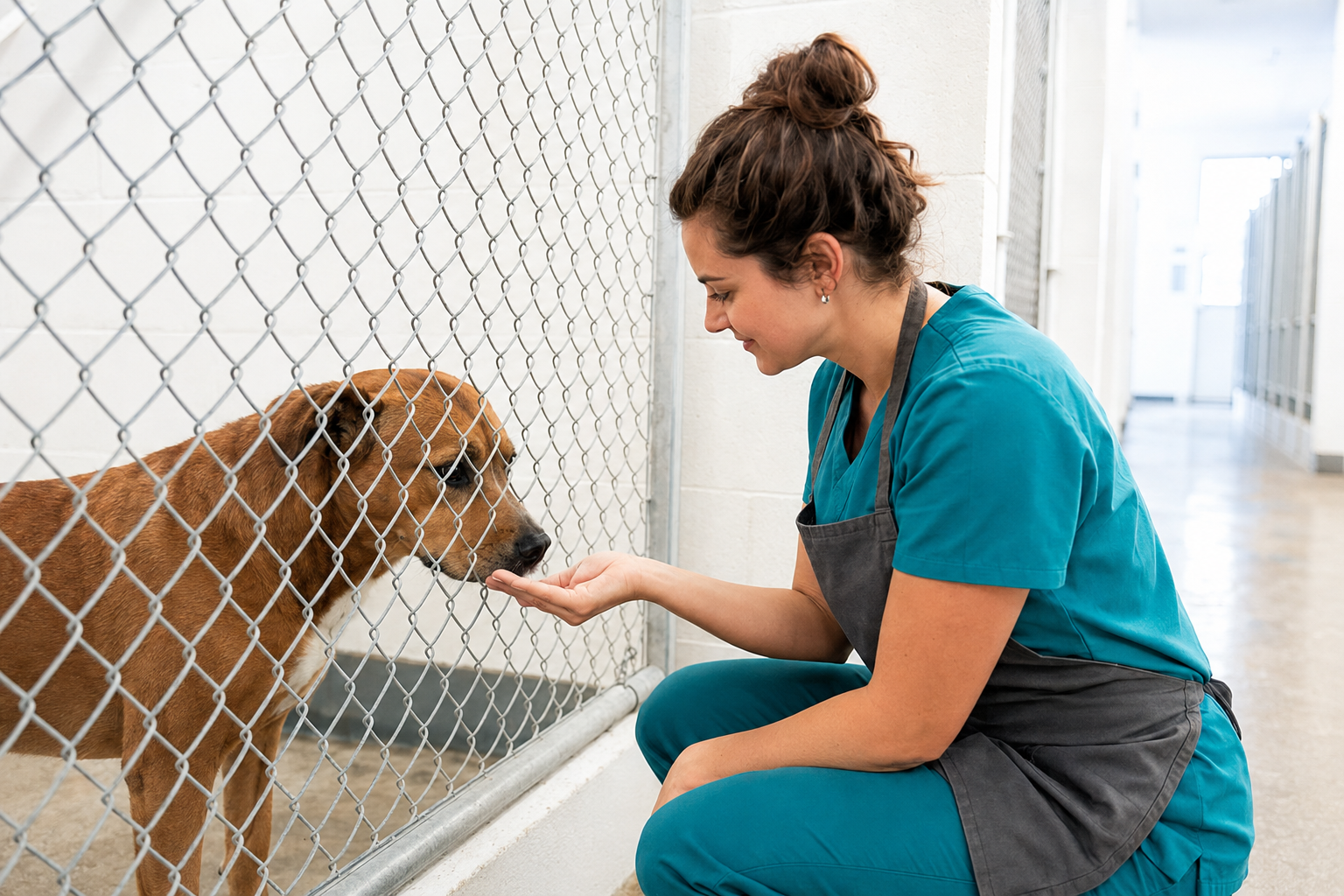
Maybe you were the kid who made an elaborate handwritten case for a puppy, complete with a chore contract. Maybe you are mid-career and quietly wondering whether the spreadsheet job is really it. Either way, the dream of working with animals comes with a reputation problem in both directions. People imagine it is either an unserious path that cannot pay a living, or a blissful daily round of puppy cuddles. Both pictures are wrong.
The honest version is more interesting. Animal welfare has professionalized into a field with real careers, real salaries, and real benefits, and at the same time it asks more of the people in it than almost any outsider expects. The smart move is to walk in understanding both halves. Here is the guide one animal person would give another.
Experience beats the diploma (with a few exceptions)
The instinct is to assume you need an animal-related degree. For most of this field, you do not. Unless you are aiming at veterinary medicine, veterinary technology, biology, or a similar science track, careers with animals are built on experience far more than credentials. A background in animal science, behavior, conservation biology, or public policy helps, but hands-on work carries you further than any diploma alone.
That is not a throwaway line. Even someone with an animal-science degree and coursework in animal behavior often finds that the real skills, how to safely handle a frightened dog, how to read stress signals, how to work fast in a chaotic shelter, only come together on the job. So if you can volunteer or intern in the corner of the field that interests you, do it. You will find out whether you actually enjoy the day-to-day, and future employers will take that experience seriously.
One caution before you enroll in anything: some animal-welfare jobs still struggle to pay above minimum wage, and a multi-year degree is a big bet. Before committing, look hard at where that degree actually leads and whether the roles you want require it.
The field is far wider than “shelter or vet”
A few decades ago, most animal work was volunteer-based: weekends at the local shelter, helping a wildlife rehabilitator. The field has expanded enormously since. Solving the hard problems, keeping pets with struggling families, responding to climate change’s effects on animals, building more humane food systems, takes committed professionals in it for the long haul.
A useful way to narrow your search is to start with the species you care about most.
If your heart is with companion animals, the options include shelter and rescue work, animal behavior consulting, and national programs focused on keeping pets in their homes. Disaster response teams also need trained people who can manage animal evacuations in emergencies.
If medicine appeals to you, the timing is good: the United States is facing a genuine shortage of veterinarians and veterinary technicians, so the field urgently needs more people on the clinical side.
If wildlife pulls at you, there is rehabilitation of native species and work at ethically run sanctuaries that shelter animals rescued from roadside zoos or the exotic pet trade. And if farm animals are your cause, a background in food service or education can open doors to helping institutions add more plant-based options.
Then there is the part most people miss entirely: animal nonprofits run on the same functions as any organization. Graphic designers, writers, attorneys, accountants, IT professionals, and fundraisers are valuable across the sector. People who started in education or law often find natural homes in advocacy, working on issues like puppy-mill reform or endangered-species conservation. You do not have to be hands-on with animals to spend your career helping them.
The part nobody puts in the brochure
Here is where the puppy-cuddle fantasy needs a reality check. It is not all petting puppies and kittens. It is not even mostly that.
Animal welfare is meaningful, fulfilling work, and it also carries one of the highest rates of burnout and compassion fatigue of any profession, along with elevated rates of mental-health strain. New people often arrive with enormous enthusiasm and find themselves depleted within a few years. Before committing, spend real time in the actual environment you are considering, not the idealized one.
If you do go in, the protective habit to build early is separating work life from home life. That boundary is what lets people keep showing up with genuine care over a long career rather than flaming out. And if you feel overwhelmed, ask for help. That is not weakness; it is how people stay in the field.
The people who last in this work are not the ones who care the least, they’re the ones who learned to protect their own reserves. Compassion is the renewable resource this whole field runs on, and you have to refill it on purpose.
You can actually make a living at it
The idea that animal welfare cannot support a real career is outdated. Full-time positions increasingly come with livable wages, health benefits, 401(k) matching, multiple weeks of paid time off, and, in many roles, remote-work options. Entry-level jobs may still start at or near minimum wage, but pathways into well-compensated positions genuinely exist.
So do not give up on leaving a corporate role that feels hollow because you assume the alternative means poverty. People make the jump, build real careers, and some of them even manage to feed their own pets the expensive food.
References
- U.S. Bureau of Labor Statistics, “Veterinarians” and “Veterinary Technologists and Technicians” — outlook and the workforce shortage.
- American Veterinary Medical Association, “Wellbeing and peer support resources” — on burnout and mental health in animal-care work.
Claire Sutton writes about life with pets, from the first days home to the small daily routines that make a household work. Her reporting spans people-and-pet relationships, training basics, and the practical side of bringing a new animal into the family.
Meet our experts ↗Keep reading
 LivingCompetitive Dog Surfing Is Real, and the Dogs Are Better at It Than You'd ThinkTom Hadley · 5 min
 LivingWant a Neighborhood Dog Park? Stop Talking About Your Dog.James Okafor · 8 min
 LivingThis California Bill Could Force Landlords to Finally Allow PetsMarcus Webb · 6 min
 LivingThe Unlikely Shelter Marketing That Works: Kids With PaintbrushesLeila Torres · 5 min
 LivingThe Photographer Who Kept Finding Cats Inside Refugees' CoatsNina Vasquez · 6 min
 Living10 Free Ways to Help Animal Shelters, Ranked by What They Need MostNina Vasquez · 5 min