


The Unlikely Shelter Marketing That Works: Kids With Paintbrushes
Three programs hand children a paintbrush and a shelter animal's story. The portraits get overlooked pets noticed, and quietly teach kids how to handle big feelings.
Most shelter advocacy is built for adults. You foster, you donate, you volunteer, and every one of those doors has a liability form and an age limit on it. Kids who love animals mostly get told to wait until they are older.
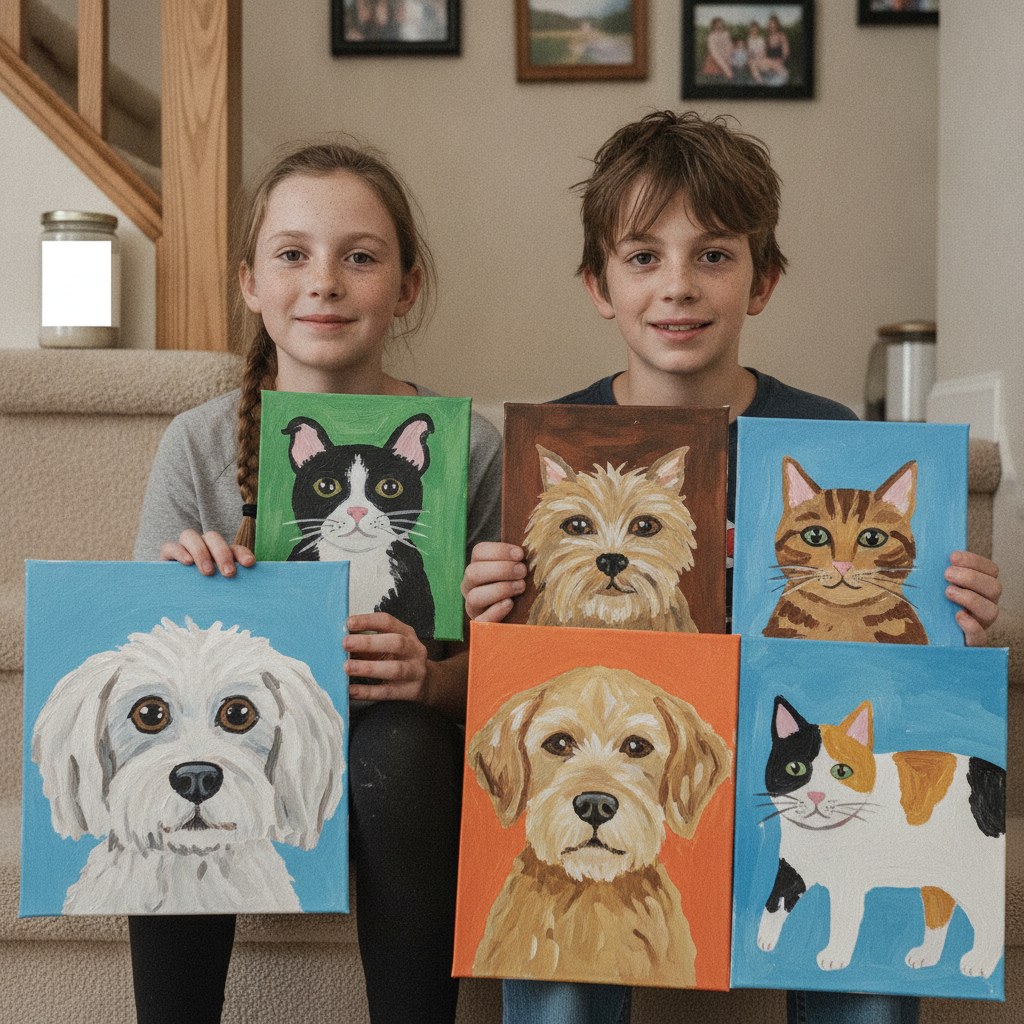
A handful of programs decided that was a waste of some of the most empathetic people in the building. Their fix is disarmingly simple: give a child a shelter animal’s photo and story, hand them paint, and let them make a portrait. The paintings do two jobs at once. They get long-overlooked animals seen, and they give kids a real, low-risk way to practice caring about something outside themselves. Here is how three of them work, and why the idea keeps spreading.
Why a child’s painting outsells a shelter kennel card
An adoptable dog’s standard shelter photo is often the worst thing that ever happened to their chances: fluorescent light, a wire door, a frightened animal. A kid’s painting flips that. It reframes the same dog through obvious affection, in bright color, with a name and a personality attached. People stop for it in a way they do not stop for a kennel card, and that attention is the whole ballgame for animals who have been passed over for months.
The programs lean into exactly that. The children learn that shelter animals, like people, are individuals with their own likes, quirks, and personalities, and the finished art carries that message to the public through a child’s obviously caring eye.
The Empathy Pawject, Calgary
Artist and art educator Rebecca Carruthers Green built the Empathy Pawject in Calgary, Alberta, around compassion as much as craft. Kids study a specific adoptable animal, then paint them, and the portraits go on public display, including in a local library, so visitors meet shelter pets through the compassionate lens of a child. One 12-year-old artist described loving the exhibit precisely because the more people who saw the dogs, the better the odds someone would take one home.
The program has real hardware to show for it, too: it was awarded the Queen’s Platinum Jubilee Medal in 2022.
Sketch-a-Pet at The Animal Foundation, Las Vegas
The Animal Foundation in Las Vegas already ran a Book Buddies program, where kids read aloud to shelter animals, and the Sketch-a-Pet program grew out of that success. Volunteer coordinator Andrew Findley points out that the benefit runs both directions: a child sitting quietly, talking and sketching, actually helps the animals decompress and get comfortable being around people again, which makes them more adoptable.
The animals are not the only ones who learn something. Findley recalls a girl asking whether guinea pigs need to live with other guinea pigs, and hearing that yes, they are social and should never be housed alone, the kind of small, sticky lesson that reshapes how a kid treats animals for life.
Rescue Advocates of Long Island
In 2015, the Buonomo family founded Rescue Advocates of Long Island (RALI) and turned their own kids loose on the project. Over the years, the Buonomo children have painted roughly 400 portraits of adoptable dogs and cats, with a deliberate focus on the “long-timers,” the animals who have waited months, sometimes far longer, for a home. The paintings hang in the shelter’s lobby and greet everyone who walks in.
The commitment sticks. Brianne Buonomo, now 15, has been part of RALI for a decade and is still visibly excited about the work, which is maybe the clearest evidence that this kind of early advocacy takes root.
The part that helps the kids
The animals get the headline, but the quieter result is what the work does for the children. Painting a specific, real, still-waiting animal asks a kid to sit with some genuinely complicated feelings, hope, worry, and the knowledge that not every story ends well. Program leaders describe children who form deep attachments to their subject, ask anxiously whether the dog will find a home, and learn to channel that concern rather than avoid it. That is emotional skill-building disguised as an art class.
What newer research adds
This is not just feel-good framing. Research on humane education, the broad category these programs fall into, consistently links structured, hands-on lessons about caring for animals to measurable gains in children’s empathy and prosocial behavior toward both animals and people. The paintings are the visible product. The empathy is the part that lasts, and the evidence suggests it genuinely does.
If you want to help, most of these programs run on small donations that cover art supplies and outreach, and several share simple at-home activities, from coloring pages to adoption flyers, so a kid can start advocating from the kitchen table.
References
- The Animal Foundation (Las Vegas), programs. https://animalfoundation.com/
- Humane Society of the United States, “Humane education.” https://humanepro.org/page/humane-education
Leila Torres leads our Living coverage, from home life and travel to the products and rescue stories that come with sharing a life with animals. She edits and writes across the section, with a soft spot for pieces about the bond between people and their pets.
Meet our experts ↗Keep reading
 LivingA Dam Broke and the Dogs Went to the Rooftops. Three Years Later, the Water Is Still the Story.Jordan Ellis · 8 min
 LivingHalf of Survivors Won't Leave Without the Dog. Only 12% of Shelters Take One.Nina Vasquez · 9 min
 LivingYou Don't Have to Adopt a Dog to Get the BenefitClaire Sutton · 6 min
 LivingPeople Don't Surrender Pets Because They Stopped Loving ThemLeila Torres · 8 min
 LivingShe's Fostering 23 Dogs. Nobody Posts the Rest of It.Leila Torres · 6 min
 LivingBrooklyn's Cat Cafe Flipped the Model: It's a Rescue Clinic With a Cafe AttachedSara Lim · 6 min