


Brooklyn's Cat Cafe Flipped the Model: It's a Rescue Clinic With a Cafe Attached
Most cat cafes are coffee shops that happen to have cats. The Brooklyn Cat Cafe is the opposite, a working rescue and surgical clinic with a charming front room, and that inversion is exactly why it adopts out cats by the thousand. Inside the only nonprofit of its kind in New York State.

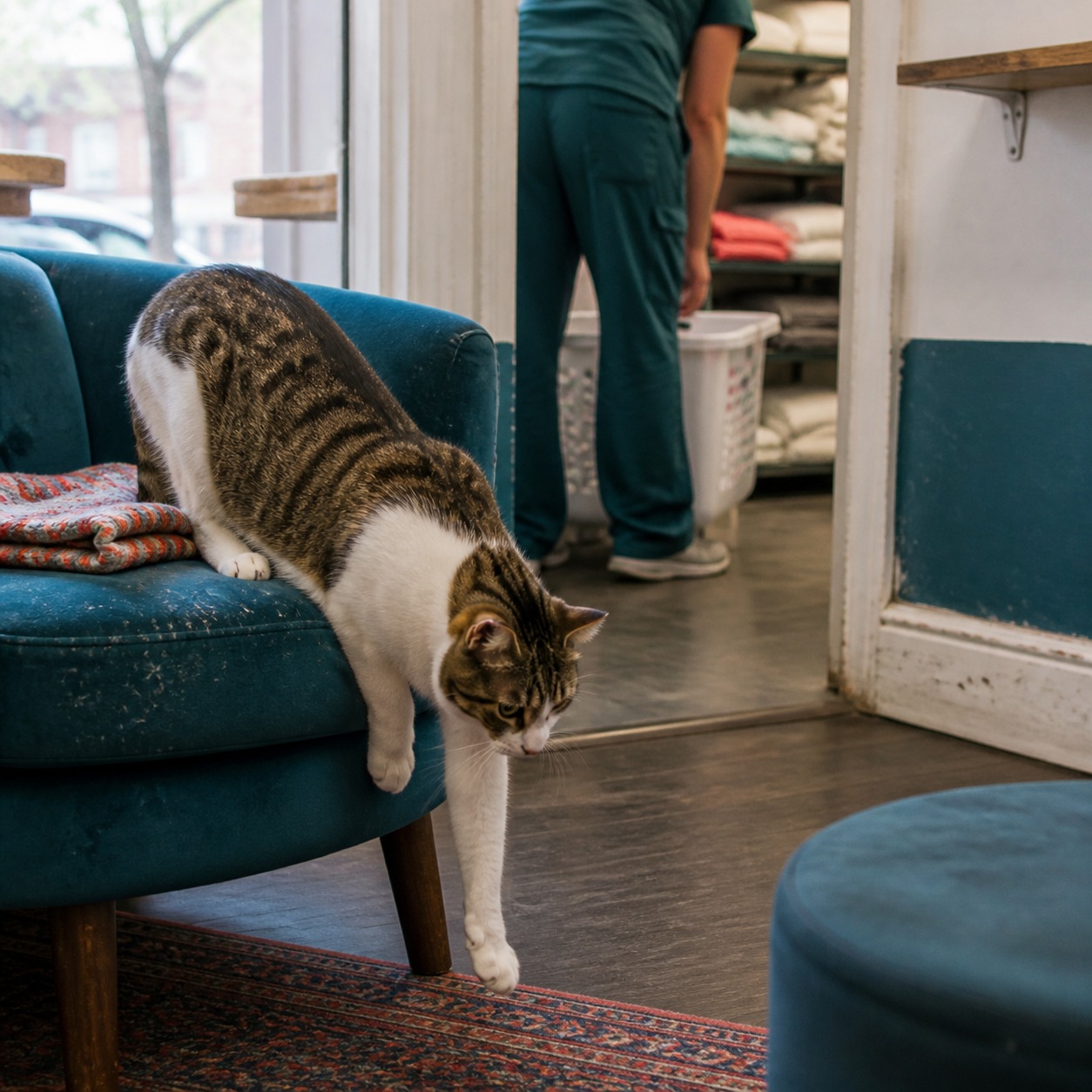
From the sidewalk, the Brooklyn Cat Cafe looks like a movie set. It sits on the ground floor of a multimillion-dollar red brick townhouse on a tree-lined block in Brooklyn Heights, all big front windows, warm light, plush armchairs, and unbothered cats waiting to be adored. It is the kind of charm that gets a place mistaken for a coffee shop with a feline gimmick.
That impression gets the place exactly backward, and the reversal is the whole point. The cute front room is the smallest part of the operation. Underneath and behind it runs a full rescue pipeline, complete with a surgical clinic in the basement, and the cafe is merely where that pipeline ends. Understand it as a rescue clinic that happens to have a cafe, rather than a cafe that happens to have cats, and its numbers stop looking surprising and start looking inevitable.
A rescue operation first, a cafe second
The scale is real. Run by the all-volunteer nonprofit Brooklyn Bridge Animal Welfare Coalition, the cafe facilitated 1,200 cat adoptions in 2021 at the height of the pandemic, making it the most successful nonprofit cat adoption organization in the state. It placed roughly another 900 the next year. It operates an active trap-neuter-return (TNR) program and leans on a network of hundreds of fosters who socialize skittish cats until they are ready for homes.
The engine for all of that is the rescue clinic that opened in 2020 in the townhouse basement, which performs thousands of exams and spay/neuter surgeries a year and serves as a lifeline for local rescuers and low-income pet owners.
“We do probably 30 to 40 spay/neuters every week,” says Desiree Pan, the cafe’s director of operations. The in-house clinic also covers vaccinations, routine exams, and a limited surgical menu up to and including eye removals, with dental work next on the list because farming it out is so expensive.
That clinic is what separates this place from a themed hangout. The visible cats are, as Pan puts it, “the last stop on the train.”
“There’s a whole lot that goes on before the cats get to be adoptable in here,” she says. Between rescue and the adoption floor sit vet visits, treatment, and behavioral assessments, a pipeline that runs a month or two per cat and longer for kittens or medical cases. The lounge full of adoptables is the finished product of that invisible assembly line.
From finance to the front lines
Steady money is the perennial problem for any animal welfare nonprofit, which is part of why the cafe is fortunate to have Pan running it. She came from management consulting in banking and finance and started out as a volunteer who pitched in during slow stretches.
When the pandemic forced the cafe’s doors shut, the animals still lived there and still needed care, she says, and she happened to live within walking distance. So she started showing up five or six days a week to look after them.
She began coordinating volunteers, and when the cafe reopened she took a full-time staff role. She has not looked back, even though the pay does not compare.
“I love cats and I really believe in what we’re doing,” she says. “It’s meaningful work. It doesn’t pay like finance, but it’s much more rewarding. I know why I’m here and why it matters.”
The cafe is the public face of an organization founded by Anne Levin, executive director of the Brooklyn Bridge Animal Welfare Coalition, whose open-door instinct shapes the place. It is not only cats: rabbits, rats, and guinea pigs live there too, all up for adoption or a cuddle.
“We’ve always had small animals,” Pan says. Founder Anne Levin’s soft spot is species-agnostic: when the city shelter calls about animals needing placement, whatever they are, the answer tends to be yes.
The welfare philosophy hiding in the details
Two of the cafe’s quirks look like charming trivia but are really windows into how it thinks about animal welfare.
The first is the rats. They get a bad reputation, especially in New York, but the cafe’s rats are gentle, smart, and affectionate enough to help raise cats.
Orphaned neonatal kittens get placed with the rats, Pan explains, and the rats take up the grooming and warming a mother cat would have done. One kitten with feline leukemia, barred from all cat company by her contagious diagnosis, was paired with a white rat instead, and thrived.
The second is the cafe’s insistence on adopting many animals out in pairs rather than singly. It sounds like an upsell. It is actually a screening philosophy.
“People often come in wanting to adopt a single cat, but cats that prefer to be solo, by nature, aren’t the type that do well in this environment,” Pan says.
So the cats that flourish at the cafe tend to be the social ones, and the staff make a point of introducing adopters to a chosen cat’s bonded best friend, presenting the two as a package deal. The result is fewer returned, lonely, under-stimulated cats down the line, which is the kind of long-game thinking that distinguishes a rescue from a pet store.
How it stays open
Welcoming the public is both mission and business model. The cafe draws 4,000 to 5,000 visitors a month, many of them locals who return just to hang out, and admission runs about $12 a head. Beyond the door fee, the cafe stitches together income from merch, cat toys, and treats visitors can feed the residents, plus grants, adoption donations of roughly $150 per cat, kitten parties, and newer experiments.
The cafe side now sells drinks and packaged snacks, since health rules bar preparing food where cats live, Pan says. Corporate sponsorships are under discussion, the upstairs apartment is becoming a private-event space, and even today the whole cafe rents out for around $600 an hour.
The challenges are mostly the kind that come with growth.
“It’s growing pains, mostly,” Pan says. “Getting repeatable processes and creating something more controlled and consistent.”
And there are always more animals in need, especially as kitten season arrives each spring. The cafe has been expanding its paid staff but still runs largely on roughly 200 volunteers, a reliable core supplemented by drop-in helpers, which can make staffing weekends and special events a scramble. Among the events it has revived is a feline film festival, first held in 2019, for which the cafe solicits 15-minute student shorts about cats, recruits film-school professors to judge, and hands out prizes at an awards night.
Visiting
The Brooklyn Cat Cafe is at 76 Montague Street in Brooklyn Heights and is open to the public several days a week; check its site for current hours, admission, and adoptable animals. Whether you are looking to adopt, to volunteer, or just to spend an afternoon with a roomful of cats, every visit feeds the rescue pipeline that makes the place run.
References
Sara Lim leads our Product Picks coverage, testing and comparing the things pets and their owners actually use. From everyday essentials to home-and-style finds, she focuses on honest, useful recommendations rather than hype.
Meet our experts ↗Keep reading
 LivingYour Team's Most Valuable Rookie This Year Might Be a Shelter DogJames Okafor · 8 min
 LivingPeople Don't Surrender Pets Because They Stopped Loving ThemLeila Torres · 8 min
 LivingA Dam Broke and the Dogs Went to the Rooftops. Three Years Later, the Water Is Still the Story.Jordan Ellis · 8 min
 LivingHalf of Survivors Won't Leave Without the Dog. Only 12% of Shelters Take One.Nina Vasquez · 9 min
 LivingThe Unlikely Shelter Marketing That Works: Kids With PaintbrushesLeila Torres · 5 min
 LivingShe Rented a House in Tucson and Inherited 30 Cats. The Internet Did the Rest.Nina Vasquez · 6 min