


This California Bill Could Force Landlords to Finally Allow Pets
Proposed legislation from Assemblymember Matt Haney would end blanket 'no pets' policies in California rentals. Here is what the bill would do and why advocates say it is overdue.

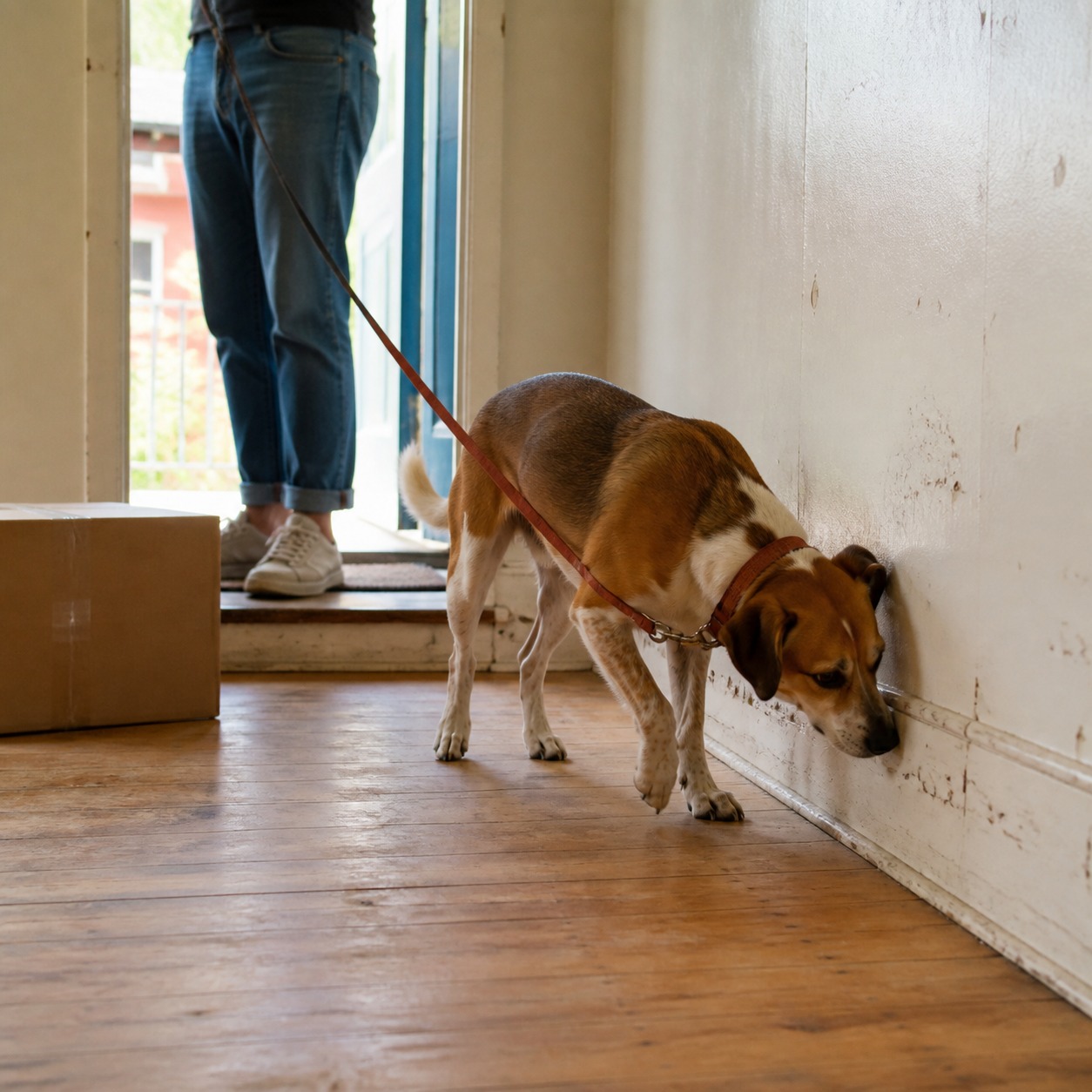
Pet parents know how tricky the housing hunt can be. Just when you think you have found the perfect spot, you read the fine print and see the dreaded “No pets allowed.” Moving in without your favorite roommate is not an option, and they cannot exactly afford their own studio. So you are back to square one. But for Californians, there is some good news: a newly proposed bill could prohibit landlords from forbidding pets.
This is one of those policy fights where the headline (“California might force landlords to take pets”) and the reality (a bill that got steadily narrowed as the landlord lobby pushed back) tell two different stories. Both are worth understanding, because the gap between them is exactly where renters with pets actually live. Here is what the bill set out to do, what it became, and why advocates still call even the watered-down version a step forward.
Promising New Legislation
The bill, authored by Assemblymember Matt Haney, would put an end to blanket pet restrictions.
“I’ve heard from many constituents about the incredible hurdles and challenges they faced in finding homes simply because they own pets,” Haney told the Los Angeles Times. “They’ve been repeatedly denied because they have a dog — even if their dog is an emotional support animal — and they need accommodations.”
According to the Humane Society of the United States, 72 percent of renters are pet parents, and three million pet parents live in Los Angeles County alone. Yet when Haney’s staff searched Zillow listings posted over the course of a week, they found that only 26 percent of apartments in LA were pet-friendly.
“I’m a huge supporter of building access to housing, and this is a housing issue,” Haney told the LA Times.
The bill is currently focused on domesticated companion animals, including dogs and cats, and does not apply to animals kept for commercial purposes. The legislation is still in early stages, with a hearing possibly scheduled for March 9.
Opponents cite concerns about high-density housing for dogs without backyards and potential allergy issues. Debra Carlton, executive vice president of State Government Affairs at the California Apartment Association, suggests a higher security deposit for pet parents as a possible middle ground.
“We understand the need for pet-friendly housing but believe a more balanced approach is necessary,” she said in a statement.
How the Bill Could Help Californians
Pet restrictions are not just annoying. They can be genuinely prohibitive and sometimes discriminatory.
“Animal policies significantly affect people with disabilities who need assistance animals in order to accommodate disability related needs,” says Julia Howard-Gibbon, supervising attorney at Fair Housing Advocates of Northern California (FHANC).
Tenants can request accommodations based on a disability, but that process is rarely straightforward.
“Unless they come to [our office], tenants often don’t even know this is an option. And even when they do, landlords often push back on these requests or deliberately make it difficult for tenants to access the accommodations they need,” she says.
In 2021, FHANC launched an investigation to determine whether landlords were granting accommodations. Testers posing as potential tenants called 111 properties to ask whether a “no pets” policy could be adjusted for a necessary assistance animal. The majority of landlords said no, and the group ultimately found evidence of discrimination at 55 percent of the properties.
“This shows that even though the law currently requires landlords to make exceptions to no pet policies for assistance animals, many landlords are not complying with that law, demonstrating a need for the proposed bill,” Howard-Gibbon says.
Pet restrictions also open the door to breed-specific policies, which unfairly target Pit Bull-type dogs based on disproven stereotypes and can discourage people from adopting them out of fear of losing housing. And most obviously, finding housing is hard for anyone. Doing away with “no pet” policies could simplify the search for millions of Californians.
The HSUS “firmly believes that household pets are an integral part of our families. Housing is a fundamental right that should not be limited because tenants are forced to choose between keeping their pet or putting a roof over their head,” said Jenny Berg, the organization’s California state director.
What the bill became
The proposal that started as Haney’s pitch was formalized as Assembly Bill 2216, and its journey through the legislature is a useful lesson in how these fights actually go. The California Apartment Association and allied landlord groups lobbied hard, and the bill that passed the Assembly in May 2024, on a 43-to-8 vote, was a noticeably narrower thing than the one introduced.
The core protection survived: under the amended bill, a landlord could not bar a tenant from keeping a common household pet without reasonable justification, and could not ask applicants about pets before approving their application, removing the quiet screen that lets a “no pets” preference filter people out before they ever get a fair look. But the teeth were filed down. The version that advanced exempted smaller buildings, those with roughly 15 or fewer units, and, crucially, dropped the original ban on pet deposits and pet fees, so landlords kept the ability to charge extra for a pet. The blanket “no pets” door was being pried open, but landlords held onto the lever that makes pet-friendly housing more expensive.
For renters, the takeaway is mixed but real. A California pet owner still cannot count on a deposit-free apartment, and anyone in a small building may be outside the protection entirely. What changed is the default posture: the burden shifts toward landlords needing a reason to refuse, rather than tenants needing to win permission. Advocates frame the compromise as the price of getting anything passed at all, and the foot in the door that future legislation can widen.
Why even a narrowed bill matters
The diluted version still moves the needle on the problems advocates pointed to from the start. It chips at the up-front screening that disproportionately blocks people with disabilities who rely on assistance animals, it narrows the cover that breed-specific “no pit bull” lease clauses hide behind, and it makes the single hardest part of pet ownership, finding a home that will take you and your animal, marginally less brutal for millions of California renters. None of that is the sweeping mandate the early headlines promised. All of it is more than renters with pets had before.
References
- California Legislature. “AB-2216 Tenancy: Common Household Pets.” https://leginfo.legislature.ca.gov/faces/billNavClient.xhtml?bill_id=202320240AB2216. Accessed June 2026.
- Apartment Association of Greater Los Angeles. “Pet Bill Passes Assembly and Moves onto Senate with Major Overhaul.” https://members.aagla.org/news/pet-bill-passes-assembly-and-moves-onto-senate-with-major-overhaul. Accessed June 2026.
- Humane World for Animals. “How Landlords Can Boost Rental Income by Allowing Pets.” https://www.humaneworld.org/en/resources/how-landlords-can-boost-rental. Accessed June 2026.
- Los Angeles County Department of Public Health, Veterinary Public Health. “Pets in Rental Housing Guidebook.” https://publichealth.lacounty.gov/vet/docs/PetsInRentalHousingGuidebook.pdf. Accessed June 2026.
Marcus Webb writes about the gear, gadgets, and everyday choices that make life with a pet easier. His coverage runs from product picks to training and the causes worth paying attention to, always with an eye on what actually earns a place in your home.
Meet our experts ↗Keep reading
 LivingThe Photographer Who Kept Finding Cats Inside Refugees' CoatsNina Vasquez · 6 min
 LivingThe Vet at the Ukrainian Border Treats Animals to Reach the People Holding ThemDr. Amara Solis · 6 min
 LivingYour Team's Most Valuable Rookie This Year Might Be a Shelter DogJames Okafor · 8 min
 LivingA Lawyer Is Suing the IRS to Claim Her Golden Retriever as a DependentNina Vasquez · 4 min
 LivingTom Brady Cloned His Dog for $50,000. Most of Gen Z Says They'd Do It Too.Jordan Ellis · 9 min
 LivingIf You Died Tomorrow, Who Feeds the Dog? Put It in Writing.Leila Torres · 6 min