


Your Dog's Canoe Problem Isn't the Water. It's the Boredom.
Most dogs can handle a lake. What sinks a canoe trip is a dog who can't sit still for an hour. Here's how to pick the right water, fit a real life jacket, and read the boredom before it capsizes you.

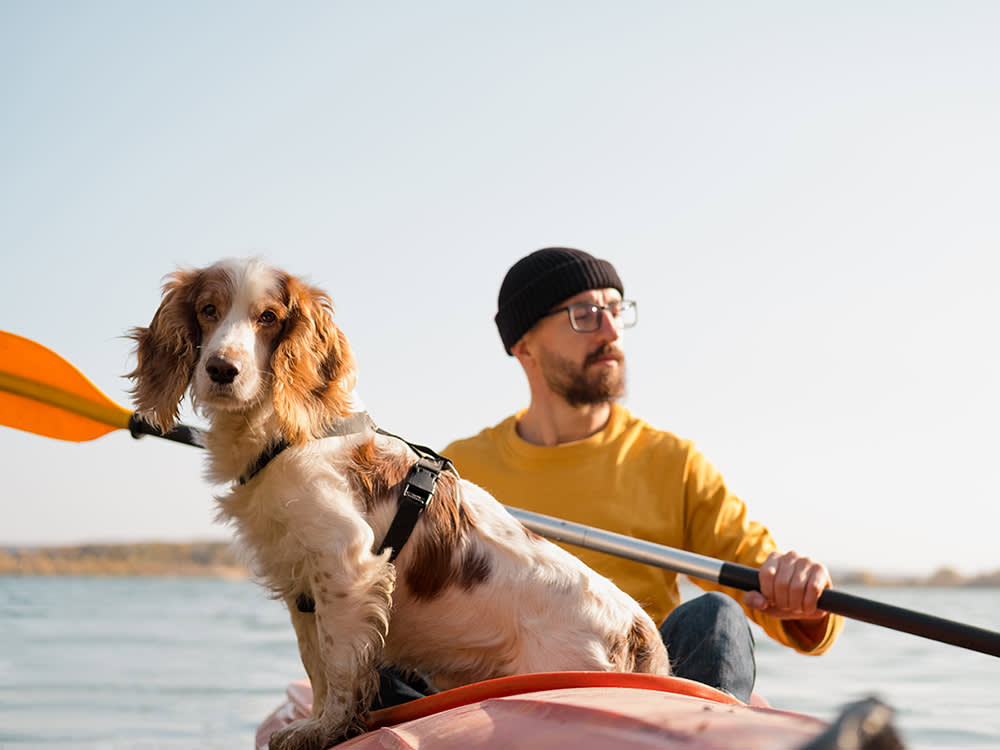
Here is the thing nobody tells you before your first paddle with a dog: the water is rarely the problem. Most dogs manage a calm lake fine. What ends canoe trips early is stillness. A canoe asks a dog to sit in a wobbly, tippy container, do nothing, watch the shoreline slide by, and stay calm for an hour or more while you paddle. That is a big ask for an animal built to move, sniff, and react. So before you worry about whether your dog can swim, ask the harder question: can your dog be bored, in a rocking boat, without trying to reorganize the seating?
Get that right and the rest is logistics. Get it wrong and no amount of gear saves the afternoon.
Is your dog actually a canoe dog?
Some dogs are natural passengers. They settle, they watch, they nap. Others treat a canoe like a moving problem to solve, and a 40-pound dog deciding to stand up and pivot at the wrong moment is how calm water becomes a swim you did not plan.
Be honest about your specific dog, not the idea of a canoe dog. Are they comfortable around water? Can they tolerate a surface that shifts under them? Will they hold a down-stay when there is a duck to look at? If you are unsure, you do not need a lake to find out. Set the canoe on the grass in your yard, get your dog in, feed a few treats, and see whether they can settle in a boat that is not even moving yet. That dry-land rehearsal tells you more than any breed generalization will.
Start small on the water, too. Your first outing should be a short, flat, close-to-home paddle on lazy water, not a backcountry expedition. Most dogs will hop in out of curiosity, especially with treats involved. Give them the time to decide the boat is safe before you decide the trip is happening.
Six things that make or break the trip
1. Burn the energy before you launch
A dog who has been watching you pack, then riding in the car, then arriving somewhere new and thrilling is not in a sitting-still mood. Expecting them to switch straight to statue-in-a-boat is unfair. Let them swim, walk the shoreline, or play a hard game of fetch first. A dog who has already spent their first rush of energy is a dog who can actually relax on the water.
2. Put a real life jacket on them, and check the fit
A canine life jacket is not optional, and it is not only for dogs who can’t swim. Even strong swimmers get into trouble with cold water, fast current, a disorienting fall from a flipped boat, or water intoxication from gulping too much while swimming. A good flotation vest keeps a tired or panicked dog at the surface and, just as importantly, gives you a sturdy grab handle on the dog’s back so you can lift them back in without a wrestling match.
Fit matters more than brand. The vest should sit snug enough that you can slip two fingers under the straps but not so loose that it rides up over the head in the water. Check it on land, then check it again after the dog has been swimming, because webbing loosens when it’s wet.
“The mistake I see is people treating the life jacket like a formality and buckling it loose,” says Dr. Lena Park. “The point of the vest is that back handle. If a dog goes over the side, you want to reach down, grab one handle, and lift, not fish around a panicking, waterlogged dog with nothing to hold.”
3. Pack for the dog like you pack for yourself
You will want a few things beyond the vest: collapsible bowls, plenty of fresh water, food, a mat or towel for them to settle on, and a pair of tweezers for tick removal. A leash is useful for exploring on land, but never clip your dog to the canoe or any part of the boat. A leashed dog attached to a boat that capsizes is a genuine drowning risk. The leash is for shore, not for the water.
Pack out what you pack in, and that includes waste, so bring more poop bags than you think you need.
4. Nail down a few cues first
Life on the water goes better when your dog already knows a handful of basics: a solid stay, a reliable leave it, and a recall you can bet on. These are not tricks out there. A stay keeps a curious dog from lunging at a passing bird and tipping you both. Leave it keeps them out of whatever dead fish washed up at the campsite. Recall gets them back when the shoreline is more interesting than you are.
5. Give them a place to settle
Dogs read a boat better when they have an assigned spot. A non-slip mat or a folded towel gives your dog a defined, grippy place that is theirs, which cuts down on the anxious repositioning that rocks a canoe. Let them get their energy out through the day, accept that they will be wet and sandy and occasionally ridiculous, and by dusk you will have a dog who is genuinely tired and ready to sleep, whether that is on the drive home or by a fire.
6. Do a dry-land dress rehearsal
This is the tip that saves first trips, and the one most people skip. Before the real outing, run the whole sequence at home with the boat stationary: vest on, dog in, settle on the mat, treats for staying put, cues practiced, vest off, done. You are teaching your dog that the boat, the vest, and the stillness are all normal and rewarded before any of it happens over deep water. A dog who has rehearsed the boring version on grass is far calmer when the version on the lake is real.
When it doesn’t go perfectly
Your first attempt might not be postcard material, and that is fine. If a full canoe-camping trip is too much, scale back to a mellow afternoon paddle and build from there. Most dogs would rather be with you doing something slightly chaotic than left home doing nothing, and with a little patience you end up with a seasoned water companion instead of a one-time disaster story. The goal is not a perfect first trip. It is a dog who learns, outing by outing, that the canoe is just another good place to be next to you.
References
- American Veterinary Medical Association. “Water Safety for Pets.” avma.org.
- Fitzgerald, K. T., et al. “Coyote and Water Toxicity.” Topics in Companion Animal Medicine — on hyponatremia (water intoxication) risk in dogs during water play.
- U.S. Coast Guard. “Life Jacket Fit and Wear Guidance.” uscgboating.org.
Marcus Webb writes about the gear, gadgets, and everyday choices that make life with a pet easier. His coverage runs from product picks to training and the causes worth paying attention to, always with an eye on what actually earns a place in your home.
Meet our experts ↗Keep reading
 LivingBiking With Your Dog Goes Wrong on the Pavement, Not the BikeTom Hadley · 6 min
 LivingThat Dog With Its Head Out the Window Is a 50-Pound Projectile Waiting to HappenMarcus Webb · 6 min
 LivingCharleston Is a Dog Town on a Clock. Miss the Hours and the Trip Falls Apart.Leila Torres · 10 min
 LivingEvery Trail Closed to Dogs Was Closed Because of a Dog OwnerMarcus Webb · 8 min
 Health & WellnessThe Waves Aren't the Biggest Beach Danger to Your Dog. The Sand Is.Dr. Priya Nair · 7 min
 LivingYou Buckle Up. In a Crash, an Unrestrained Dog Is a Projectile.Dr. Priya Nair · 7 min